ATLANTA—On May 7, 2019, Governor Brian Kemp signed into law what is known as the “heartbeat bill.” This bill made abortion illegal after detection of embryonic cardiac-cell activity, which usually happens within six weeks of pregnancy. The bill faced legal challenges that didn’t allow for its enforcement, including the blocking of the law by the federal district court in 2020, thanks to abortion rights groups fighting the enforcement of the law.
However, in 2022, the Supreme Court, filled with judges appointed by Donald Trump’s 2016 administration, overturned Roe v. Wade in the Dobbs v. Jackson Women’s Health Organization case. A month later, the 11th U.S. Circuit Court of Appeals ruled that the law could go into effect.
Three years since the Supreme Court’s decision, 12 states have near-total abortion bans, with 7 restricting the procedure earlier than the standard set by Roe v. Wade. Nearly one in three women live in these states, meaning almost one in three women have their reproductive rights and bodily autonomy stripped away from them due to the Supreme Court’s decision.
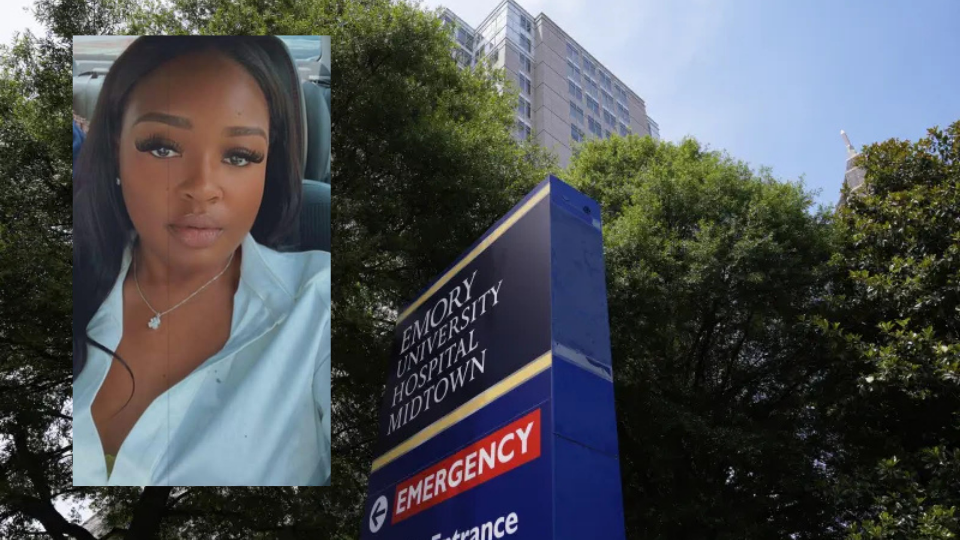
In February, Adriana Smith went to Northside Hospital after experiencing headaches. She was subsequently given medication and released. The next morning, her boyfriend woke up to Smith gasping for air and called 911. She was taken to Emory University Hospital and was declared brain-dead due to blood clots found in her brain.
However, because she was nine weeks pregnant at the time, and because of the draconian heartbeat bill, her body was forced to stay alive on life support until the baby was able to live outside the womb. The hospital stated that keeping Smith’s body on life support was required under Georgia’s Living Infants Fairness and Equality (LIFE) Act, also known as House Bill 481. Her family had no say in the matter.
On June 13, the baby was prematurely born through C-section. About a month before the birth, state senator Nabilah Islam Parkes, D-Ga., wrote to state attorney general Christopher Carr, R-Ga., asking how the heartbeat bill applies to Smith’s case. His office wrote back that “there is nothing in the LIFE Act that requires medical professionals to keep a woman on life support after brain death.” Emory Healthcare, the American healthcare system within Emory University, which owns the hospital where Smith’s body was kept, did not respond.
In May, Monica Simpson, executive director of SisterSong, an activist organization dedicated to reproductive justice for women of color, described the situation as problematic. She said in a statement: “Her family deserved the right to have decision-making power about her medical decisions. Instead, they have endured over 90 days of retraumatization, expensive medical costs, and the cruelty of being unable to resolve and move toward healing.”
The case not only represents the inhumanity of anti-abortion laws and the stripping of women’s bodily autonomy, but also highlights the prevalent problem of racism within the healthcare industry. Activists had argued during 2022 that the overturning of Roe v Wade would disproportionately affect women of color; Adriana Smith’s case, as she was a Black woman, only exacerbates that fact.
States with the highest proportion of Black, Hispanic, and Indigenous women— those in the south and the Midwest—have either banned abortion or set extreme restrictions. Not only that, but women of color also experience heightened risk of pregnancy-related morbidity, health complications, and death. This is further heightened in states where abortion has become punishable by law. Not to mention that these marginalized groups already have limited access to abortion to begin with.
Additionally, the federal Hyde Amendment—which prohibits the use of federal funds to cover abortion except in cases of life endangerment or if the pregnancy was the result of rape or incest—disproportionately affects marginalized groups of people by prohibiting federal funds from being used to pay for abortion care.
Shortly after the premature birth of Smith’s child, House Representatives Nikema Williams, D-Ga., Ayanna Pressley, D-Mass., and Sara Jacobs, D-Cali., introduced a resolution that urged states to end their abortion bans as well as to provide legal clarity to the subject of fetal personhood. The resolution highlights the “racial disparities in maternal medical outcomes and the consistently worse treatment of Black women in medical settings,” and how “pregnancy is often used to deny pregnant people their right to bodily autonomy.”
We hope you appreciated this article. At People’s World, we believe news and information should be free and accessible to all, but we need your help. Our journalism is free of corporate influence and paywalls because we are totally reader-supported. Only you, our readers and supporters, make this possible. If you enjoy reading People’s World and the stories we bring you, please support our work by donating or becoming a monthly sustainer today. Thank you!
CONTRIBUTOR