In many agricultural fields of the West Coast of the United States, you’re more likely to hear Mixtec or Triqui languages spoken than Spanish. Both are common among the Indigenous people of southern Mexico, some of whom now pick grapes for Napa and Sonoma County’s prestige wineries, or apples in century-old orchards. Without their labor, rural economies in California would collapse.
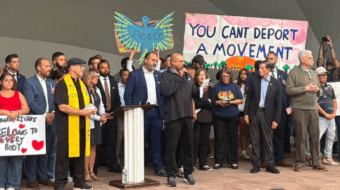
Yet Mixteco and Triqui migrants are being increasingly targeted in immigration raids terrorizing California’s rural communities. In farmworker families, mothers and fathers now give their children phone numbers to call if parents are abducted on the way to or from work. It can be an act of bravery simply to walk to the store, or to drive a car at night.
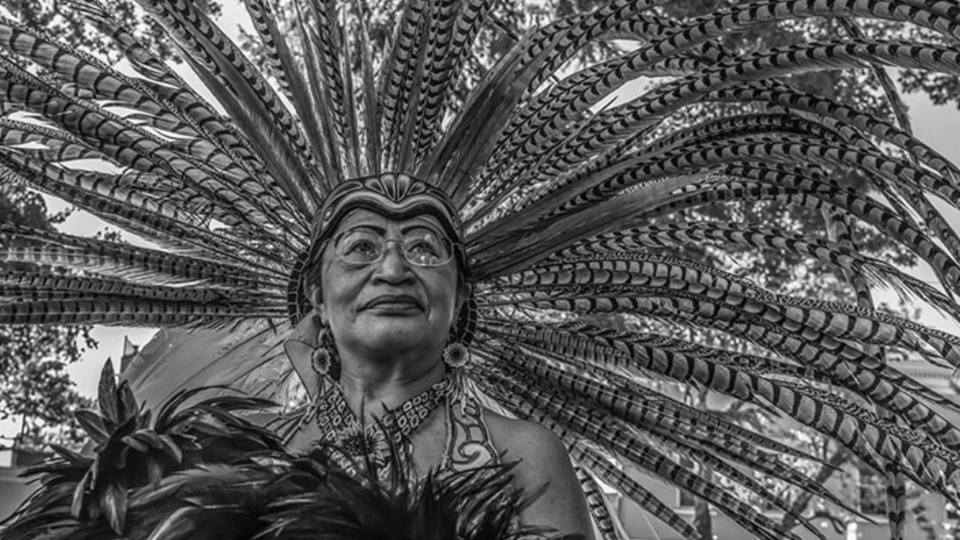
That made it an act of resistance when Triquis and Mixtecos in the Sonoma County town of Healdsburg came out in late July to celebrate the unique culture they’ve brought with them over the course of their 2,000-mile journey from Oaxaca and Guerrero. They call their festival the Guelaguetza—a celebration featuring a fabulous display of dancers in elaborate masks and tall headdresses, performing to music from home. Indigenous towns in Mexico often have their own dance; the Guelaguetza brings them together in all their vivid variety.

The main Guelaguetza is held in Oaxaca itself, but over the last four decades, the number of Mixtecos, Triquis, Chatinos, and other Indigenous peoples in the U.S. has grown so large that there are now several Guelaguetzas held each year north of the border. Indigenous communities organize dance troupes partly to show off their culture, and partly to give young people growing up in the U.S. a chance to learn the language and dances, and to imagine a home they may have never seen.
When Healdsburg’s Triquis decided to do a Guelaguetza, it would be, as one organizer said, a Guelaguetza de Resistencia, or a Resistance Guelaguetza. The act of simply dancing in public on a Sunday in the town plaza was a way of saying, “Aqui Estamos, y no nos vamos”—”We’re here, and we’re not leaving.” And even Healdsburg’s mayor and one of its council members attended, offering their welcome.

The late Mixteco community leader Rufino Dominguez-Santos explained that dances and language are not just a way to celebrate identity, but are an essential glue that keeps communities together, helping them survive in a hostile environment. “Beyond organizing and teaching our rights,” he said back in 2006, “we try to save our language. Even though 500 years have passed since the Spanish conquest, we still speak it. We are preserving our way of dancing, and rescuing our lost beliefs—that nature is something sacred for us, just as it was for our ancestors.”
In these photographs, Healdsburg’s Indigenous community activists showcase their deep roots. In spite of fear and racism, the culture of their hometowns in Mexico have been reproduced, and they now celebrate thousands of miles further north in California.


This photo essay was first published by TruthOut.
We hope you appreciated this article. At People’s World, we believe news and information should be free and accessible to all, but we need your help. Our journalism is free of corporate influence and paywalls because we are totally reader-supported. Only you, our readers and supporters, make this possible. If you enjoy reading People’s World and the stories we bring you, please support our work by donating or becoming a monthly sustainer today. Thank you!
CONTRIBUTOR