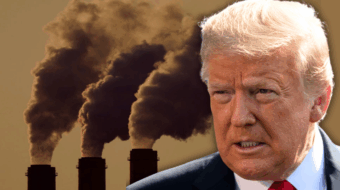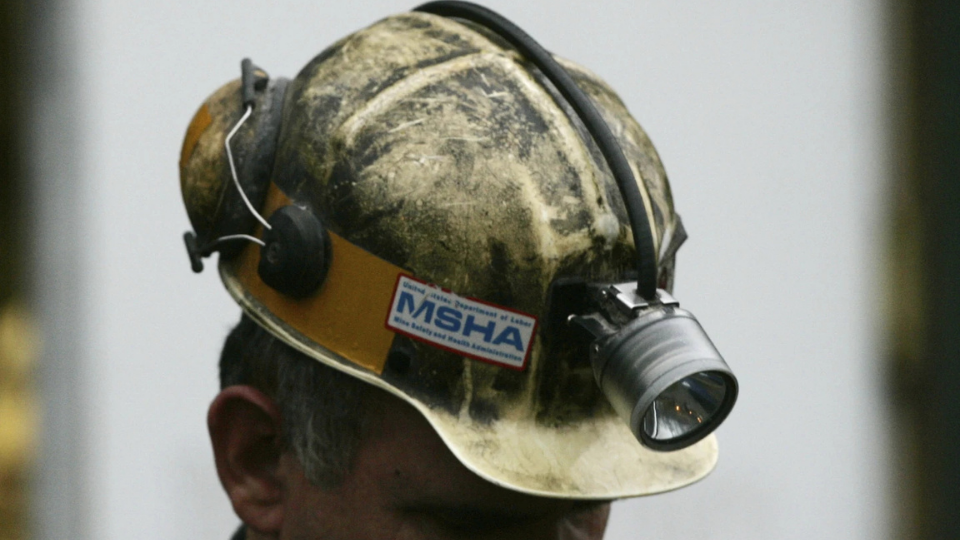
The Trump administration wants to bring back fossil fuels and move back from the transition to eco-friendly energy sources. President Trump claims that wind energy, specifically wind turbines, is causing the whales in the ocean to die, so we must go back to coal and oil to generate energy.
More likely, the connections of the fossil fuel industry to powerful politicians, including Trump, are motivating this push. This is not new to the second Trump presidency.
Workers in the mining industry are not being offered sufficient options for employment in other industries, so they may see a return to coal mining as something to fight for.
Although much of the coal mining industry has moved westward, there are still significant coal mines in the Southeast, especially in the Appalachian regions of Virginia, West Virginia, and other states. Trump garnered electoral support in those regions by promising to bring back good jobs in the mines. But this is quickly turning into a deadly trap for the miners and their families. And it is bringing back dreadful family memories to me.
I was born in what was then called the Union of South Africa in 1944. Nine and a half years later, my family and I moved to Saranac Lake, New York, in the beautiful Adirondack Mountains. We were not, strictly speaking, refugees; we moved because my father, the late Dr. Gerrit W.H. Schepers, found that his efforts to defend the rights of sick mine workers in South Africa were being stymied by the powerful gold mining industry and its political puppets in the pre-apartheid and apartheid governments. I fell in love with the Adirondacks’ beautiful scenery and interesting wild creatures, and never returned to South Africa, becoming a naturalized U.S. citizen in 1969.
But the issue of miners’ health was always on my mind, and continues to be to this day. During my South African childhood and beyond, our household’s table talk was often focused on the dread subject of “silicosis”, and my father would bring X-rays of miners’ lungs to the breakfast table to show us the damage that the inhalation of silica dust did to them. He called attention to the way exposure to silica dust creates fibrosis of the lung tissue, eventually making it difficult for the patient to breathe and ending in an untimely death. To add to that horror, the Black miners came to work in the South African mines from distant places, not only within South Africa but from Moçambique, Zimbabwe, Zambia, and even farther off. The weakening of the lung tissue made miners susceptible to tuberculosis infections on top of the silicosis, and when the miners were too sick to work (and make profits for the bosses), they were sent home to die, spreading tuberculosis all over East Africa.
My father saw this as mass murder of both white and Black miners, and came to the conclusion that only good medical science combined with strong labor union protections could defeat the deadly collusion between the transnational mining corporations and their government allies and puppets. So he threw himself into the science side, but in South Africa in those days, only white miners had union protection, a situation which got worse when the fascist apartheid regime came to power in the 1948 elections. He tried to work with Daan Ellis, the head of the existing Mine Workers’ Union, but Ellis had a racist attitude toward Black miners and refused to have his union represent them or provide them with screening services (in subsequent years, that union morphed into the current “Solidarity” bogus labor union which is a major force trying to restore white supremacy in South Africa today.)
So now in the U.S. coal mining industry, silicosis is back, according to recent reports. For a long time, coal miners in this country have suffered and died from “black lung” (coal miners’ or coal workers’ pneumoconiosis). This comes from the inhalation of coal dust and is incurable, causing terrible suffering and eventually shortening life. Establishing screening systems and compensation for victims of Black Lung has been the focus of decades of struggle by unionized miners and their allies.
But now, there are reports that coal miners are also being diagnosed with silicosis, which they were not getting before. This comes on top of the sharp increase in new cases of Black Lung. Not good!
It seems that some of the most easily accessible coal seams in Appalachian mines are played out, so to get at the remaining coal, miners have to break through rock formations. Doing so inevitably kicks up silica dust, which, when inhaled, causes silicosis. Silicosis is also incurable and shortens the lives of those who suffer from it. So this new development is a public and occupational health crisis.
The Trump administration will mobilize all available government resources to meet this crisis, right? Dream on! In fact, along with the administration’s demagogic rhetoric about “bringing back coal,” mining comes with drastic cuts to the social safety net, especially for workers’ rights.
Lori Chavez-DeRemer, Trump’s Labor Secretary, announced earlier this year a whole series of anti-worker deregulatory actions, all of which either remove or weaken workers’ safeguards that were won by hard struggle over many years. Chavez-DeRemer is the former mayor of Happy Valley, Oregon, and a former GOP congressperson. Her father was allegedly a Teamster, on the strength of which Teamster’s Union President Sean O’Brien praised her nomination. However, it is highly doubtful that as a Republican official, she will stand up for the rights of mine workers to be protected from industrial accidents and diseases that have been endemic to mining for many, many years.
Last year, the federal government announced a regulation on exposure to silica dust that was rather limited, but nevertheless would have saved lives. Important in the rule are sanctions on companies that fail to comply and fail to offer workers free monitoring services to detect black lung and other lung diseases. Penalties are important, otherwise, the mining companies will regard rules as mere suggestions or even as a joke. This has been proven in the mining industry over and over.
The rule, after its implementation was already delayed in April, was supposed to go into effect on Monday, August 22 of this year—the day I sit here writing this article. However, a federal judge, ruling on a request from an industry group that is not even involved in mining, has now delayed its implementation until October.
United Mineworkers of America International President Cecil E. Roberts immediately lashed out in anger: “The fact that an industry association with no stake in coal mining can hold up lifesaving protections for coal miners is outrageous. The Department of Labor and the MSHA should be fighting to implement this rule immediately, not kicking enforcement down the road yet again. Every day that they delay, more miners get sick, and more miners die”.
And that’s not the only bad news for labor this week. Also on August 19, the federal court for the Fifth Circuit ruled in favor of a request by Elon Musk’s SpaceX company that the National Labor Relations Board, as constituted in the Wagner Labor Relations Act of 1935, is actually unconstitutional, because it does not give the president sufficient power to replace the NLRB’s members.
When all the legal, governmental safeguards for workers’ rights are removed by the ruling class, there remains one option: to organize, unite, and fight. For miners and many others, it is a matter of life and death.
As with all op-eds published by People’s World, the views presented here are those of the authors.
We hope you appreciated this article. At People’s World, we believe news and information should be free and accessible to all, but we need your help. Our journalism is free of corporate influence and paywalls because we are totally reader-supported. Only you, our readers and supporters, make this possible. If you enjoy reading People’s World and the stories we bring you, please support our work by donating or becoming a monthly sustainer today. Thank you!
CONTRIBUTOR