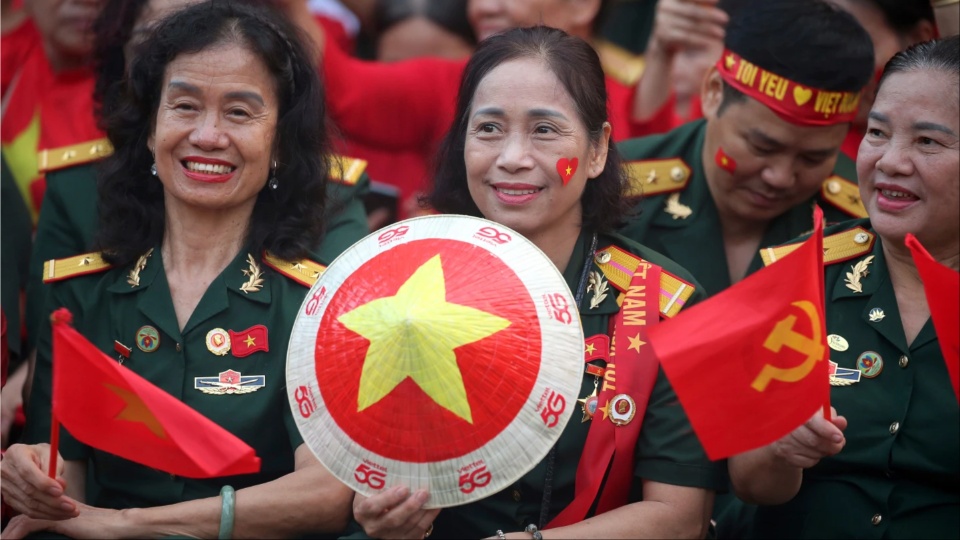
HANOI—On Tuesday, Sept. 2, the people of Vietnam filled the streets of their capital for the largest parade in the nation’s history, marking the 80th anniversary of their independence. From dawn—and in many cases, more than 24 hours earlier—crowds gathered along the parade route to secure a glimpse of the military formations, civilian contingents, and honored guests who came to commemorate a hard-won freedom that has inspired generations worldwide.
Vietnam was among the very first colonies to declare independence in the aftermath of World War II. On that September day in 1945, President Ho Chi Minh proclaimed to the world that Vietnam would never again submit to foreign domination. The victory of the Vietnamese revolution became a beacon for anti-colonial and socialist movements from Africa to Latin America, proving that the will of the people could defeat imperial powers.
At the opening of the parade, Communist Party General Secretary To Lam recalled the moment when Ho Chi Minh read the Declaration of Independence at Ba Dinh Square, giving birth to the Democratic Republic of Vietnam, “the first People’s Democratic State in Southeast Asia, ushering in an era of independence and freedom for the country.” He stressed that all of Vietnam’s victories “are closely associated with the right and clear-sighted leadership by the Party and the thought, moral example and style of Ho Chi Minh.”
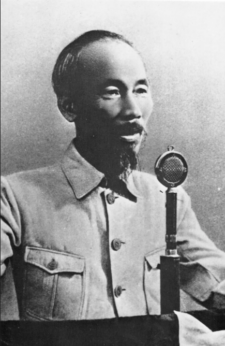
The General Secretary placed Vietnam’s present achievements firmly in the lineage of Marxism-Leninism and Ho Chi Minh Thought. “Our Party,” he said, “has stayed steadfast in the goal of national independence linked with socialism; creatively applied and developed Marxism-Leninism and Ho Chi Minh’s thought in accordance with the country’s situation in each period; and put the interests of the fatherland and the people first and above all.”
The parade in Hanoi was both a look back at that history and a demonstration of Vietnam’s present achievements. Troops from Cambodia, Laos, China, and Russia (representing the former USSR) marched alongside the People’s Army of Vietnam—nations that stood with Vietnam in its struggle for independence and reunification. Civilian delegations, representing Vietnam’s diverse regions and industries, showcased a country transformed since the days of war and blockade.
Since 1986, when the nation embarked on its renovation program, Vietnam has grown from one of the poorest countries in the world into a booming regional power. Its economy has multiplied many times over, poverty rates have plummeted, and the country has become a hub of trade, manufacturing, and innovation. Unlike other nations, however, Vietnam has not followed the path of neoliberal globalization but has instead charted its own socialist-oriented course—combining market development with a commitment to collective welfare and national independence.
To Lam emphasized that this path is rooted in the will of the people: “That strength stems from the people, belongs to the people, and is for the people; the strength of the great national solidarity bloc under the glorious flag of the Communist Party of Vietnam.” He tied this people’s strength to the future goals of the nation: By 2045, Vietnam’s independence centennial, it aims to be “a powerful, prosperous, and happy nation. That is the aspiration of the entire nation, an oath of honor before history and the people.”
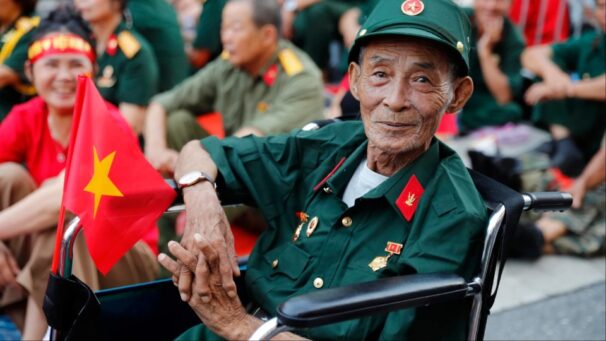
While reaffirming Vietnam’s readiness to defend its independence and sovereignty, To Lam made clear the country’s commitment to peace: “We want to be a friend and reliable partner of all countries in the world. We respect international law and the United Nations Charter, resolving differences and disputes by peaceful measures.” He insisted, however, that Vietnam “absolutely does not compromise with any plots or actions that violate independence, sovereignty, unity, and territorial integrity.”
The presence of international friends from around the globe underscored the continuing relevance of Vietnam’s struggle, a reminder that the world still looks to Vietnam as proof that even the most powerful empires can be defeated.
While much of the media attention focused on the displays of Vietnam’s modern military technology, the festivities also highlighted working-class and popular representation. Workers, farmers, and young people joined the military, police, and firefighters in marching through the streets of Hanoi.
Eighty years on, Vietnam remains a country shaped by sacrifice and solidarity, by a people who dared to break the chains of colonialism and who continue to follow their path to socialism, despite the pressures of a capitalist-dominated world. As To Lam concluded, “There are no obstacles or reasons that can stop us from reaching peace, prosperity, and an everlasting nation of development.”
We hope you appreciated this article. At People’s World, we believe news and information should be free and accessible to all, but we need your help. Our journalism is free of corporate influence and paywalls because we are totally reader-supported. Only you, our readers and supporters, make this possible. If you enjoy reading People’s World and the stories we bring you, please support our work by donating or becoming a monthly sustainer today. Thank you!
CONTRIBUTOR