Filmmaker Paul Thomas Anderson’s new film, One Battle After Another, has a lot happening, with many layers, characters, and themes. While not everything is fully fleshed out to satisfaction, the amazing cinematography and mixture of dark humor and subtle commentary on political ideologies and tactics make for a thrilling ride, with the cinematic flair of a modern-day Western film.
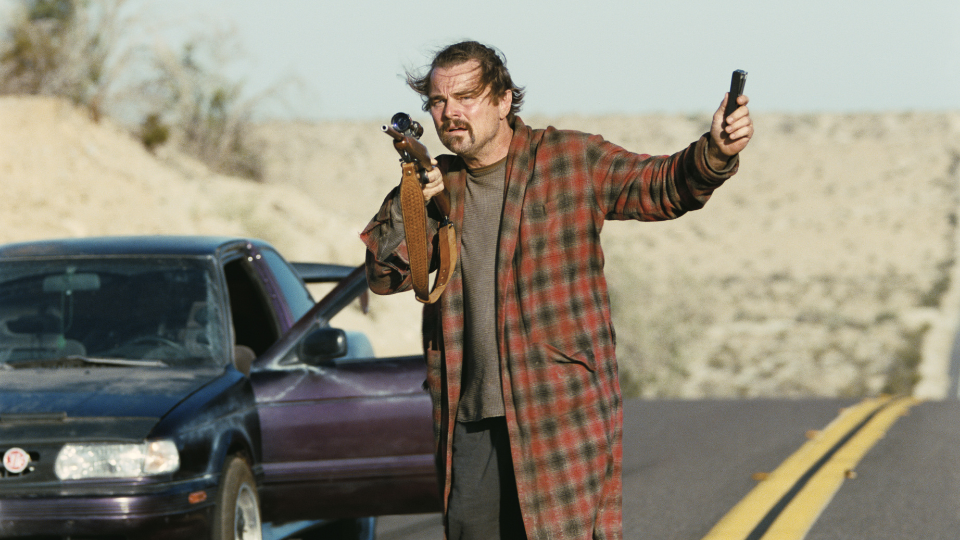
Inspired by the 1990 novel Vineland by Thomas Pynchon, One Battle After Another is a political action thriller produced, written, and directed by Paul Thomas Anderson (There Will Be Blood). The film follows members of a far-left revolutionary group called the French 75. Two of the group’s leaders, “Ghetto” Pat Calhoun (Leonardo DiCaprio) and Perfidia Beverly Hills (Teyana Taylor), become lovers, all the while Perfidia begins a sexual affair with military commander Steven Lockjaw. Perfidia becomes pregnant, giving birth to Charlene, but rejects what she considers the constraints of motherhood in order to continue her revolutionary activities. A bank robbery gone wrong sends her into witness protection and forces her to snitch on the French 75. Pat and Charlene go into hiding as the remaining members of French 75 scatter. The main events of the film take place 16 years later, as Commander Lockjaw appears to be far from done with Pat and Charlene, sparking a wave of civil unrest against a backdrop of immigration raids and a political powder keg ready to blow. To be frank, this summary alone does little justice to all the other details presented even in the first twenty minutes of the film, once again showing there’s a lot going on here. But the nucleus of the story rests on this strained family dynamic. 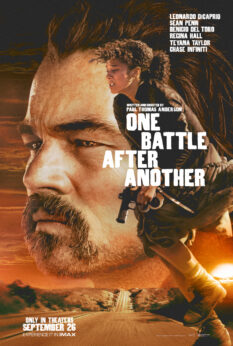
Vineland took place in 1984, the year of Ronald Reagan’s reelection, with a mixture of flashbacks by its characters detailing their revolutionary activities during the 1960s while giving commentary on what they called the “fascistic Nixonian repression” and the so-called War on Drugs. Anderson keeps this spirit of rebellion, change, and evolution, but places One Battle After Another in a more modern-day setting.
Instead of the War on Drugs, the main focal point is the continued deportations of undocumented immigrants. Instead of focusing on a militant, hippie-like group mostly composed of white members, as is the case in the novel, Anderson creates the French 75, which is more of a mixture of Black militants and allies. This adds the always relevant layer of race, racist oppression, and Black American resistance to the film conversation. Anderson could have taken the route of keeping the story within the same timeframe as the book, but given the current tumultuous political terrain we as a society—particularly in the United States—find ourselves in, this more direct approach makes for bolder storytelling.
Perhaps one of the more interesting aspects of the film is Anderson’s portrayal of the far left movement, its tactics, strengths, and weaknesses, as shown through the French 75, and also those combating the deportations. The French 75 is a group that fights for freedom, but does so through political violence and destruction. They plant bombs and rob banks, while also getting caught up in theoretical jargon that often leads to squabbling among themselves. Of course, they aren’t a monolith, and real work is being done in some aspects, but their strategies and tactics leave them vulnerable to ruin. Anderson showcases this through both serious and humorous interactions. Some of the more humorous interactions lean into an absurdist nature, really driving home just how ridiculous and self-inflicted the weaknesses can be. This absurdity is also applied to other themes in the film, such as the nature of white supremacy and those who organize to implement it.

Stand-out performances include DiCaprio as paranoid but good-natured Pat, Teyana Taylor as the strong-willed and flawed Perfidia, and Sean Penn as Col. Steven Lockjaw. The dynamics of the three hang heavy throughout the film, even when they aren’t on screen together, thus serving as a driving force for much of the movie’s interpersonal dynamics. Benicio del Toro as Sergio St. Carlos, a leader of the undocumented community and a fighter for immigrant rights, delivers a memorable performance. Sadly, we do not get nearly enough of Regina Hall as Deandra, one of the leaders of French 75. She does great with what she is given, but it’s clear there were perhaps scenes cut that would help showcase her character and importance even more.
And therein lies the main issue with One Battle After Another. Even with a run time of nearly three hours, there are plotlines, characters, and themes that aren’t as fleshed out as they could be. They’re touched upon and then moved on from. That’s not to say everything needs to be tied up into a neat little bow, but with so much happening on the screen at all times, it might be a challenge for viewers to take it all in or feel completely satisfied with how it all plays out.
Despite this, Anderson delivers a thrilling film experience with plenty for the audience to chew on. There’s humor scattered throughout, but with a good balance of heart and action. The violence is also explicit but done with intention. Overall, it’s an engrossing film that will have many audience members debating Anderson’s subtle commentary behind it.
CONTRIBUTOR