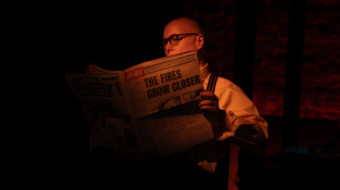
Here we are again—weeks into yet another government shutdown. Federal services are cut, and workers are going unpaid or being laid off.
Like the unfortunately all-too-regular occurrences of mass shootings or people going bankrupt over medical expenses, U.S. government shutdowns are yet another symptom of a broken political and economic system that doesn’t serve the American people.
Government shutdowns are not accidents; they are built into the architecture of U.S. governance. Under the 19th-century Antideficiency Act, no federal dollar can be spent without explicit authorization from Congress.
When Congress fails to pass an appropriations bill or a temporary “continuing resolution,” the law requires that “non-essential” operations cease (non-essential being a relative term). Parks close, research stops, paychecks for hundreds of thousands of public workers are frozen, and millions lose access to basic services.
This isn’t simply a crisis of “partisan bickering” or “political polarization” as the shallow reports of the corporate media suggest. It’s the product of a system designed to pit branches of government against each other, holding the functioning of the state hostage to political theatrics, never once taking the needs of the American people into consideration.
A democracy that stops paying its workers
When the government shuts down, workers are the first to suffer. In the 2018–19 shutdown—the longest in U.S. history—more than 800,000 federal employees went weeks without pay. Air traffic controllers, food safety inspectors, and park rangers showed up anyway, unpaid, because their jobs were labeled “essential.” Meanwhile, the same politicians who caused the crisis kept receiving their own salaries.
The economic pain ripples outward. Small businesses near federal installations lose customers; families delay rent or mortgage payments; veterans and retirees face bureaucratic chaos.
According to Standard & Poor’s, the 2013 shutdown alone wiped $24 billion from the U.S. economy, cutting 0.6% off GDP growth that quarter. For working people, that’s not an abstract number—it’s groceries, tuition, and medical bills.
And yet every few years, the same drama repeats. No lessons are learned because the underlying system remains untouched. But you don’t even need to resort to a Marxist or leftist critique to see the dysfunction of how things operate, or rather, don’t operate.
A broken social contract
At its heart, the idea of liberal democratic government as understood by the founders of the United States rests on what political philosophers from Hobbes to Rousseau called the “social contract”: the implicit agreement that people give up some freedoms and resources in exchange for protection, order, and shared welfare. When citizens pay taxes and obey the law, they do so with the understanding that the state will uphold its end of the bargain—that it will function, serve, and safeguard the public good.
A shutdown is the collapse of that contract in real time. It says to the worker, “You must keep paying taxes, but the services your taxes fund will stop.” It says to the public servant, “You must keep working, but you may not be paid.”
It’s a betrayal of the most basic promise any society makes to its people: that governance will be continuous and that the collective good will not be held hostage to partisan maneuvering.
When governments in other countries face political crises, elections may be called, coalitions may fall, but the state itself never ceases to function. In the United States, by contrast, the government can legally abandon its obligations to the very people who sustain it. That is not democracy—it’s a breach of trust.
The rest of the world doesn’t do this
Compare that to nearly every other liberal democracy:
- In Canada, a failed budget is automatically treated as a vote of no confidence: The government falls, elections are held, and essential services continue under interim funding.
- In the United Kingdom, the Treasury simply continues monthly “votes on account” until Parliament approves a new budget.
- In Germany and Japan, the previous year’s budget automatically carries over, allowing civil servants to keep working.
- Even in other presidential systems like Brazil, Mexico, or Chile, constitutions require that the government keep functioning: If lawmakers can’t agree, either the president’s proposal takes effect or the old budget remains in force.
In fact, pretty much every country on Earth has written into law the principle that the state must not stop. Only the United States treats government as a switch that can be flipped off by political temper tantrum.
A symptom of elite detachment
Shutdowns expose how profoundly disconnected U.S. politics has become from the daily lives of ordinary people. For members of Congress whose fortunes depend on campaign donors, cable news appearances, and think-tank applause, closing the government is just another bargaining chip. For millions of working Americans, it means lost income, delayed medical care, and another reminder that Washington’s priorities have nothing to do with theirs.
This gap isn’t accidental. It reflects a capitalist state that answers to wealth rather than need. In a system where health care, housing, and education are commodities, government itself becomes another marketable service—something to be negotiated, withheld, or privatized when convenient.
The threat of shutdowns keeps public workers insecure, weakens unions in the federal sector, and reinforces the narrative that “government doesn’t work,” paving the way for further austerity and privatization.
Other presidential republics learned the lesson
It doesn’t have to be this way. Latin America once modeled many of its constitutions on the United States, but after decades of instability, most of those nations rewrote their rules to guarantee continuity of government.
- Brazil’s 1988 constitution explicitly states that if Congress fails to pass a new budget, spending continues at the previous year’s level.
- Mexico’s Article 74 does the same.
- Chile’s constitution says that if Congress doesn’t act within 60 days, the president’s proposed budget automatically takes effect.
They understood that in a modern society, halting public payrolls and shutting hospitals to make a political point is not “checks and balances”—it’s irresponsible.
Why has the U.S. never adopted a similar safeguard? Because both major parties, in different ways, benefit from the crisis. The Republican right uses shutdown threats to demand spending cuts and attack social programs. The Democratic establishment uses them to present itself as the party of “responsible governance” while avoiding deeper structural reforms. In the end, both operate within a framework where the continuity of capital is sacred but the continuity of government is negotiable.
The Antideficiency Act—originally meant to limit executive overreach—now functions as a weapon for legislative blackmail. Instead of protecting governance, it paralyzes it.
Government for the people, or against them?
Every shutdown exposes the same contradiction: The U.S. government is immensely powerful when it comes to funding wars, tax cuts, and corporate bailouts, but helpless when it comes to keeping public welfare or paying park employees.
That’s not incompetence; it’s design. It reflects whose interests the system was built to serve.
A democracy worthy of the name would guarantee that public services never stop. It would treat schools, hospitals, and wages for public servants as rights—not as collateral in congressional hostage-taking. It would place human needs above procedural gamesmanship and make the government answerable to the people who keep it running.
Each time Washington edges toward or enters another shutdown, commentators blame polarization, partisanship, or the “broken politics” of the moment. But polarization is not the disease—it’s the symptom of a political system long divorced from the working class.
A system that allows billionaires to buy elections while forbidding the government to fund itself without their consent cannot be called democratic in any meaningful sense.
When workers in other nations see these spectacles, they don’t envy “American freedom.” They wonder how the richest country on Earth can be so incapable of doing the basics: paying its workers, funding its services, and maintaining its infrastructure. They see a society where the machinery of profit runs smoothly, but the machinery of governance grinds to a halt.
How to end shutdown politics
Congress could easily adopt the same automatic funding mechanisms used around the world. But doing so would require confronting the forces that profit from instability: corporations that welcome weakened regulation, politicians who thrive on crisis, and media outlets that monetize chaos.
Real reform would mean establishing government as a public good, run for the people it is supposed to represent and who sustain it. That means empowering public sector unions, expanding democratic control over budgeting, and ensuring that no worker is ever again told to show up without pay because the politicians couldn’t agree.
Shutdowns are not merely technical malfunctions. They are mirrors reflecting the broader truth about U.S. capitalism: that it can halt the government, but not the flow of wealth upward; it can stop wages, but never war spending; it can freeze public services, but never corporate subsidies.
Other countries have moved beyond this stage of constitutional adolescence. It’s time the United States did the same; not by patching over dysfunction with another stopgap bill, but by building a government that cannot be shut down because it truly belongs to the people.
As with all op-eds published by People’s World, the views reflected here are those of the author.
We hope you appreciated this article. At People’s World, we believe news and information should be free and accessible to all, but we need your help. Our journalism is free of corporate influence and paywalls because we are totally reader-supported. Only you, our readers and supporters, make this possible. If you enjoy reading People’s World and the stories we bring you, please support our work by donating or becoming a monthly sustainer today. Thank you!
CONTRIBUTOR