Iraqis went to the polls Nov. 11 to elect a new parliament. The elections paved the way for the appointment of a new president—a largely ceremonial post reserved for a Kurd—and a prime minister, traditionally Shia. According to the convention in place in post-invasion Iraq, a Sunni will hold the position of Speaker of Parliament. This sectarian power-sharing is a legacy of the U.S. occupation of the country.
The coalition led by current Shia Prime Minister Mohammed Shia al-Sudani emerged as the single largest bloc, winning 46 out of 329 seats. Negotiations are now underway to form a government, which the U.S.-backed Sudani is determined to lead.
Sudani came to power in 2022 thanks to the support of an alliance of Shia parties and factions, even though his own party held only two seats in parliament. This underscores just how important the alliances that have formed in the aftermath of the vote are, as crucial as the election itself. His main rival was the Iran-supported former Prime Minister Nouri al-Maliki.
The election was closely watched by both the United States and Iran, as each sought to influence the outcome. Iraq is still reeling from the consequences of the 2003 U.S. invasion, and the sectarian religious divisions which plague its politics are a result of that imperialist move.
Against this backdrop, the Iraqi Communist Party is attempting to make its voice heard—a secular one, addressing economic and social issues and encouraging the removal of all foreign forces and influence from the country. After boycotting the 2021 vote following a government crackdown on youth protests that killed 800, the ICP returned to the electoral arena this year.

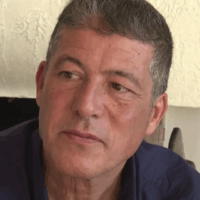
Raid Fahmi is the General Secretary of the ICP. He is a former member of parliament and Minister of Science and Technology from 2006 to 2010. This interview with Fahmi was conducted by journalist Pierre Barbancy of l’Humanité, newspaper of the French Communist Party, just before the elections. In it, he discussed the country’s internal situation and the challenges it faces from external pressures.
l’Humanité: What is the context in which these legislative elections are being held?
Raid Fahmi: The backdrop to these elections is none other than the upheavals that have taken place over the past two years at the regional level, whether it be what is happening in Palestine or Lebanon or the changes in Syria, and their repercussions on the balance of power, particularly for the Iranian axis. Furthermore, we are confronted with this [U.S.-Israeli] project of a new Middle East and the ongoing process of establishing a Greater Israel.
Like Lebanon and Syria, Iraq is part of the same picture. It is important to understand that the U.S. sees Iraq, as elsewhere, through the lens of Iran.
How will Iraq deal with these challenges, particularly regarding its relations with Iran, the place and role of armed groups, their disarmament, and the reform of the so-called “Popular Mobilization Forces,” knowing that this translates into direct pressure from the United States?
Domestically, the government formed after the election will have to address these major challenges. But there are also the purely political and economic issues. Significant imbalances exist. The level of debt continues to climb, dependence on oil production is increasing, unemployment, particularly among young people, is reaching record levels, not to mention the problems with major infrastructure, deteriorating public services, healthcare, and education…. All of this occurs within a context of a weak state, which fuels corruption.
What are the stakes in these elections?
The question now, and for the future, is whether we will continue on this path, or whether we will change course by strengthening the role of the state throughout the country? Will we continue with the same method of governance, namely the sharing of power between sectarian forces? Will these elections produce a different political configuration, especially considering regional relations, whether with Iran or Turkey?
It’s important to understand that the balance of power in this election will differ from previous ones. The Iranian axis is relatively weakened, but Turkey is gaining influence, particularly through its direct control of water resources in Iraqi territory.
As we can see, the challenges are both internal and external. Domestically, the call for a boycott by the Shia figure Moqtada al-Sadr, whose group is very influential, is not without its problems for the Shia political forces themselves. This stance will play into the hands of Sunni political groups.

The presence of sectarian parties means political confrontation between each group (Shia, Sunni, and Kurdish being the main ones), but tensions also exist internally, between the parties of each sect. This has significant consequences, particularly in what are called mixed cities, where populations of different faiths live side by side. This is obviously the case in Baghdad.
The sectarian nature of the power-sharing arrangement between majority Shia and minority Sunni factions is the chief source of Iraq’s weakness today. A legacy of the U.S. occupation of our country, it makes the state apparatus itself the main domain of conflict, with rival groups striving to increase their power at the expense of others.
Of course, power-sharing is a classic ploy used by imperialism to divide and weaken subject countries and peoples. Plus, Iraqi oil revenues are held in U.S. banks, protected by presidential decree and therefore vulnerable to strangulation and collapse.
The result is instability, a lack of coherent policies, and little or no commitment to achieving national objectives on the basis of our national identity. These challenges from within and without threaten the identity and unity of Iraq and present a potentially explosive problem.
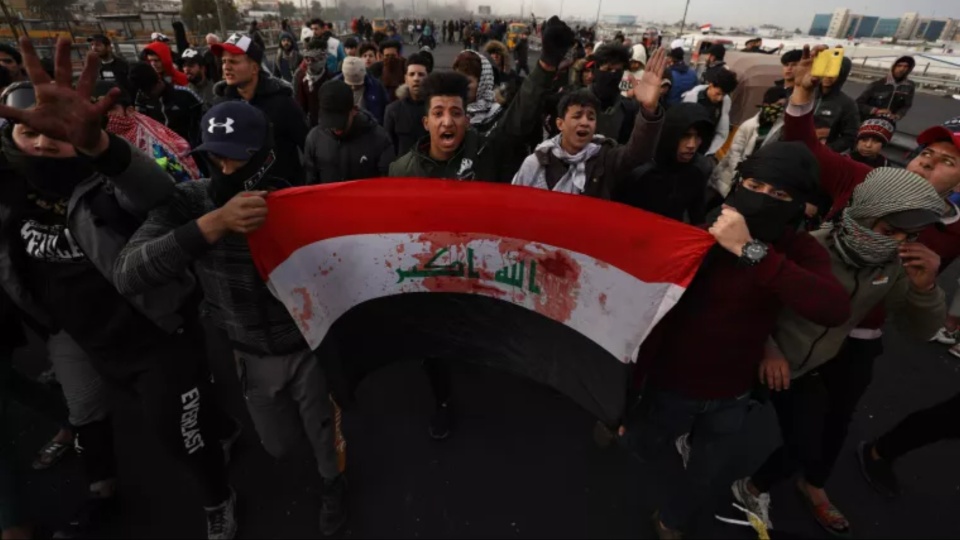
How does the non-sectarian youth movement in Iraq that has taken place in recent years fit into these elections? With its slogan, “We Want a Homeland,” it shook the Shia authorities, who suppressed it with the killing of 800 protesters, compelling your own resignation from parliament and prompting the Communist Party’s boycotting of the 2021 elections.
A large number of young people have decided to participate in the elections this time around. They have divided themselves among several groups. Some are with us. They have also become involved in local lists, in the provinces, but others are keeping their distance, they are boycotting. But I think that the current social and political situation could create conditions later on for a resurgence of the protest movement.
Because the problems young people face persist, particularly the lack of jobs and attacks on freedoms. Finally, there’s a palpable desire for change, including among politicians. Paradoxically, this is also what’s keeping young people away from elections. They sense that something is wrong. Money is flowing freely these days and plays a significant role in buying votes.
This has detrimental consequences for equality between the forces, between the groups participating in elections. State resources are often used to favor the parties and individuals in power. Paramilitary groups have political representatives, and political parties possess armed wings.
That’s why some political groups and figures believe that as long as these elements undermine the integrity of these elections, they must be boycotted and opposed. Indeed, all these elements exist and harm equality and democracy, but we believe it’s a matter of struggle and resistance.
How is the Iraqi Communist Party approaching these elections? What kind of alliance have you tried to build?
The first question we had to answer was whether to participate or boycott. We observed that there was a growing weariness, but also a rejection, of the hegemony of the religious groups.
This therefore presents an opportunity for mobilization and action with the population. Secondly, given the changes that have taken place in the region and the shifting balance of power, there is an opportunity for secular groups to make a breakthrough and perhaps even elect some members to the Assembly. We do not see parliamentary and extra-parliamentary work as opposing forces. We believe they are both complementary and mutually reinforcing.
That is why we took the initiative to build a fairly broad coalition of civic, secular forces, which we named “The Alternative.” It brings together 10 to 11 parties, most of which are civic in nature and others are patriotic.
Among them are two or three who, in the past, were close to Shia or Islamic groups. They have shifted politically, moving closer to civic and anti-sectarian positions. This has opened up a new space for movement and action for civic forces, and therefore for our party.
Sudani is in a contradictory position; he needs U.S. support, and the U.S. needs him in office. Victory for progressive or pro-Iranian forces would not be welcomed by Washington. As for us, we will be campaigning on an end to the presence of U.S., Turkish, and other foreign forces in our country.
Postscript: The ICP’s coalition, The Alternative, received 71,697 votes but did not elect any candidates to parliament.
We hope you appreciated this article. At People’s World, we believe news and information should be free and accessible to all, but we need your help. Our journalism is free of corporate influence and paywalls because we are totally reader-supported. Only you, our readers and supporters, make this possible. If you enjoy reading People’s World and the stories we bring you, please support our work by donating or becoming a monthly sustainer today.
CONTRIBUTOR