Who is determined to prevent a possible peace in Ukraine?
For the hawks in Germany, France, Poland, and elsewhere, peace in Ukraine would be nothing short of catastrophic. The fabricated threat narrative of an allegedly planned and imminent Russian attack on EU countries, used to justify the militarization of the economy and society, would collapse like a house of cards.
Recent “peace plans” for Ukraine have caused quite a stir. The media and political commotion raises a number of questions. The first version of the latest plan, the “28-points,” was not even officially announced before the media were picking apart all its details. So, one has to assume that the publication in the U.S. was a deliberate leak, possibly intended to derail a solution.
Primarily, this new “plan” served to portray Trump once again as a “peacemaker” and to convey the impression that the U.S. government is in control of the situation. Ukraine had, after all, effectively rejected the previous peace plan proposed by Trump, which is likely the reason why a new version with revised proposals was created.
The circulating claim that “the Russians” had helped draft the 28 points or that it was a “Trump-Putin plan” was intended to bring it crashing down before it even got off the ground. It was quite obvious that the 28-point document was not the result of bilateral talks; too many of the points that have come to light are certainly unacceptable to the Russians.
These include, for example, the planned use of frozen Russian funds and an amnesty that would prevent allegations of all war crimes from being investigated—including not just the alleged abduction of Ukrainian children that led to the arrest warrant against Putin but also the criminal destruction of the Nord Stream pipeline and the rampant corruption in Kiev.
Instead of supporting efforts toward negotiations and thus a possible peace, Ukraine and its European backers in NATO and the EU leadership are almost frantically tinkering with the “peace plan.” In its initial form, according to them, it supposedly amounted to a “capitulation” by Ukraine, which is by no means true.
The warmongers in the EU and NATO apparently still cling to the illusion that they can inflict a strategic defeat on Russia on the battlefield; they clearly simply refuse to acknowledge information about the real situation in Ukraine. Furthermore, the warmongers who have come together in the “coalition of the willing” apparently have no concept for the post-war period or for how to deal with their corrupt proteges in Kiev.
Now, there is a pared-down “19-point” version of the plan being negotiated in Moscow between U.S. and Russian officials, which is already being dismissed by Ukraine and European capitals as another “Russian” plan.
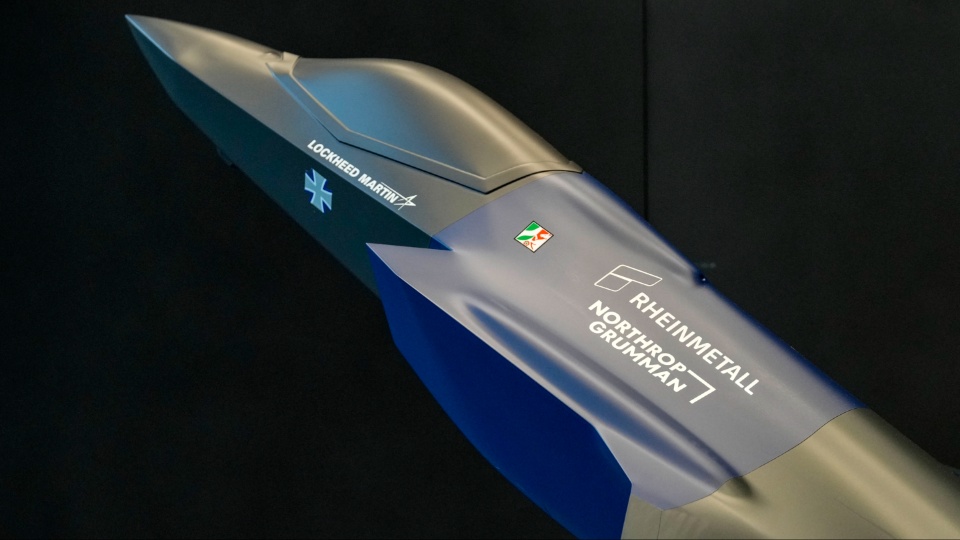
The European NATO countries and the EU, which are systematically fanning the flames, must fear that the massive deliveries of weapons and money to Kiev will no longer be justifiable in the event of peace. No sooner was the new “peace plan” mentioned than the shares of the German arms manufacturer Rheinmetall plummeted.
Zeitung vum Lëtzebuerger Vollek
We hope you appreciated this article. At People’s World, we believe news and information should be free and accessible to all, but we need your help. Our journalism is free of corporate influence and paywalls because we are totally reader-supported. Only you, our readers and supporters, make this possible. If you enjoy reading People’s World and the stories we bring you, please support our work by donating or becoming a monthly sustainer today.
CONTRIBUTOR