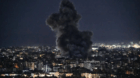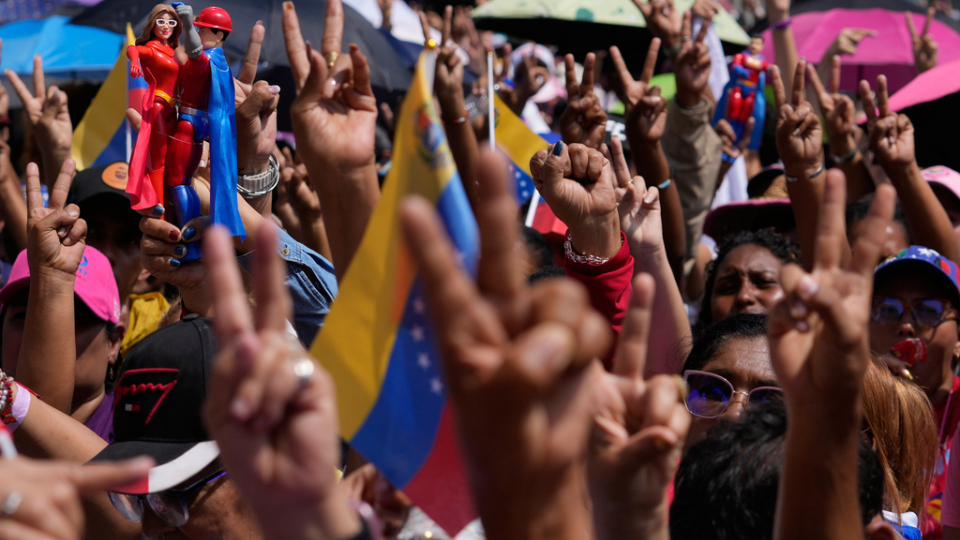
In the early hours of Saturday, Jan. 3, 2026, the Trump administration conducted a military assault on the sovereign Bolivarian Republic of Venezuela and kidnapped its president, Nicolás Maduro, and his wife, Cilia Flores. At least 100 people were killed, including 32 Cuban nationals. This flagrantly illegal act is being lauded by most Republicans, while Democratic opposition remains weak, at best, focusing on procedure and how to more effectively impose a new president on Venezuela.
To be clear, opposition to imperialism does not require the government it aims to depose to be a flawless or idealistic version of what people imagine socialism should look like. It merely calls on the most basic support for principles of international law.
However, many of those who ostensibly oppose this intervention have uncritically repeated claims from political pundits that Maduro ran a ruthless regime without any context of coup and assassination attempts, CIA infiltration, the freezing of assets or the brutal U.S. sanctions. These examples of political and economic interference have distorting effects on any society and further illustrate the difficulties of building socialism in the age of imperialism.
Despite this imperialist strangulation, the PSUV and the Bolivarian Revolution remain popular compared to the alternative of servitude to U.S. interests and oligarchy. Since the corporate media across the spectrum is hellbent on repeating the State Department line on Venezuela as completely undemocratic and Maduro as a tyrant over his own people, it will serve us well to examine the positive aspects of the over two-decade-long Bolivarian Revolution.
We need not only defend the basic principles of international law against this rapacious and criminal administration in Washington; we can also uphold the impressive achievements of this ongoing revolutionary process in Venezuela, despite the fact that it’s been under constant threat for 25 years by U.S. imperialism.
Gains made in education
Before the Bolivarian Revolution, between 1990 and 1996, spending on education decreased by 37% thanks to neoliberal “reforms.” This included adding registration fees, which disproportionately impacted poor and working-class students in the barrios.
Like other socialist experiments in Latin America, the Bolivarian Revolution prioritized education. Article 102 of the 1999 Constitution proclaims that “Education is a human right and a fundamental social duty; it is democratic, free of charge and obligatory.”
The entire ideological approach to pedagogical practice is different in Venezuela. As one educator put it, “I never heard the words accountability or high stakes testing once… The dialogue there is more about education as a human right and what the government is responsible to provide. It’s not about outcomes, as we might say, but more about access and opportunity. What our small group from the U.S. encountered was a wealth of testimonials, not testing.” This is a stark contrast to the often dehumanizing, corporate-driven, high-stakes testing and data obsession infecting the American education system.
In other important ways, pedagogy has been allowed to be applied in more creative ways. For example, the Cultural Curricular Endógeno (EPEDECUEs) allow for curriculum experimentation. These programs let teachers and students co-create curriculum through the use of flexible education proposals. They help develop what is referred to as cognitive sovereignty, or the “ability to think with one’s own head.”
These activities often focus on practical skills and can be productive, expressive, or cultural. Students from different grade levels work together based on common interests, needs, and expectations. This so-called “space of freedom” is sometimes referred to by the students as “the happy day.”
The most important gains in education from the Bolivarian Revolution and the Chavismo movement come from the various social missions. Mission Simoncito provided early education and essential cognitive development through free day care and preschool to students aged 1-6. Mission Robinson focused on reducing adult illiteracy. Mission Ribas offered primary and secondary education to adults who were unable to complete school earlier in life. Mission Sucre expanded access to higher education by sending university professors to smaller cities and rural areas, allowing those who work to pursue college studies.
By 2005, Venezuela was declared illiteracy-free by UNESCO. Furthermore, the number of post-secondary students increased from 895,000 in 2000 to 2.3 million in 2011, bolstered by the creation of new universities. Venezuela’s education budget as a percentage of GDP increased from 3.8% in 1999 to 6.9% in 2013. It’s clear that education was a central pillar of the Bolivarian Revolution, and the achievements are worth defending.
Advances in healthcare
Similarly, the Bolivarian Revolution made great leaps in healthcare, especially for the poorest Venezuelans. Juxtapose this with the United States, which has a GDP per capita far greater than Venezuela, and still, the poorest Americans are preyed upon by the rapacious insurance and drug companies.
During the neoliberal 1980’s and 1990’s in Venezuela, healthcare was essentially unattainable for the poor and working class and was mostly privatized. Before Chavez, over one-third of the poorest Venezuelans did not see a doctor because it was too expensive.
In 2003, the Barrio Adentro program was put into place. Early on, Cuban doctors collaborated with Venezuelans to not only provide care in the barrios but also help train a new generation of doctors in Venezuela. Doctors were actually able to engage with the community rather than just extract their wealth like American healthcare.
In just the first two years, an estimated seventeen million poor and working-class people were reached by this ambitious program. The number of healthcare workers expanded to over 30,000 with a particular emphasis on reaching the poorest people to attain real health equity.
Though the brutal U.S. sanctions and the economic crisis that they helped generate severely hampered the medical system, there were still important gains. As a result of this healthcare investment, infant mortality rates decreased, from 18.5 per 1000 live births to 15.5. Over six thousand popular clinics and hundreds of holistic diagnostic and rehabilitation centers were created. Millions of Venezuelans who had never received primary care were, for the first time, able to see a doctor.
As one patient said, “I walked out of the clinic with a diagnosis and treatment within twenty-five minutes of entering, without paying a dime. There was no wait, no paperwork, and no questions about my ability to pay, my nationality, or whether, as a foreigner, I was entitled to free comprehensive health care. There was no monetary value connected with my physical well-being; the care I received was not contingent upon my ability to pay. I was treated with dignity, respect, and compassion, my illness was cured, and I was able to continue with my journey in Venezuela.”
Progress in socialist economics
Perhaps the two biggest critiques of Venezuela from the West are about its economy and democracy. The U.S. sanctions, the dramatic drop in oil prices, and attempts at diplomatic isolation exacerbated, if not precipitated, the economic crisis in Venezuela.
It’s not just “socialist policies” that caused the economy to collapse. Otherwise, we would expect that China, Vietnam, and Laos, among other countries, would see a major decline in GDP. But that is not the case. All three countries have grown substantially in the last few decades, even by Western metrics of GDP growth.
Despite the brutal and coercive measures taken by the United States, the Bolivarian Revolution made substantial gains in economic life prior to 2014. Perhaps the greatest accomplishment was using the oil revenue that formerly belonged to the oligarchs and foreign investors to benefit the people through the various social missions.
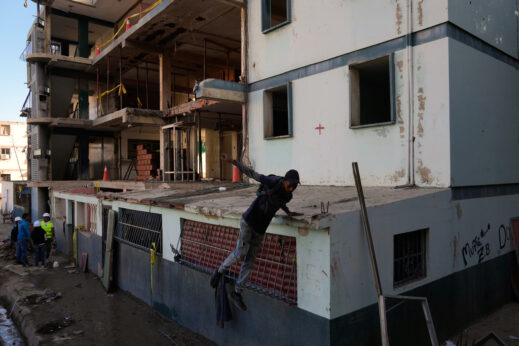
There were massive reductions in inequality. Poverty was reduced from 70.8% (1996) to 21% (2010). And extreme poverty was reduced from 40% (1996) to just 7.3% (2010). These are staggering figures for a country emerging out of neocolonial and oligarchic domination and further illustrate that the Venezuelan state prioritized the poor in ways practically unimaginable in the history of U.S. politics.
Before the Chavez government, 21% of the population was malnourished; by 2012, it was only 5%. Similarly, 7.7% of children were malnourished, which dropped to 2.9% by 2012. Compare this to the ultra-wealthy United States, where about 13% of households are food insecure.
By 2024, the Great Housing Mission had delivered 4.9 million homes to the poor and working class. Even after the sanctions, the government made it a priority to “provide all the necessary home appliances and furniture.” Depending on people’s income and the construction modality, the homes could be free of charge or low-cost.
Venezuelan housing programs are a dramatic contrast to commodified housing in the United States, a far richer country with over ten times the population of Venezuela. Scaled up to the United States population, no American could conceive of the U.S. government building 49 million homes for the poor and working class.
These economic gains for the working class and poor Venezuelans were inextricably linked with the democratic reforms. The social missions were not simply a redistribution of wealth or social welfare, but programs of mass inclusion and dignity for the people.
Democracy at the ballot box
Though the U.S. State Department and the corporate media have been incessant in their drive to portray Venezuela as anti-democratic, the popular forces that propelled the Bolivarian Revolution sought to deepen democracy by transferring power away from entrenched elites and toward the marginalized, workers, and the poor.
It should be noted that democracy means “rule by the people.” Western nations consistently look at elections as the end-all be-all measure of democracy. It really, however, is about how the masses of people actually exercise their ability to shape society in ways that benefit them. Democracy should produce a substantive output.
When the Bolivarian Revolution came to power in 1999, the constitution was rewritten with popular input. In a nationwide referendum, 72% of the population ratified the 1999 constitution. Compare this to the U.S., with a more than 200-year-old constitution ratified by slave owners and other upper-class white men.
In Venezuela, there have been 25 elections since 1998 during the Bolivarian Revolution. This includes presidential elections in 2000, 2006, 2012, 2013, 2018, and 2024. Academia largely agrees that Venezuelan elections were democratic and fair throughout the Chavez era. Though the opposition contested the 2013 election, no proof of irregularities was given. Outside observers even previously declared that “Venezuela’s voting system, which incorporates both an electronic ballot and a hard copy, to be among the best in the world.”
The 2018 elections were criticized by the West due to the banning of opposition candidates, one for corruption and one for his role in the 2014 riots, using the violent Guarimba tactics. In 2018, during the riots, opposition supporters burned a Black man alive, assuming he was a Chavista.
Even the “hero” of the opposition movement, Maria Corína Machado, admitted that Venezuela is not a dictatorship. Her career was launched by the NED, and she has openly called for U.S. intervention to overthrow Maduro. Despite being seen as a CIA asset, collaborating with the U.S. as early as 2005, and praising the sanctions against her country, she was still freely making speeches in the wealthy areas of Caracas as of 2019.
The 2024 elections have been the most contested in the Western press due to their irregularities. The Carter Center was especially critical of Venezuela’s election, though some groups, like the National Lawyers’ Guild, claimed its delegation “observed a transparent, fair voting process with scrupulous attention to legitimacy, access to the polls, and pluralism.”
Elections in U.S. not best examples of democracy
Taking a moment to compare aspects of elections in the U.S. with those in Venezuela might serve us well.
The 2000 election in the United States was mired in controversial voting irregularities, especially in Florida. Not only that, but the candidate who received fewer total votes was propelled to the presidency. In 2004, voting in Ohio was similarly critiqued for mismatched exit polling, leading critics to argue that Bush stole the election.
By 2010, the Citizens United Supreme Court case allowed Super PACs to contribute unlimited money via secretive groups to influence political outcomes. In 2016, some alleged the Democratic primary was rigged against popular candidate Bernie Sanders, but the candidate in the general election with 3 million less votes, Donald Trump, won.
Comparing our own electoral system to Venezuela’s allows us to be much more measured in our assessment of what democracy in a socialist society should look like. Rather than imposing an abstract idealistic model of how elections are supposed to function, we must examine reality as it is.
Whatever the real problems with elections in Venezuela, one still cannot deny the real democratic gains made in the everyday life of the people during many of the years of the Bolivarian Revolution.
Popular democracy – How is it reflected?
Popular participatory democracy in Venezuela is exemplified by grassroots participation, including the creation of 30,000 community councils. The 2006 Community Councils Law spurred the creation of these councils, which allowed families in neighborhood assemblies to discuss their community needs.
One of the hallmarks of the Chávez era was the encouragement of dialogue among the masses. Huge efforts were made to distribute the new constitution to popular sectors and especially to include those who were historically marginalized in Venezuelan society.
These community councils contained between 200 and 400 families, or at least 20 families in rural areas. Anyone over the age of 15 could participate and be elected as a representative. Once these councils were formed, they could receive up to $14,000 for community projects. These projects could include, but were not limited to, street paving, sports fields, medical centers, and sewage and water systems. In this sense, a real attempt was made to include participatory budgeting as an aspect of democracy.
By 2009, Chávez introduced the concept of the “commune” to coordinate and organize between these community councils. One Chavista proclaimed that it was a “significant leap forward in creating an effective space for socialist direct democracy. This space aims to foster new social relations through collective management and use of the means of production.
The government encouraged communities to organize themselves into communes. These entities are socially owned, managed by the workers, and are meant to address social needs, not profit. The government channels funds toward these autonomous organizations and enables them to coordinate their activities regionally and nationally.
Juxtapose this with everyday democratic life in the United States. Less than 1/10 of workers in the United States have a union to fight for them, let alone any form of democratic workplace. Those in the United States who were so quick to repeat corporate media and the State Department line that Maduro is an evil dictator and that Venezuela is an authoritarian country could learn a tremendous amount from the Venezuelan people’s experiences in the barrios.
Long live the revolution
Despite the brazenly illegal attack on the Bolivarian Republic of Venezuela, the Venezuelan people will not willingly be put back under the domination of foreign or domestic oligarchs. The Bolivarian Revolution is a 25-year process that cannot be undone by Trump kidnapping the leader or bombing the Hugo Chávez mausoleum. This revolutionary process is a part of Venezuela’s historical memory.
Because the administration in Washington has no fundamental understanding of the nature of dialectics in a revolutionary process, they believe kidnapping the leader of that movement will bring the revolution to a grinding halt. To the contrary, the Bolivarian Revolution and Vice President Delcy Rodríguez and the PSUV understand that a tactical retreat is not surrender.
If anything, the opposition may be further exposed for celebrating the illegal abduction of Maduro. Venezuelans in Miami and Madrid may cheer, but the masses of poor, working-class, Afro-Venezuelan and Indigenous Venezuelans march in the streets to support the Bolivarian Revolution and demand the freedom of their president. We in the United States should not only demand the return of Maduro and his wife but also defend the revolutionary process in Venezuela.
As with all news-analysis and op-ed articles published by People’s World, the views reflected here are those of the author.
We hope you appreciated this article. At People’s World, we believe news and information should be free and accessible to all, but we need your help. Our journalism is free of corporate influence and paywalls because we are totally reader-supported. Only you, our readers and supporters, make this possible. If you enjoy reading People’s World and the stories we bring you, please support our work by donating or becoming a monthly sustainer today. Thank you!
CONTRIBUTOR