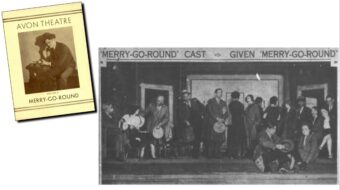
Eugene Gordon’s contributions to American letters are largely forgotten. It is not widely known, for example, that his role as convener and mentor at the Boston-area Saturday Evening Quill Club launched the literary career of Dorothy West, a younger star in the Harlem Renaissance constellation and future editor of the Communist-aligned journal Challenge. Gordon, who lived at the time in Cambridge, edited the club’s annual journal, also called Saturday Evening Quill, which featured the club’s best stories and poems of the year. Its annual appearance in the late 1920s was typically greeted by Black newspapers and literary journals with favorable reviews.
Gordon’s own writings, a handful of brilliant short stories and thought-provoking journalistic pieces, likewise spanned the Harlem Renaissance and the heyday of the New Masses. Born in 1891 in Florida, Gordon moved to Washington in 1912 to attend Howard University (never completing a degree), then to the Boston area just before the U.S. entry into World War I. A brief but highly decorated military service in France preceded the launch of his career as a journalist upon his return to the Boston area. In addition to his role as the Quill Club convener in the late 1920s, Gordon published his essays in popular magazines such as the American Mercury, alongside articles by Clarence Darrow, Emma Goldman, Sinclair Lewis, and Lewis Mumford. 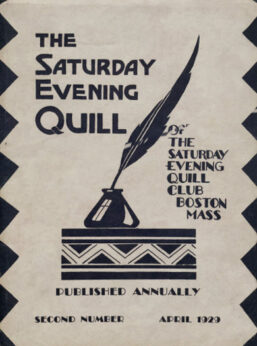
Edited by H.L. Mencken, the American Mercury was an iconoclastic, modernist publication (with no precise political orientation) that frequently featured Black literary voices. In an interview for the “Oral History of the American Left,” more than three decades after they first met each other, former communist Abner Berry remembered Gordon’s association with the American Mercury, which Berry claimed to read voraciously, and described his former comrade as one of “Mencken’s boys” before his arrival at the Daily Worker.
Several other nonfiction essays and short stories included in the newly published The Making of a Black Communist originally appeared in popular mainstream publications such as The Nation, Scribners, and Plain Talk. Several of his stories, including my favorite of all of Gordon’s fiction, “The Agenda,” were published in the National Urban League’s journal Opportunity. The Crisis editor, W.E.B. Du Bois, returned at least one of Gordon’s article manuscripts with some gentle suggestions for revision, but did not publish it.
After the dissolution of the Quill club in 1929, Gordon was among the founders, about two years later, of Boston’s John Reed Club and its short-lived magazine, Leftward. In addition, he began contributing frequently to the Daily Worker, a practice that continued throughout the 1930s and 1940s. His day job was as a copy editor and occasional writer at the Boston Post until 1935, when he traveled to the Soviet Union to take a staff position at the English-language Moscow News. He stayed in Moscow for three years.
In addition to the New Masses and the Daily Worker, Gordon wrote cultural and political analysis for Communist-adjacent publications such as the Soviet Union-based literary magazine International Literature, the International Labor Defense’s monthly Labor Defender, New Theater, and pamphlets for the League of Struggle for Negro Rights and the Workers Library Publishers. This collection’s editor also states that Gordon may have written briefly for the left-leaning National Guardian and attended the 1955 Bandung Conference to gather material.
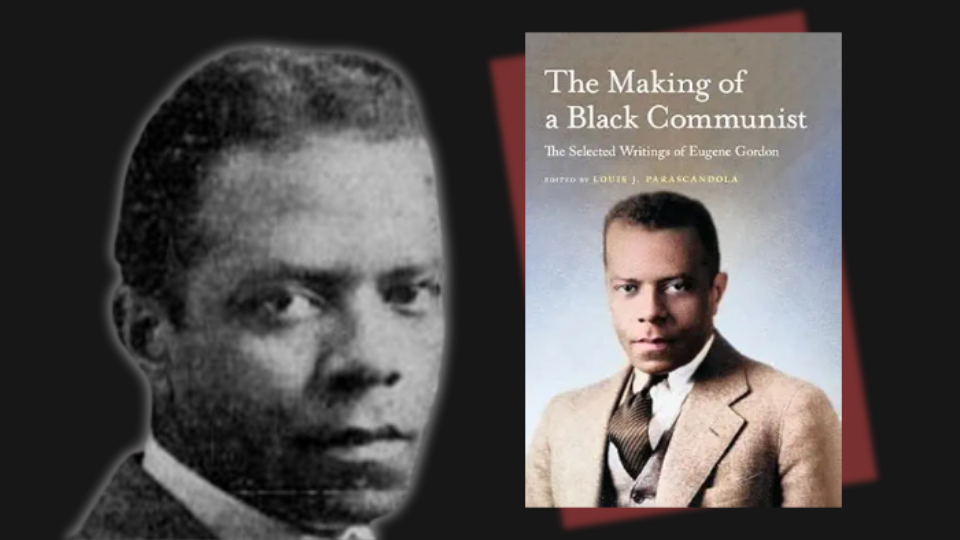
This new book, which gathers several of Gordon’s unpublished autobiographical pieces, a variety of his short stories, and a large quantity of his remarkable journalism, has proven a huge service. The editor, Louis J. Parascandola, has delivered a treasure trove of documents. The book is divided into three major parts: autobiographical writings, fiction, and nonfiction. The autobiographical section is composed of several previously unpublished reflections on Gordon’s youth that are bookended by two strong pieces titled “Southern Boyhood Nightmares” and “How Lt. Gordon Took his Seven Colored Heroes in the Jaws of Death—and Back Again.” In the former, Gordon documents his experiences with racism and the arbitrary violence of racist police and lynchers in New Orleans and Georgia. In the latter, he describes his involvement in the segregated 92nd Division in France, earning that country’s Croix de Guerre for bravery in combat. (The unpublished material that accompanies those two articles in this section is a more detailed treatment of the same subject matter taken from Gordon’s unpublished autobiographical manuscript.)
For this reviewer, the second section, which includes six previously published short stories and two unpublished ones, is the most fascinating. My personal favorite is “The Agenda,” which was published in 1933. That story’s main protagonist is Cass Johnson, a Black Communist Party cadre who has come to Georgia to help organize the Sharecroppers’ Union. His contact is a Euro-American man named Snell, a former KKK member-turned revolutionary labor organizer. Johnson initially regards Snell as a “Georgia cracker gone communist.” Johnson and Snell develop a plan to infiltrate a KKK meeting to learn its plans to stop the integrated sharecroppers’ union drive. The story explicitly aligns the KKK and its racist mentality with monopoly capitalism and emphasizes that the critical leverage working-class people have for their freedom is to destroy white supremacy and monopoly power through a Black-labor alliance of exploited Euro-Americans and Black people.
The main tension in the story, developed strictly from Cass Johnson’s point of view, is whether he can trust Snell to have his back during this operation. The allegorical question is, can Black people generally count on white workers as allies in what will prove to be a dangerous collective struggle? “The Agenda” exemplifies Gordon’s taut short-story writing craft.
The book’s third section is devoted to Gordon’s nonfiction cultural and political essays, spanning the late 1920s through the 1940s, with two unpublished pieces added. One outstanding piece is an essay Gordon co-authored with Cyril Briggs, a former co-founder of the African Blood Brotherhood and a leader in the Communist Party’s Harlem section. Titled “The Position of Negro Women,” it was published as a pamphlet in 1935. Readers interested in tracing the ideological and theoretical origins of “intersectionality” may want to review this essay. While recent scholarship on this has pointed to some of the writings of Communist Party leader Claudia Jones, it is likely that Jones (and Party policy) were influenced by Gordon’s and Briggs’s argument that, because of “the general discriminations against women workers and from [their] identity as [members] of a nationality singled out by the ruling class for special plundering, persecution and oppression,” Black women are “doubly victimized.” The final essay in this section is a treatment of the “Free Angela Davis” movement in the 1970s.

The nineteen essays included in this section do the work suggested by the anthology’s title: how Gordon remade himself into a Communist. The early essays, through about 1930, are polemics against what Gordon sees as faults in Black society, with gentle criticisms of Black leaders and the false hope of assimilation. Gordon’s polemical shift after 1930 is apparent through these writings as his radical development deepens.
The editor’s efforts to compile these stories and articles are to be commended. He is correct that it is unfortunate that Gordon has been “virtually ignored as a literary figure.” And this book will improve the general impression of this undervalued writer. In addition, the editor’s introduction helps construct a narrative and timeline of Gordon’s early life, romantic partnerships, and later life.
There are a handful of noticeable errors in the editor’s “Introduction” worth correcting, however. For example, the editor cites the Soviet non-aggression treaty with Germany in 1939 as a reason many people left the party, referring to Richard Wright as an example. The documentary evidence, however, shows that Wright endorsed the Communist Party’s antiwar policy as late as July 17, 1941, according to his article for The New Masses titled “Not My People’s War.” While this isn’t the place to review the historical complexities and diverse political debates around the run-up to World War II, the Gallup organization reported that most Americans supported Britain and France, but more than nine out of ten shared Wright’s opposition to direct military involvement.
A second significant factual error in the “Introduction” includes the claim that Gordon was a managing editor of A. Philip Randolph’s Messenger magazine in the late 1920s. While Gordon had contributed a handful of “Best of the Editorial” pieces, future arch-conservative George Schuyler was listed as the magazine’s managing editor on its masthead during this time.
A third significant mistake in the “Introduction” is the editor’s flawed attempt to discuss the Communist Party’s treatment of the national question, implying that it could be reduced to the “Black-belt thesis.” A reading of Gordon’s “Negro Novelists and the Negro Masses” and “Black Turn Red” shows Gordon’s nuanced understanding of the actual policy. Other errors, such as the inaccurate claim that Gordon “eschewed race” in his account of the Scottsboro Nine and a prominent reference to the League of Struggle for Negro Rights as the League of Struggle for Equal Rights, are noticeable errors in the text.
Worthy of careful study, this book is a commendable addition to any library.
The Making of a Black Communist: The Selected Writings of Eugene Gordon
Edited by Louis J. Parascandola
Amherst: University of Massachusetts Press, 2025. ISBN: 978-1-68575-148-7
We hope you appreciated this article. At People’s World, we believe news and information should be free and accessible to all, but we need your help. Our journalism is free of corporate influence and paywalls because we are totally reader-supported. Only you, our readers and supporters, make this possible. If you enjoy reading People’s World and the stories we bring you, please support our work by donating or becoming a monthly sustainer today. Thank you!
CONTRIBUTOR