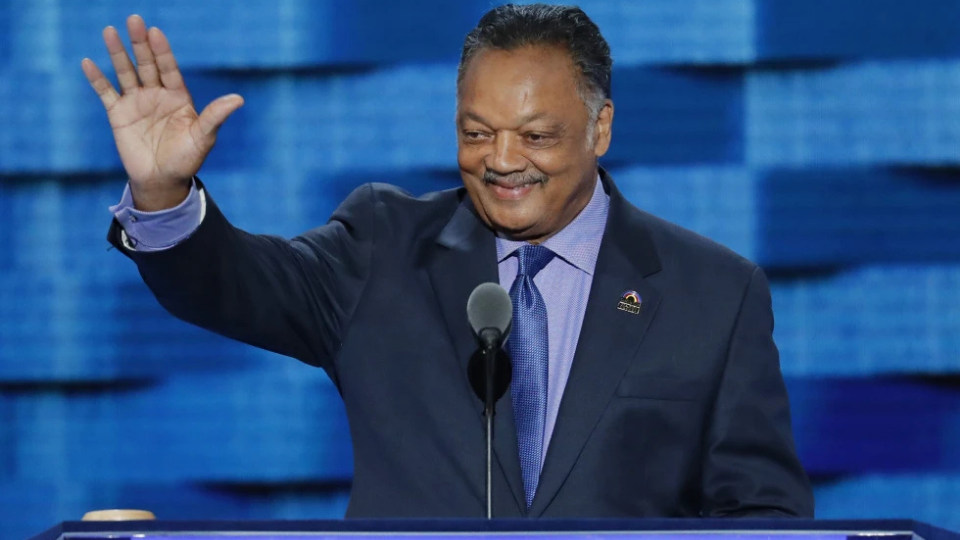
The Rev. Jesse L. Jackson, a close ally and follower of the Rev. Martin Luther King Jr., who led the Civil Rights movement for decades after King was assassinated, has died at the age of 84. Doctors confirmed he had a rare neurological disorder. The iconic leader died in his home in Chicago, where he was surrounded by his family.
As a longtime civil rights leader based in Chicago, Jackson openly wept tears of joy on national television as thousands gathered in the city’s Grant Park to celebrate the election of Barack Obama as the first African-American president of the United States. It was a victory made possible in large part by the struggles led by Rev. Jackson throughout most of his life.
Not the least of those contributing factors was Jackson’s own two runs for the presidency.
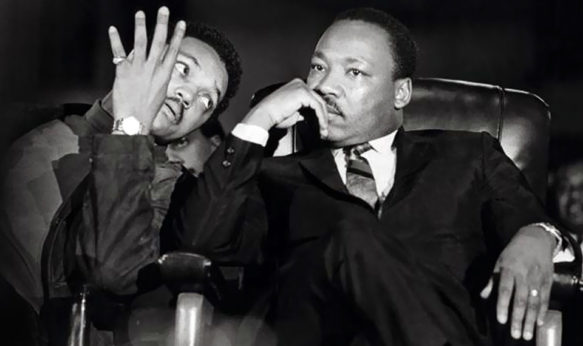
Joe Sims, national co-chair of the Communist Party USA, said that “Rev. Jackson was an outstanding freedom fighter and champion for independent politics generally and the election of the U.S.’s first Black president in particular. Jackson’s legacy extends internationally from the fight for peace and against nuclear war to defeating apartheid in South Africa. We dip our flag in his honor.”
Jackson was uniquely able to connect the struggle for civil rights and racial justice to the battles fought by working-class and poor people generally. Wherever workers or poor people of any race were being denied a voice, he was there advocating for them and sounding out the demands of the oppressed.
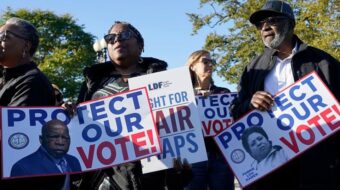
His leadership has particular relevance for today on so many fronts. In a nation led by a president trying to destroy free elections, Jackson’s fight until almost the time of his death for voting rights will always be remembered. Much of the activity of voting rights advocates today reflects the continuation of the fights for voting rights that he led.
It is no accident that a ruling class and billionaires determined to take from working people and give to themselves are fighting to grab things Jackson fought for all his life. Those things include jobs that pay living wages, schools that really educate all children, and health care as a human right.
He took the fight for equality wherever he could. The movements he led became so powerful that even some corporate leaders were unable to ignore them. Some even started boasting about how they were opening up their hiring processes to people whom they previously had locked out.
He fought hard to establish cultural norms that recognized the worth of all people, regardless of their economic circumstances. Typical of his support for people of all racial backgrounds and his special focus on youth was his frequent shouting out of his favorite slogans: “I am Somebody, I may be poor, but I am Somebody; I may be young; but I am Somebody; I may be on welfare, but I am Somebody.”
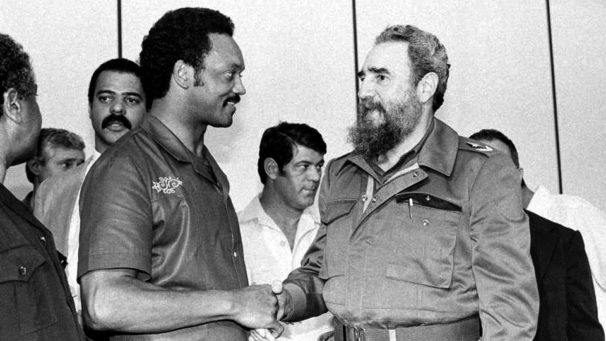
“Our father was a servant leader—not only to our family, but to the oppressed, the voiceless, and the overlooked around the world,” the Jackson family said in a statement posted online. “We shared him with the world, and in return, the world became part of our extended family.”
Jackson was never afraid to extend his causes out all over the world. He was never afraid to join with people who were not favored by much of the political establishment: He worked extensively with the civil rights activist Harry Belafonte, who had been blacklisted in the McCarthy era. Their joint work resulted in the placement of a plaque in honor of Nelson Mandela in Yankee Stadium’s Monument Park in 2014.
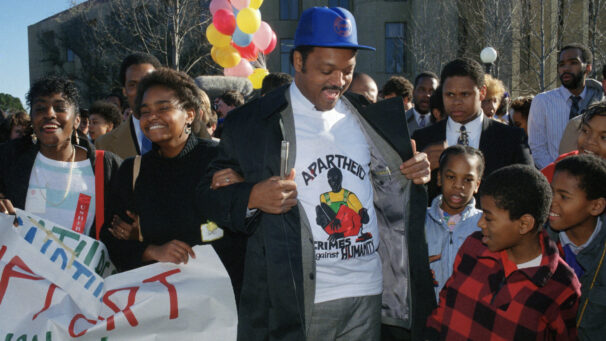
In 2021, he was active in the battles protesting police violence that resulted, among other things that year, in the death of George Floyd, who was murdered by a Minneapolis policeman in 2020.
Going back to his earlier life, we saw Jackson, in 1965, joining the voting rights march King led from Selma to Montgomery. He then went to Chicago to launch Operation Breadbasket, a Southern Christian Leadership Conference effort to pressure companies to hire Black workers.
In 1971, Jackson launched Operation PUSH, based on Chicago’s South Side, successfully getting companies to hire Black workers and registering massive amounts of voters not just in Chicago but all over the country.
In his presidential race in 1988, Jackson won in 13 primaries. Those victories were seen as critical to proving that Black people could run for high office in the United States, which, of course, Barack Obama proved later.
Jackson’s presidential races were taken seriously abroad. The press in East Germany, the then German Democratic Republic, for example, wrote about his campaign and the issues he raised. Jackson himself said his campaign paved the way for much more open political activity, not just by Black people but for women, too.
The loss suffered because of his death may never be able to be fully measured.
We hope you appreciated this article. At People’s World, we believe news and information should be free and accessible to all, but we need your help. Our journalism is free of corporate influence and paywalls because we are totally reader-supported. Only you, our readers and supporters, make this possible. If you enjoy reading People’s World and the stories we bring you, please support our work by donating or becoming a monthly sustainer today. Thank you!
CONTRIBUTOR