A fuel tanker called the Sea Horse is crossing the ocean toward Havana. It is carrying about 200,000 barrels of diesel fuel. It is expected to arrive in early March.
That ship matters for one simple reason. In Cuba today, fuel is not about comfort. It is about whether the lights stay on. It is about whether families can cook. It is about whether hospitals work, trash gets picked up, buses run, and the dead are buried with dignity.
People are watching this ship because pressure is closing in. And that pressure hits ordinary families first.
The Sea Horse is coming from Russia, a longtime ally of Cuba. Its voyage carries political weight. Many are watching to see whether the shipment will reach Havana without interference and whether Moscow will stand by the delivery despite U.S. pressure.
For decades, the United States has enforced an embargo on Cuba and added layer after layer of sanctions. In recent weeks, pressure around fuel has grown even stronger.
On January 29, 2026, the White House issued an executive order declaring a national emergency related to Cuba. The order allows the U.S. to punish countries that provide oil to the island, even indirectly. In simple terms, not only Cuba can be targeted. Any country that helps Cuba buy or ship fuel can face penalties.
The impact was immediate. Mexico, a key supplier after Venezuelan shipments slowed, said it has stopped sending oil to Cuba while it weighs the risk of retaliation.
Reuters has described this as an oil chokehold. Fewer deliveries from longtime partners, combined with tighter sanctions, have deepened shortages and blackouts.
Washington says this pressure is meant to bring political change. But when you squeeze a country’s fuel supply, you do not squeeze leaders first. You squeeze everyone.
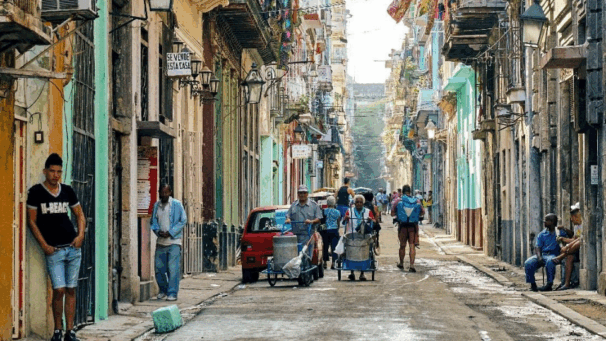
I have been in contact with residents in Havana and other provinces who asked not to be named. Their accounts match what international news outlets have reported.
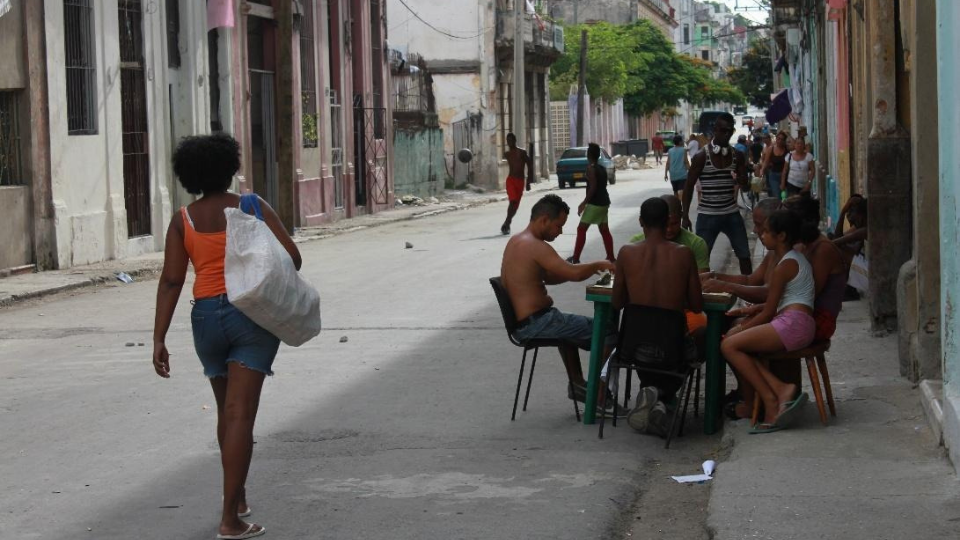
They describe blackouts that last most of the day in some areas. People get only short windows to charge a phone or cook a meal. Power plants are old. The grid cannot get the fuel or parts it needs.
Businesses close early. Workers lose hours. An eight-hour day cannot run without electricity.
When diesel runs short, garbage trucks stop. Trash piles up. Mosquitoes spread. Sanitation declines.
When fuel and electricity fail, health care suffers. Hospitals face outages. Ambulances struggle to refuel. Flights bringing medical supplies face limits.
Shortages also change behavior. Informal markets grow. Corruption pressure rises. Families search for medicines that used to be easier to find. Low wages and thin supply strain workers inside already stressed institutions.
Even in death, shortages show. Funeral services are limited. Transport is scarce. Materials are poor. These are not abstract numbers. They are daily life when a nation’s energy supply is squeezed.
This does not mean Cuba’s government has done everything right. It means something simpler. When outside pressure targets fuel, banking, and shipping, every weakness inside the country becomes harder to fix.
Today’s crisis lands on a country that has lived under U.S. economic limits for more than sixty years. In 1962, President John F. Kennedy formalized a trade embargo between the United States and Cuba.
Over time, that embargo grew into a wider system of financial rules and penalties. Laws such as the Helms-Burton Act allow lawsuits against foreign companies that invest in certain Cuban property. Even when food or medicine is allowed on paper, banks often refuse to process payments because they fear fines. Companies step back entirely to avoid risk.
Each year, the United Nations General Assembly votes by a wide margin to condemn the embargo. The votes are not binding, but they show how many countries believe broad economic punishment hurts ordinary people more than it changes governments.
The debate about reform inside Cuba is real. People raise concerns about efficiency, corruption, and planning.
But reform requires trade, spare parts, financing, and stable energy. Fixing a national power grid requires contracts and reliable shipping. When those channels are blocked or threatened, reform becomes harder, not easier.
Sanctions do not stand alone. They make internal problems worse and shrink the space for change.
There is a larger question that rarely gets asked.
Critics argue that socialism cannot sustain itself without external pressure. If that were true, why would such extensive sanctions be necessary?
Economic systems grow under real-world conditions. When allowed to trade and invest in a stable setting, some socialist-oriented countries have adapted to their national needs and grown, as seen in China and Vietnam. That broader debate deserves its own space and will be explored more fully in a future article.
You do not have to agree with every decision made by Cuba’s leaders to see what is happening.
But you should not confuse an economy under siege with a failed state.
A failed state stops trying to serve its people. Cuba is still trying through clinics, schools, and rationing meant to protect basic services. What is failing is the ability to secure fuel, parts, financing, and normal trade under an expanding blockade.
Cuba is not a failed state. It is a strangled one.
And so we return to the Sea Horse.
Two hundred thousand barrels of diesel is more than eight million gallons of fuel. That shipment could keep power plants running for days. It could slow the blackouts. It could move buses and ambulances. It could keep hospital machines working and water systems pumping.
It buys time.
It gives families a brief moment of relief.
But it does not break the grip around the island.
One ship cannot undo decades of policy.
The Sea Horse is not a solution. It is a symbol.
It shows how daily life in Cuba now depends on whether a tanker appears on the horizon. It shows what happens when energy becomes a tool of pressure.
A nation should not have to wait for a ship to survive.
As with all news-analysis and op-ed articles published by People’s World, the views reflected here are those of the author.
We hope you appreciated this article. At People’s World, we believe news and information should be free and accessible to all, but we need your help. Our journalism is free of corporate influence and paywalls because we are totally reader-supported. Only you, our readers and supporters, make this possible. If you enjoy reading People’s World and the stories we bring you, please support our work by donating or becoming a monthly sustainer today. Thank you!
CONTRIBUTOR