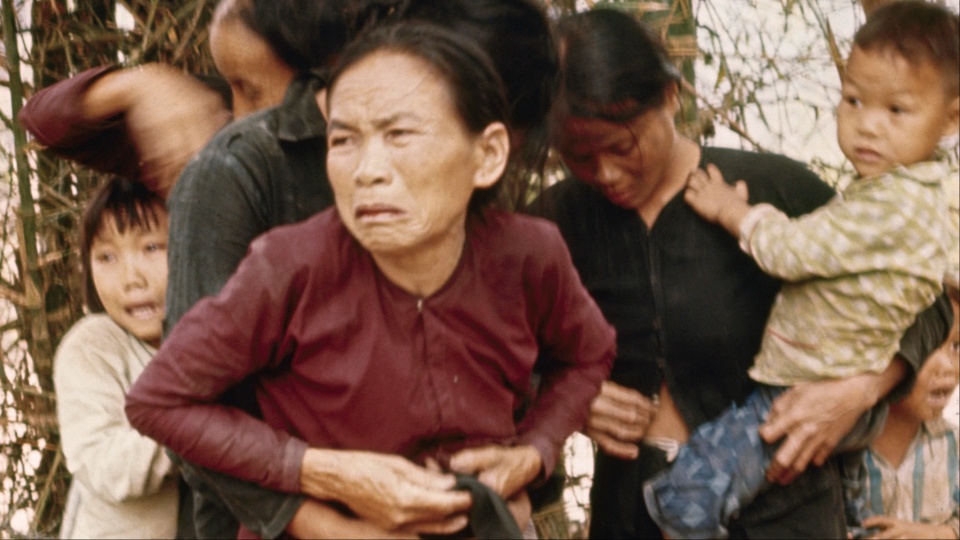
How little we’ve learned. Exactly fifty‑eight years ago, on March 16, 1968, the U.S. Army committed one of the most horrifying war crimes in American history. In the hamlet of My Lai, within the Sơn Mỹ commune of Quảng Ngãi Province, South Vietnam, troops of Charlie Company, 1st Battalion, Americal Division, slaughtered in cold blood hundreds of unarmed Vietnamese civilians—504 men, women, and children, including 21 infants under the age of two.

The soldiers, sent on a “search and destroy” mission, had been primed by their commanders to expect fierce Viet Cong resistance. Instead, due to faulty intelligence, they found no enemy combatants at all—only elderly villagers unable to flee, mothers clutching babies, and children too young to understand what was happening. But Charlie Company, jacked up with warrior ethos and seeking vengeance for booby traps encountered elsewhere, systematically murdered them.
Under the command of Captain Ernest Medina, with direct orders from Lieutenant William Calley, soldiers fired point‑blank into crowds of villagers. Families were forced into groups and executed, some with automatic weapons, others with grenades and small‑arms fire. At one point, for the sake of efficiency, dozens of civilians were herded into an irrigation ditch. As terrified children pressed against parents in a screaming, struggling mass, their bodies were ripped apart by high‑velocity, full‑metal‑jacket rounds, until the ditch was filled with corpses suspended in blood‑red water. Survivors were shot as they crawled out from beneath the dead.
Homes of the murdered were torched, turning the village into a hellscape of smoke and ash. Grenades were thrown into the village’s makeshift bomb shelters. Some victims—among them women holding children—were bayoneted at close range; the crying infants were stabbed where they lay. At least 20 Vietnamese women and girls were raped or gang‑raped and sexually tortured.
The methodical massacre went on for hours. At midday, the Americans calmly took a lunch break, after which they reloaded and went back to killing.
* * * * *
In 2016, during a Fulbright visit to Ho Chi Minh City (Saigon), where I taught a five‑week course on American Literature of the Vietnam War, I traveled to the site of the My Lai Massacre. As a guest professor at Ho Chi Minh City Open University, I had been warmly welcomed by students and faculty. But I’d read enough about the country to know that the comforting, largely pro‑American vibe I’d felt in the former Saigon was not felt everywhere. And I wanted to stop imagining a place I’d been teaching about for years.
On a weekday in April, I took a 90‑minute early‑morning flight up the coast to the city of Da Nang, where the first U.S. Marine combat troops had gone ashore at Red Beach in March 1965. From the Da Nang airport, I hired a driver to take me 95 miles south to the My Lai site near the area of Sơn Mỹ, where I spent a lonely day of near‑total silence. I took many pictures, but almost the only words I spoke in the tranquil rural commune were in answer to the question, “What country?” posed by a somber young woman at the gate of the nearly empty memorial: “United States,” I said.
Saying these words wasn’t easy; I had hesitated out of a sense of shame. Many Americans may feel that same hesitation now, in response to the negligent, horrific bombing of the Shajareh Tayyebeh girls’ elementary school in Minab, southern Iran, reportedly killing 175 students and teachers.

“Stupid rules of engagement interfere with winning,” says “Secretary of War” Pete Hegseth, calling for “maximum lethality, not tepid legality.” In a March 14 column in the New York Times, Nicholas Kristof warned that the United States is drifting away from respect for international law toward an era in which “anything goes.”
Truthfully, what happened at My Lai was unusual only in its mass scale. A culture of top‑down tolerance for civilian killings existed throughout the Vietnam War, and it undeniably exists now.
As we enter what may be yet another era of mass civilian death (hundreds of thousands have already died of disease and malnutrition as a result of Trump’s elimination of foreign aid funding), the oft‑forgotten atrocity in Quảng Ngãi Province feels newly meaningful. Here are a handful of photos, taken ten years ago, that invite contemplation—of My Lai, of Minab, and of the world U.S. imperialism is now making.


We hope you appreciated this article. At People’s World, we believe news and information should be free and accessible to all, but we need your help. Our journalism is free of corporate influence and paywalls because we are totally reader-supported. Only you, our readers and supporters, make this possible. If you enjoy reading People’s World and the stories we bring you, please support our work by donating or becoming a monthly sustainer today. Thank you!
CONTRIBUTOR