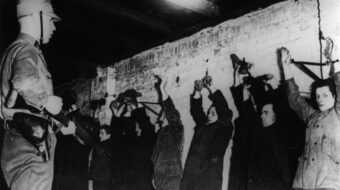
They say there are no atheists in fox holes, but it isn’t quite true. Like all theology, atheism is its own confession – a statement of faith about what one trusts when they face the threat of nonexistence. Whatever you trust, war has a way of bringing it to the surface. If you’re in the foxhole, you consider the eternal fate of your own soul. If you’re watching war upend the world around you, you may find yourself asking the questions of public theology.
In her “Believing” newsletter, Lauren Jackson asks this week, “But what about when a whole society is facing a crisis— war, economic collapse, political upheaval, revolution? What voices and sources help us navigate our collective struggle?”
Her answer: “That’s where public theology comes in.”
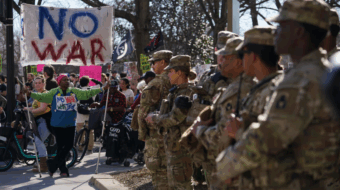
Jackson is not alone. On CNN Sunday night Anderson Cooper’s “The Whole Story” devoted a full hour to “Christian nationalism,” the political movement that misuses Christian faith to justify the current illegal war in the Middle East and other policy violence of the Trump regime.
As preachers who teach the Christian faith, we insist it’s a misnomer to call this movement “Christian” when it’s led by people who are distorting our faith. But sociologists have been tracking this movement’s impact for decades by using the term, and the data is helpful: we know the number of people who embrace this heresy in the United States hasn’t actually increased over the past decade. It is a minority position—two thirds of Americans reject it, as do most Christians. (Again, it isn’t Christian at all). But the latest polling from PRRI shows that more than half of Republicans embrace this ideology, and its influence in our public life has been supercharged by Trump’s rise to power.
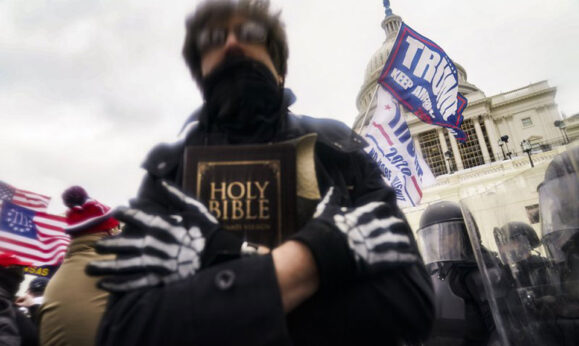
Religious nationalists distort both Christianity and Judaism in American public life to persuade people who feel like they are losing control that Trump is the strongman who can save them. In the face of so many uncertainties, they have presented Trump as “God’s chosen one” to assure people that everything is going to be alright.
As crazy as that might sound to people outside of the wrap around culture this movement creates, it is an important story about public theology. Life has been hard for many Americans for a long time, and the Democratic Party must take responsibility for largely ignoring whole parts of the country as everyday people watched the American Dream fade. As the gap between the super-rich and everyone else widened, lots of Americans asked the basic questions of public theology. Religious nationalism is little more than a Tylenol to knock the pain of the dread so many people feel as they struggle to raise kids in a society where they can’t figure out how to make ends meet themselves. But it’s something. So many people are desperate for a public theology to tell them where they can look for real hope.
This is why, as grateful as we are that CNN and others have tried to shine a light on so-called “Christian nationalism,” we continue to insist that exposés are not enough. Liberals have made this same mistake since the rise of the religious right in the 1970s. Shocked that anyone could be captivated by this worldview, they naively assume that shining a light on the problem will make it go away. It will not. Because people who’ve already been drawn into this movement will be told by leaders they trust that liberal journalists are looking down on them, and the majority of Americans who already reject this ideology will not be compelled to see those who’ve been deceived as fellow Americans who are being exploited by a bad public theology.
The answer to bad public theology isn’t simply a light that exposes the deception (though we need that now, as we always have). Bad theology demands a better public theology, which takes people’s faith commitments seriously, draws on the traditions that have informed moral movements for the common good, and kindles a fire to draw people together in a moral movement to reconstruct democracy. Humans need more than the light of reason. We need a fire to bring us together.
The data tell us that this religious nationalist movement has not grown in recent decades, despite incredible investments from wealthy donors who depend on it to elect politicians who support their low taxes. Why? Because the people exploited by this heresy are always leaving the movement. The fastest growing religious group in American life in recent decades has been the “nones”—people who don’t embrace any religious tradition—at least in part because many who’ve grown up in churches and synagogues captive to religious nationalism have fled those spaces. But where can they go to answer the big questions of public theology that do not go away?
Where are people finding a public theology that can sustain them and spark a prophetic imagination for a better future?
Three years ago, we launched the Center for Public Theology and Public Policy at Yale Divinity School because we wanted to cultivate a space for people to access the vast resources of our moral and religious traditions to answer these questions. It’s a gift to work with students who are eager to not simply critique religious nationalism but to also learn from the moral movements that have helped reconstruct democracy and promote the common good. Out of this work, we convene a national public theology conference in the spring of each federal election year on the moral issues of this election. We’re preparing now for this year’s gathering, April 12-14, in New Haven. (If you’re thinking about these questions of public theology, we’d love for you to join us!)
Here’s what we’ve learned: religious nationalism isn’t new in American public life. Our colleague Phil Gorski calls it a “deep story”—a trope Americans have come back to again and again. When the headache is bad enough, people will take whatever they can get to ease the pain. But every expansion of democracy we have experienced—every stride toward a more perfect union—has been fueled by moral movements that cultivated the fire of a better public theology. The abolitionists certainly exposed the hypocrisy of the preachers who Frederick Douglass called “five thousand dollar divines.” But they also drew on the Hebrew prophets, articulated a moral vision for freedom, built a moral movement, and called people to make a choice. No doubt, Ida B. Wells waged a journalistic crusade to expose the lies used to justify lynching. But she also built women’s suffrage and civil rights organizations, rooted in the moral vision of the Black Social Gospel that her Chicago pastor, Rev. Reverdy Ransom, preached every Sunday morning – and several nights a week during revivals. This was the theological imagination that animated the Civil Rights Movement and called people into a Second Reconstruction of American democracy.
The crisis of this moral moment is a crisis of public theology. Religious nationalism animates the movement that has plunged America into the throws of authoritarianism. God knows we need journalism that tells the truth about where we are. But that is not enough. If we learn from our past, we know that moments when people are hungry for public theology are also pregnant with potential for transformative change. We need a Third Reconstruction in America, and that will require a new generation of public theologians to tap the best of our traditions and help us imagine something better together.
The good news isn’t only that those wells are deep. It’s also that many people are already drawing from them, bringing faith into public life in ways that offer bold hope for a better tomorrow.
People of faith and moral conscience are linking arms with neighbors to resist authoritarianism this Saturday, March 28, at No Kings Day protests in more than 3,100 communities. Find the No Kings Day closest to you.
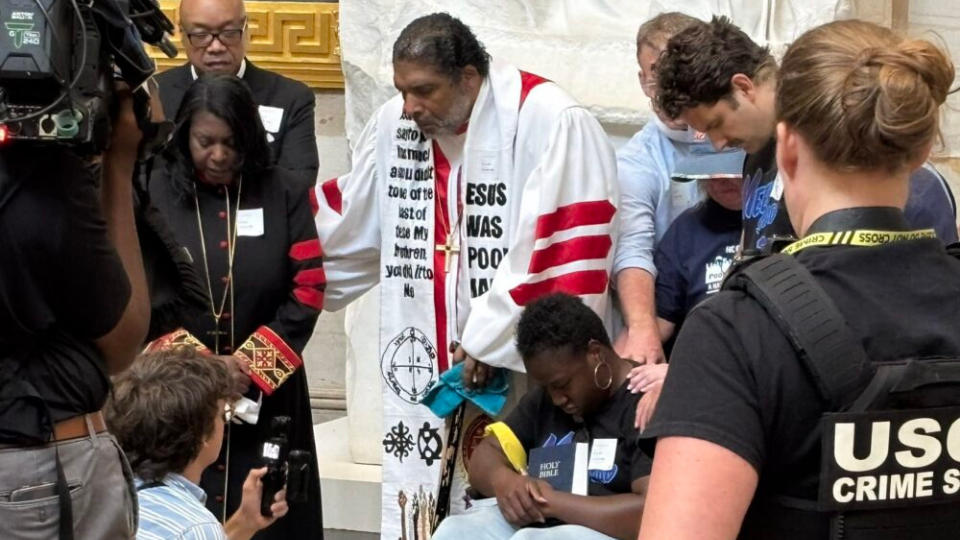
Next Monday, March 30, Repairers of the Breach is coordinating Moral Mondays Against Unholy War in Washington, DC, and in states across the country. Register here to join the Moral Monday closest to where you are.
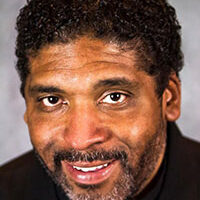
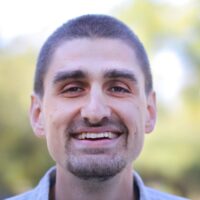
Our Moral Moment w/ Bishop William Barber & Jonathan Wilson-Hartgrove
As with all news-analysis and op-ed articles published by People’s World, the views reflected here are those of the author.
We hope you appreciated this article. At People’s World, we believe news and information should be free and accessible to all, but we need your help. Our journalism is free of corporate influence and paywalls because we are totally reader-supported. Only you, our readers and supporters, make this possible. If you enjoy reading People’s World and the stories we bring you, please support our work by donating or becoming a monthly sustainer today. Thank you!
CONTRIBUTOR