In 1607, an English court ruled that babies born in Scotland after it unified with England were born the English king’s “subjects,” with all the rights of Englishmen. Well into the 19th century, standard American and British legal treatises included, as basic law, the 1607 case’s principle of “birthright citizenship.”
Donald Trump is now attempting to overturn more than four centuries of settled law. Based on a recent Supreme Court argument, he will likely not succeed.
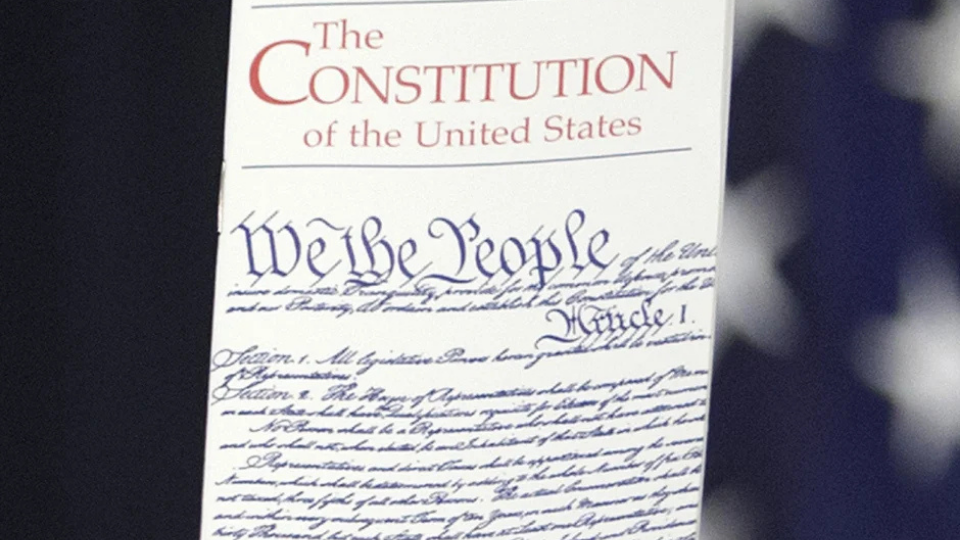
The United States first adopted a national rule of birthright citizenship after the Civil War. In 1868, mostly to overturn a Supreme Court decision that no one of African descent could qualify as an American citizen, Congress passed the 14th Amendment. It explicitly confers American citizenship on any person “born or naturalized in the United States, and subject to the jurisdiction thereof.”
Until 2025, American courts and presidents have consistently held that the “citizenship” clause means what it says. For example, in 1898, in the case of Wong Kim Ark, the Supreme Court ruled that the 14th Amendment “reaffirmed in the most explicit and comprehensive terms” the “fundamental principle of citizenship by birth within the dominion.” The court only recognized two exceptions: Children of foreign enemies in hostile occupation of the child’s birthplace and children of foreign diplomats.
In 1940, and again in 1952, Congress enshrined birthright citizenship in federal statutes.
Despite these federal laws and four centuries of legal history, on Jan. 20, 2025, President Donald Trump issued an executive order that “United States citizenship does not automatically extend to persons born in the United States.” It specifically excludes babies born when their parents were here illegally. Trump claims only those legally in the United States are “subject to” American jurisdiction.
A standard law dictionary defines “jurisdiction” to mean a court’s “power and authority” to “pronounce the sentence of the law, or to award the remedies provided by law.” So far, every court that’s considered Trump’s executive order has declared it invalid. One judge called it “blatantly unconstitutional.”
In 2025, the Supreme Court ducked the issue. It ruled that—whatever their ruling on birthright citizenship—other courts had no authority to apply their decisions beyond those who brought the case. This year, on April 1, in Trump v. Barbara, birthright citizenship returned to the Supreme Court.
For the federal government, Solicitor General D. John Sauer argued that “jurisdiction,” in the 14th Amendment and the 1940 and 1952 statutes, doesn’t mean what’s in law dictionaries. He distinguished between what he called “political jurisdiction,” the type that confers citizenship, and “regulatory jurisdiction,” the type involved when governments regulate behavior, as with criminal law.
For Sauer, “political jurisdiction” requires “allegiance,” a “reciprocal relationship,” which Sauer claimed exists only when someone lives somewhere legally and with intent to remain “permanently.” It excludes temporary visitors or anyone lacking legal immigration status.
No justice bought Sauer’s distinction. As Justice Neil Gorsuch pointed out, no one debating the 14th Amendment in 1868 limited its citizenship clause in the way Sauer suggested. And if intent to remain permanently matters, whose intent counts—the mother’s or the father’s? Besides, if intent to remain is key, why should it matter whether a baby’s parents are here legally or illegally?
The justices raised other practical problems with a line based on the parents’ intent and on legal residence. Asked Justice Amy Coney Barrett, would pregnant women have to sit for an interview as to their intent, or bring proof of legal residence to the delivery room? What if, at the baby’s birth, hospital workers don’t even know the parents’ identity?
Sauer could only respond by claiming intent to remain is “objectively verifiable,” and suggesting that, when their baby is denied citizenship, new parents could appeal.
What about Sauer’s claim that citizenship requires “allegiance”? Justice Elena Kagan called that claim “technical” and “esoteric,” based on “obscure sources.” Justice Sonia Sotomayor noted that even visitors, when in the United States, owe allegiance to our laws.
To Sauer’s claim that allegiance is a “reciprocal relationship,” Justice Ketanji Brown Jackson argued that even travelers have that relationship with the place they find themselves. Just as foreign travelers must obey local law, they can count on local law enforcement to protect them.
Chief Justice John Roberts was also skeptical about Sauer’s argument. He saw Sauer as trying to expand the long-recognized birthright-citizenship exceptions, which the Chief Justice called “tiny” and “idiosyncratic,” to cover a much larger category of children.
Added Justice Coney Barrett, the standard exceptions all constitute “natural outgrowths” of the general rule. All deal with people outside the reach of American authority and within the jurisdiction of another country. The children covered by the standard exceptions have legal immunity from the local government. Diplomats’ children can literally get away with murder.
By contrast, ordinary criminal defendants, just because they were in the United States temporarily or without legal status, can’t claim their status allows them to escape American jurisdiction.
Sauer echoed Donald Trump’s claim that virtually no other country still has birthright citizenship. Not only is that false—around three dozen still offer birthright citizenship—but, as Justice Brett Kavanaugh pointed out, American courts interpret American law based on American precedent and history. What other countries do is irrelevant.
And when Sauer warned that an increased threat of illegal immigration makes this a “new world,” the Chief Justice retorted that, even if it’s a “new world,” it’s “the same constitution.”
The justices also questioned Sauer’s analysis of the longtime understanding, since its 1868 ratification, of the 14th Amendment, of the Supreme Court’s 1898 decision in the Wong Kim Ark case, and of what Congress meant in its 1940 and 1952 laws.
Justice Kagan noted even Sauer’s brief concedes the government’s taking a “revisionist” position regarding a “substantial part of our history.” Wondered Justice Gorsuch, given the multiple expansive readings of Wong Kim Ark and of the amendment between 1868 and 1940, shouldn’t the court infer that the 1940 Congress incorporated those readings?
Indeed, because the Supreme Court prefers to base decisions on statutes, not the Constitution, both Justices Gorsuch and Kavanaugh suggested the court should rule against Trump’s order using the 1940 and 1952 federal statutes, instead of the 14th Amendment.
Warned of the Trump order’s potentially harmful real-world effects—including those in a brief filed by the AFL-CIO—Sauer reminded the justices that Trump proposes his order apply only to babies born after the court’s decision, not to current citizens. But, as Justice Sotomayor noted, the logic of Sauer’s argument would permit any president, even Trump, to start stripping away citizenship from current citizens.
Even Justice Samuel Alito warned about the “humanitarian problem” raised by expelling immigrants who have gone “through the proper procedures,” and who have “made a permanent home here and have established roots.”
Seeking to overturn the order, Cecillia Wang, ACLU legal director and herself the daughter of Taiwanese immigrants, picked up on this point. Ruling for the government could jeopardize the status of “millions of Americans,” who thought they and their ancestors were citizens, she said.
A decision is expected by July 4.
We hope you appreciated this article. At People’s World, we believe news and information should be free and accessible to all, but we need your help. Our journalism is free of corporate influence and paywalls because we are totally reader-supported. Only you, our readers and supporters, make this possible. If you enjoy reading People’s World and the stories we bring you, please support our work by donating or becoming a monthly sustainer today. Thank you!
CONTRIBUTOR