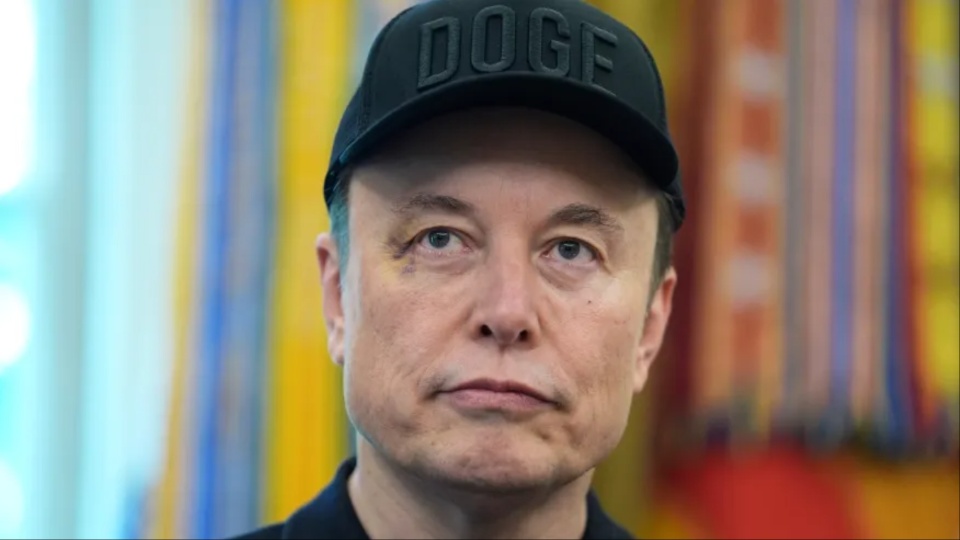
WASHINGTON—DOGE and Trumpite multibillionaire Elon Musk lost. Workers, AFSCME, and the American Libraries Association won.
The victory for workers comes in the form of a restoration of the Institute for Museum and Library Services (IMLS). Its $266 million budget and 75 employees were eliminated by Musk’s so-called Department of Government Efficiency a year ago. IMLS makes grants funding libraries and museums around the country.
And unlike previous DOGE losses, higher courts won’t be able to reverse this one because the Trump administration threw in the towel and agreed, in court, to restore the agency, its staff, and its grants.
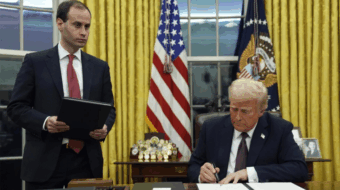
But there is a catch that the pact the two sides signed doesn’t mention, though: The new head of IMLS is a Trump political appointee, Keith Sonderling, who’s also deputy Labor Secretary in the short-staffed administration. He wants all 75 returning professional staffers to tailor library and museum grants to fit the MAGA agenda.
Still, the win is notable. The Trump Justice Department signed off on it in U.S. District Court in D.C. on April 9. It also settled an anti-DOGE lawsuit involving the institute, filed by 21 state Attorneys General in U.S. District Court in Rhode Island.
The D.C. win occurred almost precisely a year after AFSCME and the American Libraries Association sued the government after Musk’s DOGE raided the institute. Last April, Musk’s staffers gave the workers half-an-hour to clean out their desks. It cut off their e-mails, collected their security credentials, and evicted them.
Even more importantly, DOGE cut off all pending federal grants to museums and libraries in every state. The impact was huge, because IMLS’s budget exceeds that of more well-known National Endowment for the Arts ($210 million).
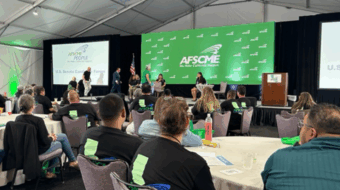
It was the support for the libraries and museums, many of them unionized by AFSCME, which got that union involved in the court case. It’s now celebrating the win.
The settlement restores all the institute’s grant money, which Congress previously appropriated. It mandates the institute, even under its new management, to solicit grants for fiscal 2026, which is almost half over.
That’s where Sonderling enters the picture. He sent out grant solicitation letters which, past IMLS officials have said, rang alarm bells. Money that went to libraries for new computers and training, or to museums to refurbish exhibits, would need to ideologically conform to Trump’s agenda.
Grants to museums must “foster an appreciation for the country through uplifting and positive narratives,” Sonderling wrote. For guidance, he told applicants about a Trump executive order that attacked the much larger and internationally known Smithsonian Institution for “divisive, race-centered ideology” and for focusing on “how bad slavery was.”
Another Trump order Sonderling wants the libraries and museums to follow would end “the anti-Christian weaponization of government.” A third order, Making Federal Architecture Beautiful Again, holds up specific Greco-Roman style architecture—preferably grandiose—as eligible for money.
None of this was in the agreement which Trump’s Justice Department, AFSCME, and the American Libraries Association signed in federal court.
Nevertheless, AFSCME President Lee Saunders, Library Association President Sam Helmick, and Skye Perryman, head of Democracy Forward, the pro bono lawyers group which aids unions and other organizations in their battles against the administration, all cheered.
“Today is a victory for every community that depends on libraries and museums as gateways to opportunity, learning, and connection,” Saunders said. “As the nation’s largest union of cultural workers, AFSCME members fought tirelessly to protect this essential institution, which supports the vital services we provide to communities across the country.”
“When the administration began shuttering IMLS last year, it set off a chain reaction. Libraries across the country started cutting hours, staff, and services people rely on: After-school programs, support for job seekers and connection for older adults,” said Helmick. “This settlement protects life-changing library services for communities across the country. ALA will continue to defend every American’s freedom to read and learn.”
“Once again, this is proof that litigation works,” said Perryman. “Libraries and museums are pillars of our democracy. They expand opportunities, safeguard access to information, and strengthen communities. This settlement ensures the Trump-Vance administration’s unlawful attempt to dismantle a congressionally mandated agency will not prevail. We are honored to protect the public infrastructure that keeps our communities informed, educated, and connected.”
We hope you appreciated this article. At People’s World, we believe news and information should be free and accessible to all, but we need your help. Our journalism is free of corporate influence and paywalls because we are totally reader-supported. Only you, our readers and supporters, make this possible. If you enjoy reading People’s World and the stories we bring you, please support our work by donating or becoming a monthly sustainer today. Thank you!
CONTRIBUTOR