Workers in the U.S. and around the world paid the price for a war that, by its own ceasefire terms, ends up restoring much of what existed before the first bombs fell, leaving many questioning why the war against Iran was even launched in the first place.
Not everything is like it was in the pre-war world, though. Costs are up, incomes are down, and some of the biggest weapons, energy, and finance corporations are far richer than when the war started.
The United States and Iran announced a framework agreement this week to end more than 100 days of war, with President Donald Trump declaring on social media that the “Deal with the Islamic Republic of Iran is now complete” and ordering the reopening of the Strait of Hormuz and the lifting of the U.S. naval blockade on Iranian ports. Negotiations over details continue, but a formal signing is set for June 19 in Geneva.
A draft 14-point memorandum of understanding, reported by CNN and Bloomberg from sources who reviewed the text, shows just how little the agreement actually locks down, however.

Both sides pledge an immediate and permanent end to hostilities—including the requirement that Israel halt its aggression in Lebanon. But on Trump’s stated explanation for why he launched the war—Iran’s nuclear program—the text changes nothing for now: Iran will maintain the status quo on its nuclear energy research during the talks, while the U.S. agrees not to impose new sanctions or add forces to the region.
Iran reaffirms its commitment, which it has long held, not to build nuclear weapons under the Nuclear Non-Proliferation Treaty. A $300 billion development and reconstruction fund is dangled for Iran, but only if it meets future commitments.
Negotiations over the nuclear program are pushed to a 60-day window after signing. This is the same issue that was, in one form or another, already on the table in talks before the United States and Israel launched their joint attack on Iran on Feb. 28.
That timeline matters. The Strait of Hormuz, through which roughly a fifth of the world’s oil and liquefied natural gas typically passes, was not closed before the war. Iran moved to restrict shipping only after the U.S.-Israeli strikes began, with the closure declared in early March in retaliation for the assault that killed Iran’s supreme leader and scores of civilians.
The deal’s celebrated reopening of the strait, in other words, is a return to where things stood before Washington and Tel Aviv chose war—and even that return comes on Iran’s terms. The same goes for the broader picture. Oil exports will resume, but they were already flowing before the war disrupted them. Nuclear negotiations that were already underway will restart.
The war did not produce a settlement that wasn’t already within reach diplomatically. What it produced is a death toll of more than 7,000 people, a global energy shock that’s hit working people hardest of all, and a wrecked Lebanon.
Bombs dropped abroad also explode at home
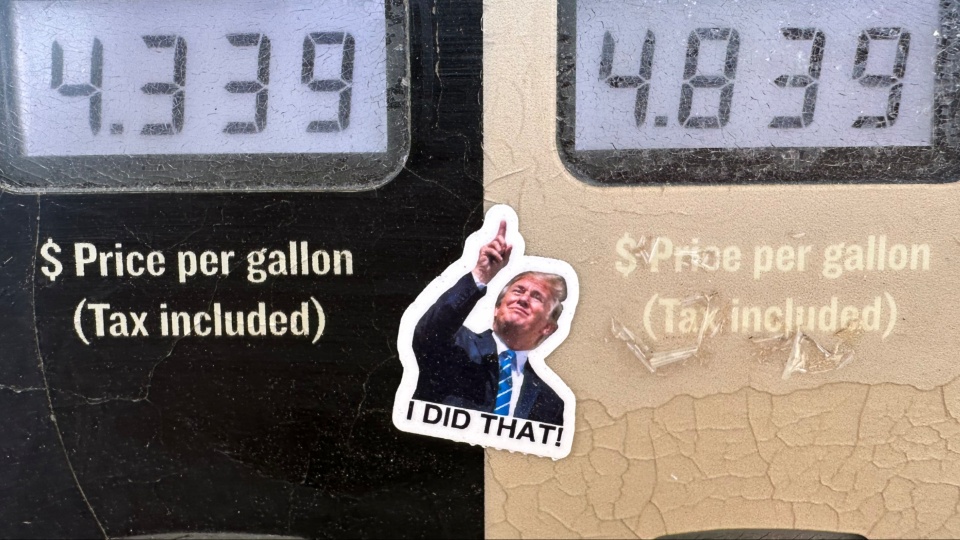
The economic damage was not abstract. The war helped push U.S. inflation to its highest level in nearly two years, with gas prices climbing above $4 a gallon and crude oil surging more than 20% in the war’s first weeks alone, and those costs have fanned out and compounded in the months since.
Economists at the Federal Reserve Bank of Dallas and the Centre for Economic Policy Research separately estimated the conflict added more than half a percentage point to U.S. inflation in 2026, a burden that fell on working families already squeezed by years of price increases.
A new look at the data by the Economic Policy Institute shows even more clearly just how much this war hurt the U.S. working class. The giant jumps in energy prices, most acutely seen in gasoline and airfares, have completely erased all the real wage gains that workers have made during Trump’s second term in office—not that they’d gained all that much to start with, but even that is gone.

Even with this supposed deal to end the war, the costs will continue accumulating. “There is a heightened threat that price increases will spill over to the broader economy,” EPI’s Ben Zipperer wrote last week, “triggering a more permanent increase in the cost of living and further reductions in real earnings.”
It’s been even worse for workers in other countries, since the U.S. economy has been relatively insulated from many of the war’s costs, so far. The UN’s International Labour Organization says the worst is still to come. The Iran war is “a slow-moving and potentially long-lasting shock that will gradually reshape labor markets,” undermining wages and working conditions worldwide.
Ruling class divided: Higher costs for some, higher profits for others
It’s not just the working class who are upset over the war, though. Even some among the right-wing elite are questioning exactly what they got out of it.
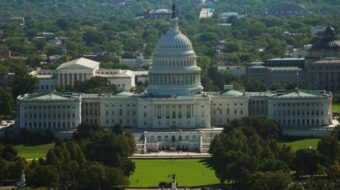
The Wall Street Journal called Trump’s settlement “a strategic retreat” that fell “short of achieving his war aims.” And Republican Rep. Thomas Massie, who co-sponsored the House war powers resolution that finally passed on June 3 by a vote of 215-208 put it plainly after the vote: “People are tired of this.”
All across the economy, companies in sectors as diverse as retail, transportation, airlines, food production, tourism, and manufacturing also felt the impact of higher fuel prices and shrinking customer wallets.
Others in the top echelons, however, have benefited handsomely from this dead-end war.
The companies that supply the bombs and aircraft used to decimate Iran—firms like RTX (formerly Raytheon), Lockheed Martin, Northrop Grumman, and others—have seen a surge in orders as the U.S. and Israeli militaries race to restock their depleted supplies and replace lost jets and helicopters. Military logistics companies and maritime security firms, too, saw their revenues soar as the largest U.S. military buildup in the Middle East since the 2003 Iraq War played out.
As the seesaw of on-again/off-again ceasefires kept investors fidgeting about whether to put their money in stocks or bonds, the big banks cashed in on transaction fees.
“The volatility unleashed by the war has led to a surge in trading, as some investors sold stocks on fears of escalation, while others bought the dip, helping to fuel a recovery rally, Wealth Club chief investment strategist Susannah Streeter told the BBC. “Heavy trading volumes have benefited investment banks, in particular Morgan Stanley and Goldman Sachs,” she said.
And with oil flows through the Strait of Hormuz choked, major Western energy companies—ExxonMobil, Chevron, Shell, and BP—all enjoyed windfall profits thanks to inflated war-time market rates and constrained competition.
Israel’s other wars
Israel, meanwhile, has been using the cover of the wider war to dramatically escalate its own campaign against Lebanon, where it had already been violating a November 2024 ceasefire with near-daily strikes.
After Hezbollah resumed rocket fire on March 2 in response to the killing of Iran’s supreme leader, Israel expanded its bombing campaign, launched a ground invasion, and moved to occupy Lebanese territory up to the Litani River—the same line it had occupied decades earlier, before withdrawing in 2000. More than a million Lebanese have been displaced, and Lebanon’s Health Ministry reports thousands have been killed.
In Gaza, where Israel’s war never stopped, airstrikes continued, land grabs picked up pace, aid deliveries shrunk, and Palestinians remained displaced from their homes. And in the West Bank, attacks by illegal Israeli settlers proceeded with a green light from the Israeli government.

Rep. Rashida Tlaib, D-Mich., the only Palestinian American in Congress, tried to force a reckoning over U.S. support for Israel’s Lebanon war, telling the House that Israel had repeatedly used white phosphorus, a chemical weapon, in residential neighborhoods and Lebanese farmland, and that the United States was supplying the weapons while providing operational support, according to Democracy Now.
She called the U.S. an “active participant” in what she described as Israel’s “ethnic cleansing campaigns.” Her resolution to end U.S. military involvement in Lebanon failed on June 4, though, after most House Democrats joined Republicans to vote it down, 324-92.
As for the war on Gaza, Congress has actually moved to tie the U.S. and Israeli militaries closer to one another, with the latest draft National Defense Authorization Act opening the way for Israel to have more expanded access to the most advanced U.S. weaponry.
A real deal?
The announcement of a possible deal to end the war is being cautiously welcomed by pro-peace forces.
CODEPINK, the women-led anti-war group, said it hopes a settlement really is signed in Geneva this weekend but warned against false hope—appropriate since previous Trump “ceasefires” were characterized by further bombing.
“Let’s hope Israel doesn’t sabotage it by continuing to bomb Lebanon. But let’s also not let Trump claim victory,” CODEPINK said. “This war has been a disaster, and there would be no need for a deal if Trump hadn’t bombed Iran in the first place.”
With the war’s end now being negotiated on terms that mirror the pre-war status quo, the people who absorbed the costs and deaths—in Tehran, in Beirut, in Gaza, and in households across the United States and the world—are left to add up what was gained.
So far, the answer for ordinary people looks very much like nothing.
As with all op-eds published by People’s World, the views expressed here are those of the author.
We hope you appreciated this article. At People’s World, we believe news and information should be free and accessible to all, but we need your help. Our journalism is free of corporate influence and paywalls because we are totally reader-supported. Only you, our readers and supporters, make this possible. If you enjoy reading People’s World and the stories we bring you, please support our work by donating or becoming a monthly sustainer today. Thank you!
CONTRIBUTOR