Something has shifted in South Africa. Things that were once said quietly, in private dining rooms, golf clubs, and bars, are now said out loud, on social media, in court papers, and on political platforms. Racism and even fascism no longer bothers to hide itself. Secession, once a fringe fantasy, has become an organized campaign.
In the Western Cape, the Freedom Front Plus and the Cape Exit Party joined forces around a platform of independence for the province. Some in the Democratic Alliance, the mainstream right-wing party, support this.
Cape independence campaigners have gone further, asking U.S. President Donald Trump to back their call for a referendum. President Cyril Ramaphosa has rejected that referendum, and they are challenging him. In KwaZulu-Natal, too, voices have argued that the province should go its own way.
Alongside this runs a quieter but more consequential campaign. AfriForum and allied lobby groups such as Lex Libertas are using the courts and the media to roll back the policies of redress: broad-based black economic empowerment, employment equity, land reform. Their case is dressed in the language of merit and fairness. Its effect, however, would be to freeze in place the inequalities that apartheid, colonialism, and slavery built.
These are not the same thing, and the people involved are not the same people. A court challenge is not a riot, and a vote for a referendum party is not a call to arms. But together they add up to a sustained challenge to the constitutional promise of 1994: one country, shared by all who live in it, committed to undoing the injustices of the past.
But there are more insidious elements that are prepared to use violence to achieve their goals. All of these represent a clear and present danger to our democracy, to the constitution, and to the lives of the majority of law-abiding people who live in our country.
Why now?
It is tempting to blame foreign money and global fashion. Both play a part. The far right is emboldened from Washington to Budapest, and it offers its South African admirers media networks, funding, and political cover. But honesty requires us to look closer to home.
These forces have quietly lain in wait, have been organized as a network from the old apartheid and far-right structures. They have actually been a beacon to the far right globally and have inspired fascists the world over. White racists in the diaspora such as Elon Musk and his ‘Tech Bros’ have also played an important role in this resurgence of the far right.
But we are also to blame. The progressive movement has been weakened. Partly by its own devices—factionalism, corruption, opportunism—but also by a deliberate strategy of the former regime and its allies.
Only the most naïve progressive activist would believe that the racist regime and its structures—the spy operations of the Joint Management Centres and the hit squads of the Civil Cooperation Bureau, etc.—did not have a game plan to bring down the governing alliance of the African National Congress (ANC), the South African Communist Party (SACP), and the Congress of South African Trade Unions (COSATU).
As a result of these issues, too many municipalities have failed the people they serve: water that does not run, refuse that is not collected, tenders that enrich the connected few. But also, unemployment, especially among young people, remains a national disgrace. Crime makes ordinary life frightening. Inequality is the worst in the world.
These, 36 years after the end of apartheid, are also issues we must reflect on. The failure to transform the political economy of apartheid lies at the heart of our country’s problems. Yet we all skirt around it.
Into that gap steps a simple and seductive story: The state or the ANC has failed you, so leave it. For some it is a story about race, for others about competence, but the message is the same. Shrink the circle of who belongs. Keep what you have. Let others fend for themselves. That is the language of fascism, racism, and its diluted expression—neoliberalism.
That story also feeds on divisions among the poor. When South Africans are turned against migrants, when race is set against race and one community against another, the people who benefit are never the workers on either side.
Xenophobic violence surged again this year, especially in KwaZulu-Natal. Racism remains one of the most common complaints to the South African Human Rights Commission. Every one of these divisions makes it easier to argue that a shared South Africa cannot work.
So, how should the left respond? Not with panic, and not by mirroring the tactics of its opponents. The answer has four parts.
First, use the law against what is unlawful. Incitement, hate speech, intimidation, and violence are crimes, and South Africa has institutions built to deal with them: the Human Rights Commission, the Equality Courts, the police, the prosecuting authority and, now, the Hate Crimes and Hate Speech Act. Every incident should be documented and reported. The rule of law is not our opponents’ weapon, it is ours.
Second, win the argument against what is lawful but wrong. Campaigning for secession, or against black economic empowerment, is protected speech in a democracy, and it must therefore be defeated on its merits. The case is strong. The Constitution offers no route out of the Republic. Most people in the Western Cape are black and colored working people, and a “self-determination” designed without them is nothing of the kind.
The province’s water, power, transport and trade are woven into the national economy, and tearing them apart would cost jobs. And a movement that asks a foreign president to sponsor its referendum has little to teach anyone about sovereignty. In fact, that is treason, plain and simple.
We must also listen. Many people drawn to independence talk about competence, crime, and corruption, not race. They reject the “far-right” label, and shouting it at them will only push them further away. Their grievances are real. Our job is to show that the solution is to understand class divisions in our society, and to ensure better government and organized communities, not new borders. The harshest words should be kept for those who actually preach racism or violence.
Third, organize. The most durable answer to the far right is material. Honest councils that deliver, food gardens, tenant committees, farm-worker associations, and unions that bring together black, colored, and white workers do more to defeat racism than any statement.
Working-class people need to see that they share interests across the lines that divide them, because they share the same landlords, the same bosses, and the same corrupt officials. One community, one city, one country, one continent, one world. That’s why solidarity is so crucial.
We are South African, but we are also Cuban, Palestinian, Sahrawi, Kurdish, Venezuelan, Chinese, who suffer the aggression of imperialism, racism, and reaction. But also, the working class, the poor, and the minorities in the USA, the UK, Europe, and other developed countries who are only marginally better off than their brothers and sisters across the developing world.
Fourth, mobilize. Communities have every right to march, picket, protest, and occupy public spaces, and they should. They should also take charge of their own safety through lawful structures: street committees, community policing forums, and registered neighborhood watches that work with the police and hold them to account.
While we should never form para-military structures, we must be aware that the far-right does. We must gather the intelligence on these and ensure that the police and the intelligence community are aware of their activities.
All of this demands consistency. If we oppose racism, we must oppose it wherever it appears: in a farm-town bar, in a xenophobic mob, and in our own ranks. A chant that calls for violence against any group is wrong whoever leads it. Our moral authority depends on it.
None of this works without renewal on the left itself. A movement that tolerates corruption cannot credibly promise honest government. A movement that cannot reach young people will lose them to whoever can.
And a movement still arguing about its own alliances will struggle to build the broad front this moment needs, one that brings working class people, unions, churches, mosques, civic groups, lawyers, and liberals and centrists who believe in the constitution into common cause.
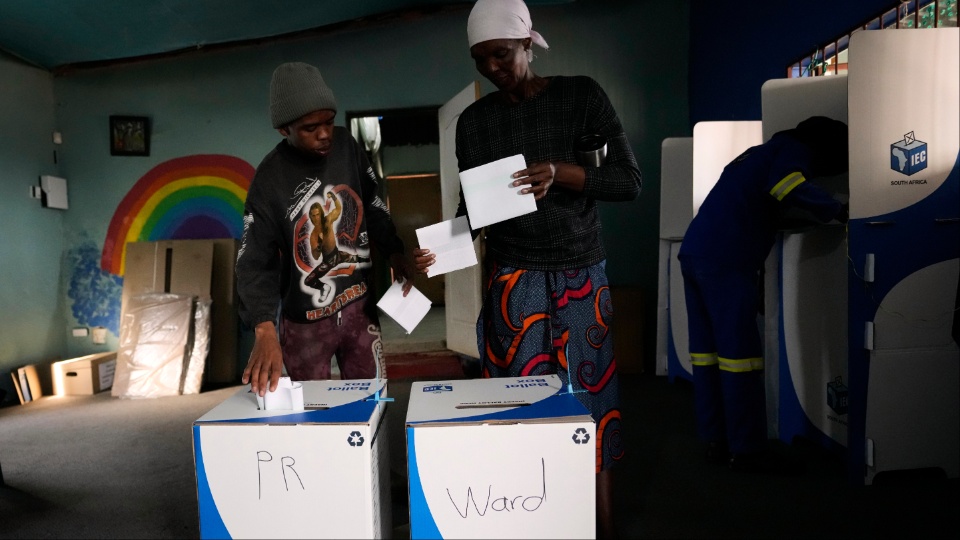
Last week, voters in every municipality made their choice. The contest that matters most began the day after. It will be decided in councils that deliver or fail, in streets that are organized or abandoned, and in arguments that are won or left unanswered.
The far right is betting that South Africans have given up on each other. Our task is to prove them wrong, not with louder slogans, but with stronger organization and a country that works for the people who live in it.
No paywalls at People’s World
We hope you appreciated this article. At People’s World, we believe news and information should be free and accessible to all, but we need your help. Our journalism is free of corporate influence and paywalls because we are totally reader-supported. Only you, our readers and supporters, make this possible. If you enjoy reading People’s World and the stories we bring you, please support our work by donating or becoming a monthly sustainer today. Thank you!
CONTRIBUTOR