

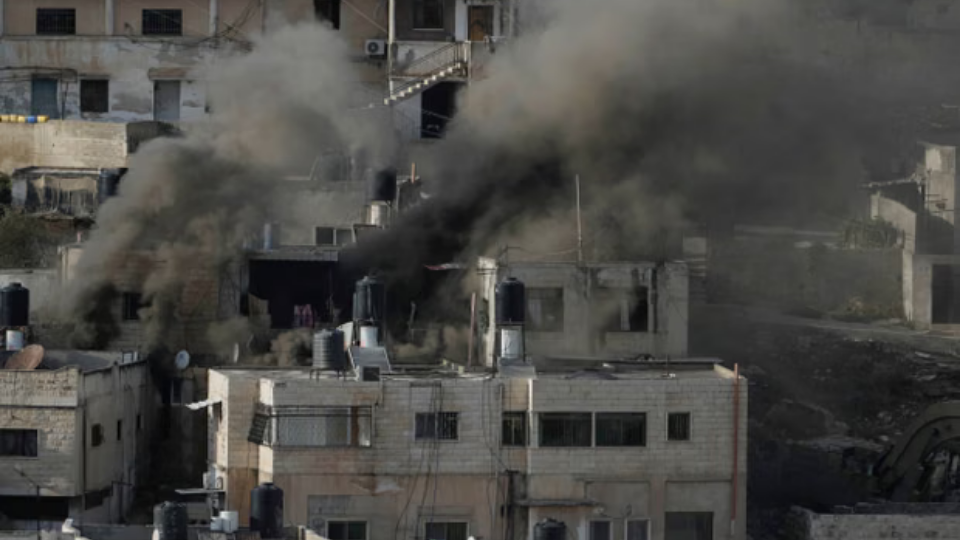
The world continues to focus on Gaza with hope that the genocidal conflict there might soon come to an end. After two years of slaughter and destruction, it’s understandable that all eyes are on the beleaguered coastal strip in Palestine.
Yet while global attention remains fixed on Gaza, the Israeli government has taken advantage of the distraction to accelerate its campaign of ethnic cleansing in the West Bank—one that has, in the words of the UN Special Rapporteur, “strong echoes of the 1947–1949 Nakba and the 1967 Naksa.”
While the Zionist project in the West Bank may appear less overtly violent than the bombardment and starvation imposed on Gaza, it is no less dangerous to the Palestinian people’s right to self-determination.
Like Gaza, the West Bank was conquered by Israel in 1967. It is home to roughly 2.7 million Palestinians and nearly 700,000 Israeli settlers. Unlike Gaza, however, the West Bank has been carved up by thousands of illegal settlements and segregated roads reserved for settlers. Israel even objects to the use of the term West Bank, preferring the ancient biblical names “Judea and Samaria” in an attempt to erase two millennia of the region’s history.
The Israeli government incentivizes settlers, many of them religious, messianic extremists and followers of fascistic ideologies like Kahanism, to populate the area strategically, making any future Palestinian state logistically impossible. Toward this end, Israel recently approved the so-called E-1 settlement, a project designed to permanently sever the northern and southern parts of the West Bank.
But merely filling the region with illegal settlements is not enough. The Zionist project also seeks to drive Palestinians off their land entirely. According to a recent Reuters report, since Israel launched Operation Iron Wall earlier this year, approximately 30,000 Palestinians have been displaced from the northern West Bank alone. A UN report confirms that mass displacement in the West Bank is now at its highest level since 1967.
The UN Office for the Coordination of Humanitarian Affairs (OCHA) reports that the Israeli military has destroyed more than 13,500 structures across the occupied region since 2009, displacing over 21,500 people. The year 2024 saw the sharpest rise in demolitions during that period. In the southern West Bank’s Hebron Governorate—the largest under the Palestinian Authority—nearly 300 people were displaced in April and May, 2025 alone.
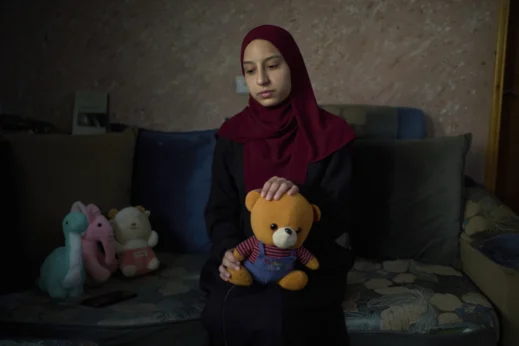
These are not just numbers on a page. Each building destroyed was someone’s home or livelihood. Each person displaced represents another human tragedy—part of Israel’s ultimate goal of depopulating the land and destroying any hope of an independent, viable Palestinian state.
Israel and its allies deny that these acts amount to ethnic cleansing. They argue that because the expulsions do not resemble the mass forced deportations of the 19th or 20th centuries, they do not meet the definition. The claim goes that Israel is simply administering the territory as its military governor and that if Palestinians “choose” to leave, that is voluntary—not coerced.
No one should be fooled by these semantic tricks. The methodology may differ, but the end goal remains the same.
One of Israel’s favored tactics for strangling Palestinian life in the West Bank is declaring Palestinian population centers to be “closed military zones” or “firing zones.” When this happens, residents are forced to leave “for their safety” and are then permanently barred from returning. According to Amnesty International, Israeli forces have done this to residents of Jenin and other towns in the northern West Bank, displacing as many as 40,000 Palestinians. Similar tactics have been reported across the territory.
Another weapon in this campaign of slow ethnic cleansing is the destruction of olive trees. Olive cultivation has long been a cornerstone of the Palestinian economy, sustaining thousands of families throughout the West Bank. Many groves are hundreds of years old, tended by the same families or communities for generations.
The Israeli military routinely claims that olive trees pose a “security risk” to settlers driving nearby. This pretext has justified the uprooting of thousands of trees, devastating rural livelihoods. In one notorious case, in the small village of al-Mughayyir near Ramallah, the Israeli military uprooted over a quarter square kilometer of olive trees. Such destruction forces farmers to “voluntarily” relocate in search of other means of survival.
This method has proved so “effective” that Israel’s far-right Finance Minister, Bezalel Smotrich, who openly calls for the annexation of the West Bank and is the person who effectively governs the West Bank, recently announced the creation of a special unit dedicated solely to destroying olive trees.
Israeli settlers, often operating under the protection of soldiers and police, participate directly in these campaigns of terror and destruction. In coordinated pogroms, settlers burn homes, torch cars and olive groves, destroy water supplies, and attack Palestinian herders—all with the intent of driving Palestinians from their land. While some settler leaders have been sanctioned by foreign governments—including two sanctioned under President Biden but later pardoned by President Trump—they continue to enjoy protection from Israel’s extremist Security Minister Itamar Ben-Gvir.
Between August 26 and September 1, OCHA reported at least 24 settler attacks on Palestinian civilians. These assaults rarely make headlines in either Israeli or international media. They resulted in the displacement of 17 people—including nine children—from the East Tayba Bedouin community near Ramallah.
In the South Hebron Hills, settlers destroyed solar panels and assaulted herders and their livestock. In Kafr Malik, near Ramallah, and in the Michmas Bedouin community near Jerusalem, settlers terrorized and attacked farmers and their families, leaving several injured.
Mahmoud Mleihat, a survivor of one of these pogroms by Israeli settlers, told Reuters how they were forced off their land. He said, “The settlers are armed and attack us, and the (Israeli) military protects them. We can’t do anything to stop them. We can’t take it anymore, so we decided to leave.”
Together, these acts form part of a coordinated campaign of ethnic cleansing through intimidation and coercion across the West Bank. While the world rightly focuses on Gaza, we must not lose sight of what is happening to Palestinians in the hills and valleys of the West Bank. This region—with its nearly three-quarters of a million settlers and its long border with Jordan—is the heart of the so-called “Greater Israel” project.
Any future Palestinian state will be centered in the West Bank, with East Jerusalem as its capital. And while that dream seems distant today, it will be truly impossible if there are no Palestinians left on their land.
As with all op-eds published by People’s World, the views reflected here are those of the author.
We hope you appreciated this article. At People’s World, we believe news and information should be free and accessible to all, but we need your help. Our journalism is free of corporate influence and paywalls because we are totally reader-supported. Only you, our readers and supporters, make this possible. If you enjoy reading People’s World and the stories we bring you, please support our work by donating or becoming a monthly sustainer today. Thank you!
CONTRIBUTOR

MOST POPULAR TODAY
Europe refuses war script: Spain’s rebuke exposes limits of U.S.–Israeli escalation in Iran


Praising Trump’s war, monarchist forces hijack Iranian diaspora

Trump’s Postmaster General says USPS may shut down in a year
As Iran war rages, Netanyahu builds ‘Greater Israel’ from Palestinian and Lebanese land