BALTIMORE—Don’t look now, but there are multiple health care crises in Baltimore, and the more serious one—a feud between a major insurer and a prominent hospital system—could leave 60,000 people in Maryland, D.C., and Virginia scrambling for care.
As if that wasn’t enough, one alternative for patients pursuing solutions, the city’s Catholic health care system, is busy making money by investing in corporate bad actors, National Nurses United reports.
The two controversies are hitting Baltimore as nationwide health care is going through a crisis of its own.
The temporary money bill, called a continuing resolution (CR), to keep the government going after Sept. 30 lets an Affordable Care Act (Obamacare) tax subsidy expire. That would drive up the cost of health care for millions of people nationally, not just those in the D.C.-Maryland-Virginia area.
In addition, Planned Parenthood clinics and rural hospitals are closing around the U.S., thanks to the GOP Donald Trump regime’s deep cuts over the next decade in Medicaid and cuts in Medicare.
And Sen. Sheldon Whitehouse, D-R.I., warned during debate over the CR that another law, the 15-year-old Pay-As-You-Go Act and its automatic cuts in federal spending could cost Medicare half a billion dollars over the next decade.
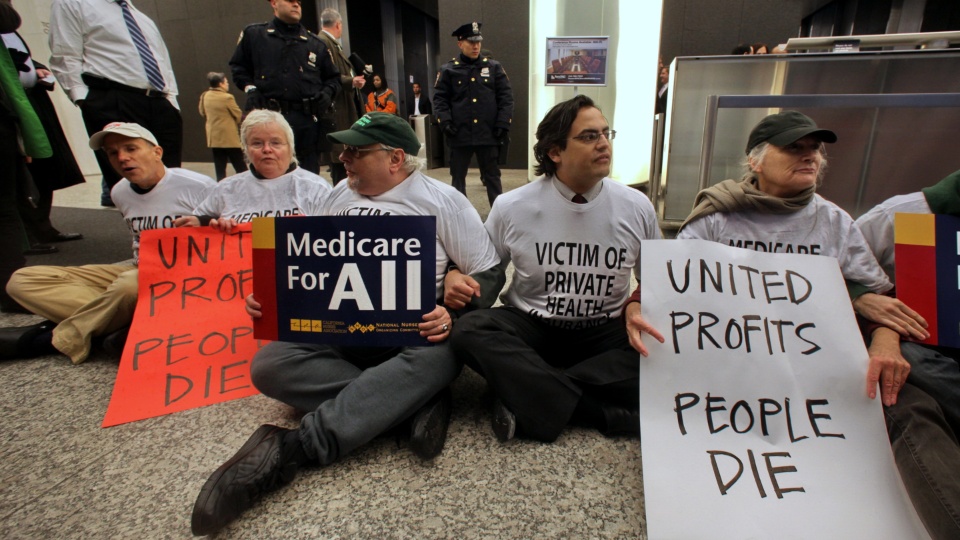
Baltimore’s problems are specific, and in some sense, unique. Their root is a feud between the nationally renowned Johns Hopkins University health care system and one of the nation’s largest insurers, United Health Care.
Talks between the two for renewing their agreement that Hopkins would be an “in-network” provider on United’s list have broken off. In-network coverage ended in August. Hopkins and United can’t even agree on who walked out, or why.
The Maryland Insurance Administration, which is trying to craft a rescue package for the United customers who’d get hit, says Hopkins walked out.
Hopkins says United won’t budge on the insurer’s demand for pre-authorizations and on its care denials and delays. United retorts Hopkins wanted to exclude covering patients of some employer health care plans.
The end of United “in-network” coverage for Hopkins patients strands thousands of patients. Those who need continuing care for chronic diseases or for pregnancy could still go to Hopkins hospitals, and pay United’s lower “in-patient” co-pays.
The rest of United’s customers who use Hopkins hospitals and clinics—an estimated 60,000 people in D.C., Maryland and Virginia—would have to fend for themselves.
Stuck with higher rates
They’d either be stuck with United’s much-higher “out-patient” rates, denied coverage at all—since United leads the nation’s insurers in rejection rates—or scramble to find replacement doctors and insurers.
The Maryland Insurance Administration says its first priority for the United patients “is to ensure UnitedHealthcare members entitled to continuity of care benefits with Johns Hopkins providers under state and federal law are able to access those benefits.
“Continuity of care means you can continue to see your doctor or other provider while you look for a new provider or conclude your care. The Federal No Surprises Act requires all group and individual health plans to provide for up to 90 days of continuity of care for certain conditions”—chronic illnesses or pregnancy.
But if the “refugees” from Hopkins seek care and coverage at Baltimore’s Catholic-run Ascension hospital system, they face a moral dilemma, National Nurses United reports.
Ascension is very profitable, but a lot of its revenue comes from investments in, for lack of a better term, dirty money. That led to an NNU report and an informational picket line at St. Agnes Hospital on September 15. The report and picketing also shows the 600 St. Agnes registered nurses are still at loggerheads with hospital bosses over a new contract. The RNs even staged a brief strike in July.

Some $451 million “of Ascension investment holdings directly contradict the benevolent image Ascension promotes for itself as a Catholic hospital and leader in Corporate Social Responsibility,” the union reports.
Those holdings include investments in weapons manufacturers, alcohol producers, gambling promoters, oil, gas and mining firms whose emissions lead to climate change, labor law breakers and human rights violators, the union said.
Banks that finance climate change-denying oil, gas and mining firms and those firms themselves account for more than half of Ascension’s investments ($259.7 million). And Ascension holds $20 million in exploitative overseas labor law breakers, most of them apparel manufacturers.
“These investments” in the public documents from the Ascension Master Pension Trust “appear to violate investment criteria set forward by the Vatican and the U.S. Conference of Catholic Bishops” in 2022 for responsible investing, NNU added.
Press Associates Marketing Manager Janet Brown contributed material for this story.
We hope you appreciated this article. At People’s World, we believe news and information should be free and accessible to all, but we need your help. Our journalism is free of corporate influence and paywalls because we are totally reader-supported. Only you, our readers and supporters, make this possible. If you enjoy reading People’s World and the stories we bring you, please support our work by donating or becoming a monthly sustainer today. Thank you!
CONTRIBUTOR