
Editor’s Note: The global spotlight this week turned to Shenzhen, China, where the 2026 Asia-Pacific Economic Cooperation (APEC) summit culminated in an unprecedented three-way meeting between Chinese President Xi Jinping, U.S. President Donald Trump, and Russian President Vladimir Putin. While mainstream U.S. coverage has largely framed the gathering around great-power rivalry, nuclear arms, and shifting geopolitical alignments, a deeper economic reality is reshaping the global order.
As Washington continues to lean on tariffs, sanctions, and military aggression to maintain its dominance, nations across the Global South—and even traditional U.S. allies—are increasingly looking toward Beijing for trade stability and infrastructure investment. In the following commentary, originally published in Britain’s Morning Star, Roger McKenzie reports from China on how the Belt and Road Initiative is offering developing nations an alternative model of economic cooperation rooted in sovereignty rather than U.S. domination.
It has been slightly edited for a U.S. audience.
The Belt and Road Initiative (BRI) is far more than the fanciful and ambitious dream of China alone. It has become a reality and a lifeline for hundreds of millions of people in 115 countries around the globe.
Despite the hysterical attempts by Western liberal propaganda merchants to trash it, the BRI is bringing about fundamental improvements for a world that is trying to break away from the shackles of decades of U.S. imperialist rule. It is a rule that has come with expectations that those hoping to benefit from the largesse of the U.S. must toe its line unconditionally.
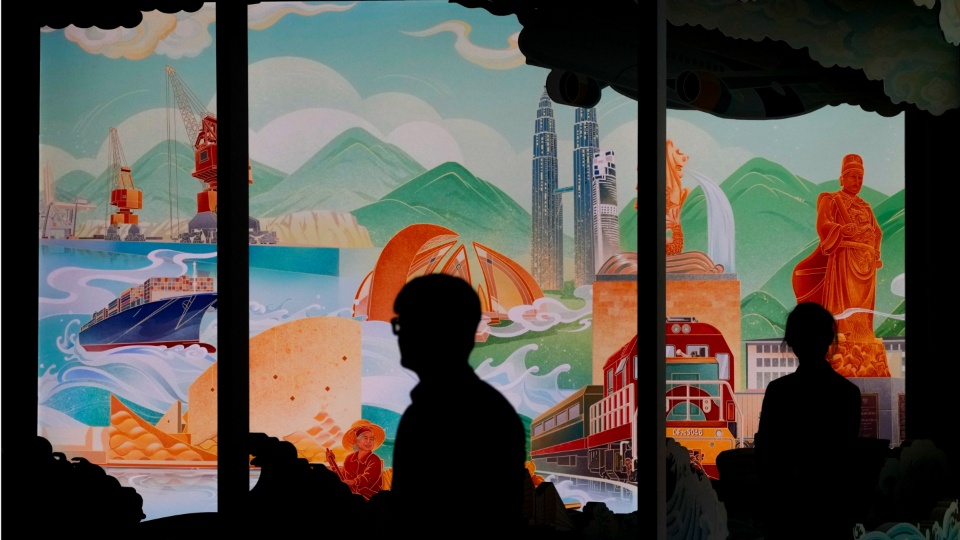
The BRI is an ambitious global infrastructure and economic development strategy launched by China in 2013. It is far and away the largest infrastructure project in world history, spanning dozens of countries across Asia, Europe, Africa, and Latin America.
The BRI has two main parts.
The first is the Silk Road Economic Belt. This is a land-based network of railways, highways, and pipelines designed to increase China’s connectivity to Central Asia, the Middle East, and Europe.
The second is the 21st-Century Maritime Silk Road. This is a sea-based route linking China’s coastal ports to southeast Asia, the Indian Ocean, Africa, and the Mediterranean. In other words, it links China to its brothers and sisters in the Global South.
Critics of China claim that Beijing is attempting to assert its dominance over these nations. Their argument is that creating infrastructure connectivity by building ports, roads, railways, and power grids in developing countries that lack them is somehow taking advantage.

It’s a bizarre argument essentially made by colonial countries and their U.S. masters which, between them, have spent centuries pillaging the resources and labor from the countries with which China is busy developing win-win relationships.
China is also doing the world a favor by attempting to reduce barriers to trade and creating new supply chains at a time when the U.S. is slapping sanctions on all and sundry and linking trade to its political objectives even more than before.
China, on the other hand, is aligning its development strategies between participating nations in a way that screams partnership rather than domination.
To facilitate this initiative, Beijing has also established new financial institutions, such as the Asian Infrastructure Investment Bank and the Silk Road Fund. It is a beacon for the future need for separate financial arrangements from the U.S.-dominated and -manipulated World Bank and International Monetary Fund.
Deal makers
As of 2024, over 150 countries and international organizations had signed co-operation agreements with China under the BRI framework. The number of countries seeking to reach deals with Beijing is increasing all the time.
The BRI covers roughly 60% of the world’s population and about a third of global GDP.
Africa is one of the most significant regions for the BRI. As of 2024, 52 of Africa’s 54 countries had signed BRI co-operation agreements with China. The only two outside are Eswatini (which recognizes the Taiwan rather than mainland China) and Mauritius (though it has signed various other agreements with China).
The BRI in Africa is heavily concentrated in east Africa (Kenya, Ethiopia, Tanzania, Djibouti) and west Africa (Nigeria, Ghana, Senegal), with major projects in north Africa (Egypt, Algeria) and southern Africa (Zambia, South Africa).
Some of the flagship projects on the continent include the Mombasa–Nairobi Standard Gauge Railway in Kenya and the Lagos–Ibadan Railway in Nigeria. Maritime projects include developing the ports of Djibouti, Tema Port in Ghana, and Bagamoyo Port in Tanzania.

Major energy projects include the Grand Ethiopian Renaissance Dam, the Inga Dam projects in the Democratic Republic of Congo, and numerous solar and wind farms—an economic sector in which China leads the world. There is also the peace cable and various fiber optic networks connecting Africa to Asia and Europe.
If ever there was a rebuke to the world’s trading system dominated by the former colonial powers and the U.S., then this is clearly it.
The notion that a trading partner which is, by some measures, the largest economy in the world, has no intention of attempting to meddle in your domestic affairs for their own gain is a novelty to say the least. But that’s what we have with China, even when left activists around the world question its relationship to fascistic states, such as Narendra Modi’s Indian government.
Whatever questions many might have, the facts are clear: The BRI has transformed world politics and trade and has acted as a model for the future development of the BRICS bloc of which, of course, China is a leader.
It was never an option that the U.S. and its acolytes wouldn’t attempt to retaliate. In these, the dog days of U.S. hegemony, of course they would. Their answer to the BRI was to launch the G7 Partnership for Global Infrastructure and Investment. Perhaps given past experiences, these alternatives have failed to enjoy anything like the same support as the BRI.
While it’s easy to look at the successes of the BRI in numbers, its achievements go beyond what statistics alone suggest. The connectivity offered by the BRI in trade is matched by the connectivity it offers between people.
More than once during the recent BRI Media Network meeting in Fuzhou in the Fujian Province of China, I heard it said that no mountain or sea should prevent people from touching hands with other people.
While many analysts spend their time looking at the geopolitical or economic consequences of the BRI, the significant factor they often choose to ignore or fail to consider is the people-to-people contact it is providing.
Contacts
Time and time again, the discussion in Fuzhou emphasized this aspect of the BRI. At no time did I feel that a load of economic statistics were being thrust down my throat.
The network asked the media practitioners to consider how best can they tell compelling stories of the BRI, discover new themes, and report new developments.
Well, one of the biggest reports I can make is that the BRI is much more than about trading goods. It carries forward the hopes and aspirations of literally hundreds of millions of people at a time when so many are simply struggling to put bread on the table and keep a roof of some kind over their heads.
The BRI carries forward a spirit of friendship and cooperation that goes beyond the negative narrative peddled by Western powers as their own power spirals into what appears to be a terminal decline. It is a spirit that reminds me greatly of the hopes and aspirations of Third World nations at the Bandung Conference in 1955.
The BRI is a massive contribution being made to civilization by the Chinese people under the revolutionary guidance of the Communist Party of China. I can’t think of too many greater contributions to humanity than facilitating the effort to bring people together in peace and harmony.
Rather than allowing some people to continue to indulge in the usual uninformed Sinophobic nonsense about alleged negative Chinese motives which they suggest lay behind the BRI, we should recognize this as the pivotal moment that it is and its contribution toward building a new world.
As with all op-eds and news-analysis articles published by People’s World, the views expressed here are those of the author.
No paywalls at People’s World
At People’s World, we believe news and information should be free and accessible to all, but we need your help. Our journalism is free of corporate influence and paywalls because we are totally reader-supported. Only you, our readers and supporters, make this possible. If you enjoy reading People’s World and the stories we bring you, please support our work by donating or becoming a monthly sustainer today. Thank you!
CONTRIBUTOR