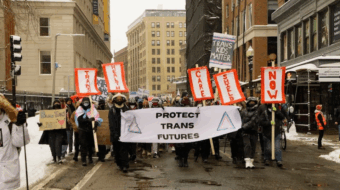
The new short documentary Call Me Micky arrives at a perilous time for the LGBTQ community. Every month there seems to be a new piece of legislation that aims to delegitimize the existence of those who identify as gay, lesbian, trans, and queer. Yet amid that continued struggle, many express themselves through acts of resistance, from demonstrations to the art they produce.
Call Me Micky is a film that puts the spotlight on an individual who dared, later in life, to live their truth as a trans man boldly. It offers a glimpse into the experiences of a larger-than-life personality, a New Jersey native, inviting the audience on their journey through the trials, tribulations, and small triumphs of what their existence is like and the powerful connections they make along the way.
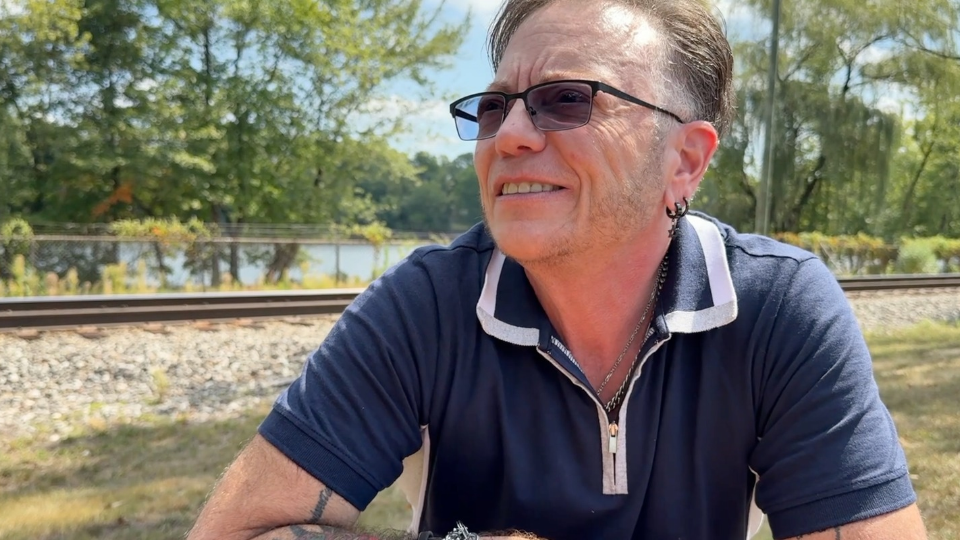
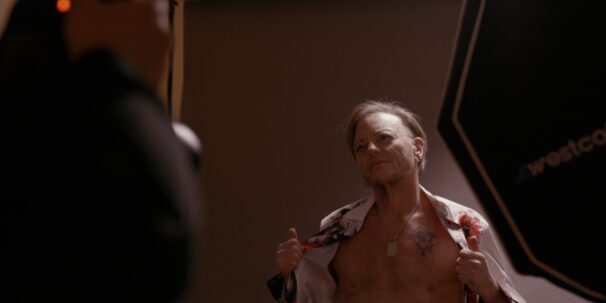
Directed by Andrew Rasmussen, the documentary follows Micky Angelo Petrillo, a New Jersey author, performer, and community personality, who began living openly as a man for the first time at 59. Viewers follow Petrillo through his daily life of Pride events, open-mic performances, first-time photo shoots, and advocacy work through visibility.
These public-facing excursions are balanced with more intimate moments, such as Petrillo’s pointed discussions with family and friends about his new life, the stress, and the uncertainty that comes with it. Micky, 62 at the time of filming, is shown as a layered individual who wants to go beyond symbolism and “lessons.” The 22-minute film at times feels like a chaotic whirlwind of events and musings by Petrillo, delivered in a way that deliberately reflects the subject’s life, allowing the audience to feel this newfound journey in the at-times frazzled way Petrillo engages with his new existence.
One of the film’s most compelling aspects is the community Petrillo has built around him. In a society that often emphasizes individualism, pulling oneself up by the “bootstraps,” and a dog-eat-dog mentality, Call Me Micky showcases a different approach. Petrillo has made a number of connections throughout their life, and that theme of belonging and found family comes through brightly in the film. Petrillo’s tragic story of the rejection he felt from his mother when he decided to transition is contrasted with the radical support he has built around himself, which is crucially important in a world that is often alienating to those who are transgender. Through these connections, we see other forms of activism and visibility that add further weight to Petrillo’s journey.
At an event celebrating Jersey City’s Transgender Day of Visibility, we meet Rev. Erin Kinahan, a transgender Lutheran pastor who came out later in life as well. In a time when themes of Christian nationalism are being pushed by certain figures in power—such as the current leader of the so-called Department of War, Pete Hegseth, giving speeches about serving God and in the same breath declaring “no fatties, no trannies, no beardos, no weirdos”—Kinahan’s presence in the faith community serves as political resistance in itself.
The most compelling and intriguing connection in the film is the one between Petrillo and Dominique Jackson. Jackson, who serves as the film’s executive producer, is an amazing artist, model, and actress from the series POSE, which showcased the forever-influential New York City ballroom culture of the 1980s. The actress has an impressive list of groundbreaking credits yet still takes the time to mentor Petrillo. Jackson, a trans woman, makes sure to point out to Petrillo that they (trans people) are not looking for “tolerance” or “acceptance” but respect.
This powerful sentiment serves as a necessary overlay to the documentary. The audience is getting a slice of Petrillo’s life. The aim is not simply to convince people to accept them or understand who they are but rather to see them as a full-fledged human being—one deserving of a fulfilled life with its ups, downs, and everything in between.

This idea of respect and seeing transgender people as full humans should, in the year 2026, seem like a given. Yet, just like racism, transphobia and homophobia are alive and well and, unfortunately, being codified further into law.
In the U.S., there have been numerous attacks and discriminatory pieces of legislation passed that call into question the direction in which the fight for equality is swinging. Hundreds of anti-LGBTQ bills have been introduced in the U.S. in 2026 alone—nearly 400 tracked by the ACLU. Around the globe, there has been an increase in far-right conservative political leadership, threatening many of the civil rights gains made over the decades. The Trump administration, as of this writing, has just officially made Title IX—a groundbreaking 1972 statute meant to end sex discrimination in education—weaker than ever before.
While Call Me Micky is a vibrant and often joyful film, it still includes moments that show the societal hostility Petrillo must navigate, such as his fear that the gender affirming care he receives from the doctor may soon cease to exist. The audience watches as his friends try to calm him down, but it is clear this looming fear may never truly go away. Yet, amid this stress, Petrillo persists.
When speaking to People’s World about the film, director Rasmussen noted that while the documentary is a “trans story,” it is also an “everyone story,” and that the hope is that people see how Petrillo is “so incredibly relatable.” The director explained, “There’s something infectious about the way he [Micky] moves through the world and how he can laugh at himself. The more time you spend with him, the more you realize his story isn’t winding down at all—he’s just getting started.”
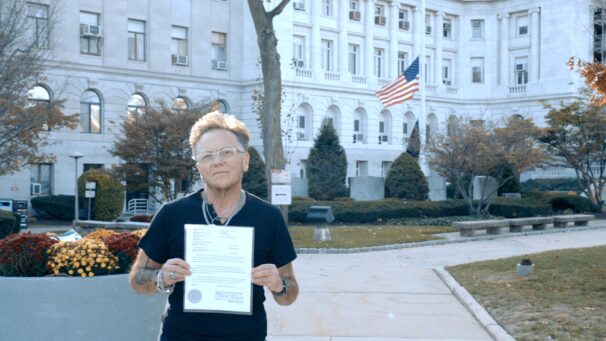
This sentiment, of a journey just beginning, comes through boldly in the film. It tells a story we don’t always see in mainstream media, that of an older transgender person. At the same time, it shows that life doesn’t have to slow down or “settle” as one ages, especially if they keep discovering new parts of themselves. It’s an in-your-face—often as Jersey people tend to operate (I’m allowed to say this as a Jersey native myself)—exploration of an individual reintroducing themselves to a world still struggling to respect the LGBTQ community.
The 22 minutes will leave many wanting to spend more time in Micky’s life. It’s truly a film worth watching.
The trailer for Call Me Micky can be viewed here.
No paywalls at People’s World
We hope you appreciated this article. At People’s World, we believe news and information should be free and accessible to all, but we need your help. Our journalism is free of corporate influence and paywalls because we are totally reader-supported. Only you, our readers and supporters, make this possible. If you enjoy reading People’s World and the stories we bring you, please support our work by donating or becoming a monthly sustainer today. Thank you!
CONTRIBUTOR