At the end of World War II, the most devastating war in history in terms of lives lost and destruction of the physical world, nations from all continents came together to establish an international order which would be built on peace and mutual respect. At the core of this new system was the United Nations.
Unfortunately, that dream of a new, peaceful global order has not yet been fulfilled. The 80 years since the defeat of fascism have been a mixed bag. On the one hand, we saw the rise of national liberation movements that dismantled the European-dominated world order of five centuries. The socialist countries, though numbering far fewer than they did a few decades ago, continue to build a better world for their people.
Yet, over that same time period, the United States and its major capitalist allies used their power and influence to dominate the direction of global politics and economics since 1945. They set up several military alliances, most notably the North Atlantic Treaty Organization (NATO), dedicated to the destruction of the world socialist system. And they erected a series of trade, banking, and aid mechanisms designed to control the international economic order.
What has emerged is a world where the ruling elements in a small number of countries have long run the show in their interests, be it through war, interference in the internal affairs of other countries, or an unfair and unequal set of relations among nations. The world capitalist class benefits from this system and will do all in its power to keep things as they have been.
The rest of the world (much of what today is called the “Global South”), however, is demanding the creation of a more equal international order, one that reflects current reality.
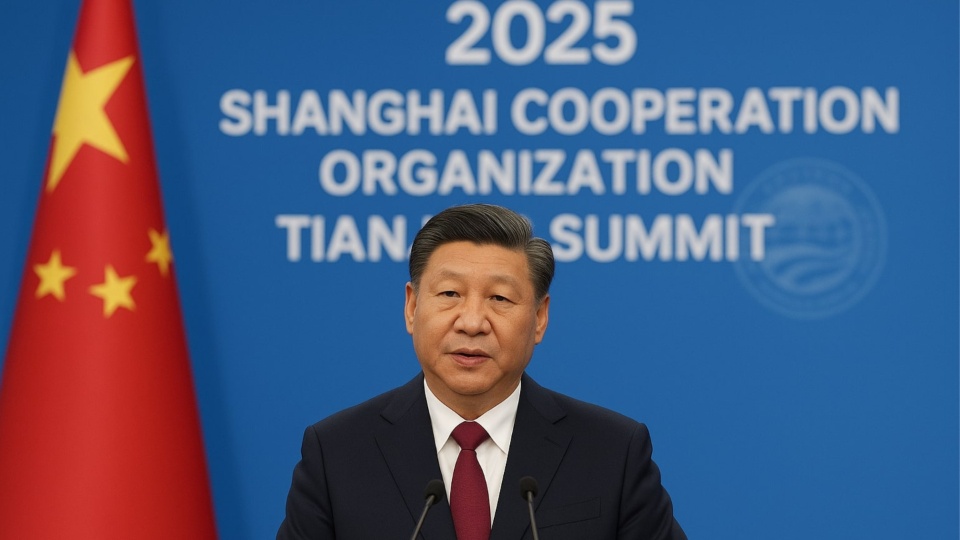
Nowhere is this more evident than in a recent proposal of China’s President Xi Jinping. At a meeting of the Shanghai Cooperation Organization Plus (SCO—a group of countries, mainly in Central Asia, along with China, Russia, and India), the Chinese leader proposed a new framework for international relations, the Global Governance Initiative (GGI).
“As a permanent member of the U.N. Security Council and the biggest developing country,” in the words of an editorial from Xinhua, the Chinese news agency, “China has all along been a staunch builder of world peace, contributor to global development, defender of the international order, and provider of public goods.”
It goes on to say that “this proposal charts a practical path for improving global governance and is expected to galvanize collective efforts among nations to make global governance more effective.”
The GGI outlines its ideas in five main areas:
1. Staying committed to sovereign equality. This means that “all countries, regardless of size, strength or wealth, shall have their sovereignty and dignity respected, their domestic affairs free from external interference, the right to independently choose their social system and development path, and the right to participate in, make decisions in, and benefit from the global governance process as equals.”
- Staying committed to the international rule of law. This is the fundamental safeguard for global governance. The purposes and principles of the U.N. Charter are universally recognized basic norms of international relations. They must be upheld unwaveringly.
- Staying committed to multilateralism. This is the basic pathway of global governance. Multilateralism is the core concept of the existing international system and international order. The principle of extensive consultation and joint contribution for shared benefit must be upheld.
- Staying committed to the people-centered approach. The people of all nations are the fundamental actors in global governance, and their well-being is its ultimate benefit. The global governance system must meet the people’s needs and consistently foster their confidence and belief in a stable future in order to be extensively supported and effective.
- Staying committed to real results. This is an important principle of global governance. Effective global governance is essentially one that resolves real problems.
The Global Governance Initiative goes on to say that “Developed countries should take their responsibilities seriously and provide more resources and public goods. Developing countries, on their part, should pull together for strength and do their best for the world.”
In the month since its formulation, the GGI has received endorsement from countries all over the world—such as Portugal, Nepal, Malaysia, and Cuba—as well as from António Guterres, Secretary General of the United Nations.
As we enter the second quarter of the twenty-first century, it is time to reform and update the international order. The Global Governance Initiative is a good place to start.
As with all op-eds published by People’s World, the views reflected here are those of the author.
We hope you appreciated this article. At People’s World, we believe news and information should be free and accessible to all, but we need your help. Our journalism is free of corporate influence and paywalls because we are totally reader-supported. Only you, our readers and supporters, make this possible. If you enjoy reading People’s World and the stories we bring you, please support our work by donating or becoming a monthly sustainer today. Thank you!
CONTRIBUTOR