VANCOUVER—On Oct. 20, Premier David Eby of the Canadian province of British Columbia introduced Bill 31, The Energy Statutes Amendment Act. The legislation is being touted as a necessary measure to speed up “nation-building projects” in the face of threats to Canada’s sovereignty from U.S. President Donald Trump.
When looked at in the larger context of Canada’s economic restructuring, however, the bill appears to be more about serving U.S. imperialism than resisting it.
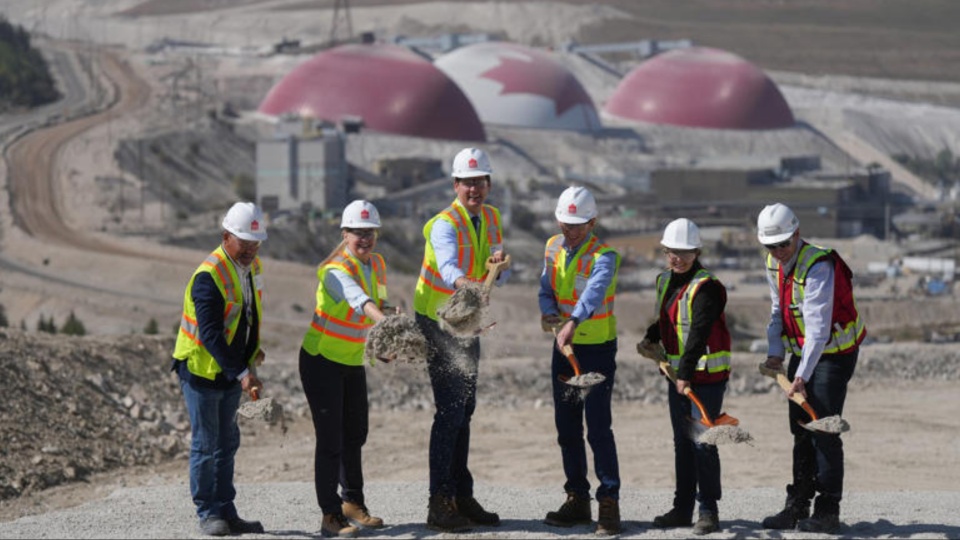
The immediate objective of Bill 31 is to fast-track the construction of the North Coast Transmission Line, which will transmit hydro electricity from Prince George west to Terrace, and then north to Bob Quinn Lake on the border of Alaska. This line is designed to attract investments into “critical mines, port expansions, and Liquid Natural Gas and resource development.”
In general, the bill will fast track the expansion of public energy infrastructure in northern B.C. by exempting large scale projects from having to seek approval from the B.C. Utilities Commission (BCUC). The BCUC is the body that would otherwise determine whether or not a project proposing to connect to the electricity grid is in the public interest. The bill will also eliminate the requirement of public consultations.
Addressing the anti-democratic aspects of Bill 31, Eby confidently proclaimed that the next election will decide whether or not his center-left New Democratic Party made the right choice. “We are making the decision as a government that this is in our public interest,” the B.C. premier said. “We will be held accountable for that decision by voters. But to my mind, there is no debate with this.”
This proposed legislation would be a complement to Bills 14 and 15, passed earlier this year to circumvent the requirement for informed prior consent from Indigenous nations and to override the need for environmental assessments.
Bill 31 will also cut some of the start-up costs for resource extraction projects. The current regulations governing the province’s publicly-owned electricity company, B.C. Hydro, state that the cost of the “basic transmission extension” falls on the customer. In other words, companies must pay for connecting their business to the public electrical grid.
These upfront costs are meant to keep electricity rates low for the average B.C. resident. Eby wants to eliminate them to attract investment, essentially to subsidize private corporations at the expense of working people.
The first two-thirds of constructing the North Coast Transmission Line is estimated to cost taxpayers $6 billion CAD, up from $3 billion a few months ago. The cost of the final phase has yet to be announced.
Eby’s rationale for these subsidies to private companies is that these projects will have an outsized impact on the provincial economy. Citing a report released by the Mining Association of B.C., the advocacy organization for private mining companies in the province, Eby claims that the North Coast Transmission Line will create “approximately 9,700 direct full-time jobs, contribute nearly $10 billion per year to GDP, and generate approximately $950 million annually in public revenues for the province and municipal governments.”
The Mining Association of B.C. has been pushing for this kind of deregulation for a while, including public investment into “electrical infrastructure.” Its president, Michael Goering, was quoted in the province’s press release for Bill 31. “The North Coast Transmission Line,” he said, “will strengthen Canada’s position as a leading global supplier of critical minerals and metals.”
Supplying the Department of War
The announcement of Bill 31 comes at a time when the United States government is looking to Canada, among other countries, to secure mineral sources necessary for the development of technology, especially military technology.
On Oct. 6, the U.S. Department of War (formerly the Department of Defense) purchased a 10% stake in Trilogy Metals, which has mining operations in northern Alaska. On Oct. 1, the U.S. Department of Energy announced a 5% stake in Lithium Americas, which mines in Nevada. Both companies are based in Vancouver.
Another Vancouver-based mining company with assets in B.C. could be next.
Defense Metals owns the Wicheeda mine located 80 kilometres north of Prince George. The mine is advertised as a “reliable, Western-aligned supply of vital minerals, reducing reliance of foreign sources.” According to Defense Metals President and CEO Mark Tory, Wicheeda is one of the world’s most significant deposits of rare earth minerals.
Defense Metals received $853,825 from the Canadian federal government to conduct a feasibility study in May and is planning on completing it in early 2026. Notably, B.C. Hydro received $25 million in that same round of federal grants, to do their own technical assessment of the North Coast Transmission Line expansion.
Defense Metals has assured its potential investors that “there is momentum within the Government to accelerate the permitting process, especially in B.C. where the Wicheeda project is located.”
Tory has had favourable meetings with David Eby and traveled alongside Canadian Prime Minister Mark Carney on a trade mission to Germany in August. Tory was also invited to participate with Energy and Natural Resources Minister Tim Hodgson in a roundtable on how the Canadian government can support expanding mining projects in B.C.
It’s not only Canadian governments that are interested in Wicheeda mine, however. “U.S. authorities” have also “expressed an interest in supporting the Company as it develops the project.”
In fact, Defense Metals has close ties to the current U.S. government. Tory has bragged about the support they receive from the Republican Party and said they are “open to any potential funding” the United States might offer. Two of Defense Metals advisors include Andrew Leland, a former engineer with Lockheed Martin and Karl Wagner, who spent 29 years with the CIA before becoming the head of global security at Tesla.
In a press release from Defense Metals announcing his hiring, Senior Vice President of Corporate Development Avi Mahdavi emphasized that the company is in an “excellent position at a time when Canada and the U.S. are accelerating their plans to secure the domestic supply of these critical minerals.”
Canada’s economic direction
In November, the Foreign Ministers of the G7 met Ontario, following up on the discussions that were held in June’s G7 leaders meeting in Alberta regarding the need for securing rare earth minerals in the face of growing economic trade tensions between China and the United States, and the escalating drive to war.
While value-added manufacturing jobs are flying out of the country, federal and provincial governments are positioning Canada to be a leading exporter of raw materials. Carney has already been making supply chain agreements with NATO allies Germany and Britain. Defense Metals also boasts about the proximity of Wicheeda to the Prince Rupert port to Asia, although CEO Tory has clarified that they won’t be shipping to China.
In the context of Eby and Carney both having used U.S. tariffs and the specter of deteriorating economic relations with the Trump administration as a smokescreen to push deregulation, you might expect that investments from the U.S. government into Canadian mining might be a cause for concern. You’d be wrong.
“The fact that an ally of ours chooses to make an equity investment into a Canadian company whose sole asset is in the United States, I don’t think that bothers us at this time,” Hodgson said.
“That’s capitalism in action.”
People’s Voice
We hope you appreciated this article. At People’s World, we believe news and information should be free and accessible to all, but we need your help. Our journalism is free of corporate influence and paywalls because we are totally reader-supported. Only you, our readers and supporters, make this possible. If you enjoy reading People’s World and the stories we bring you, please support our work by donating or becoming a monthly sustainer today. Thank you!
CONTRIBUTOR