The focus this week is on the special Congressional election in Tennessee, where the Republicans managed to hold onto a seat. But a month ago in Virginia, Democrats swept the 2025 statewide races, picking up 13 additional seats in the House of Delegates. While this was a needed win against the forces of MAGA, the contests in Virginia deserve closer scrutiny.
While the vote was a net win for Democrats, the Virginia “blue wave” that the mainstream media reported on this year was somewhat of an optical illusion resulting from massive Democratic margins in Northern Virginia (NoVA) rather than from the creation of a sustainable base centered on the working class and the affordability crisis.
Before the election, a CNU poll found that the cost of living and inflation were the major concern for most voters, no matter their political affiliation. There already existed deep structural faults in the economy before Trump took office in January (the real unemployment rate—including the underemployed and those paid poverty wages—in November 2024 was 23.7%). But the president’s trade war, DOGE, and One Big Beautiful Bill Act have shattered what was once a sense of economic isolation and stability in NoVA, where the local economy is dependent on federal employment.
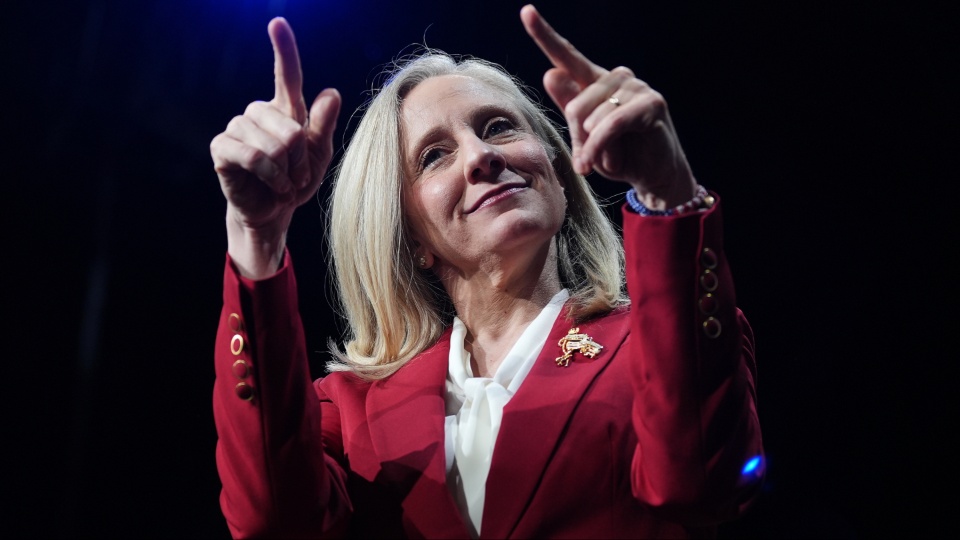
NoVA accounted for 85% of Democratic Gov.-elect Abigail Spanberger’s statewide vote margin, with Fairfax County alone making up nearly 41%. Throughout the state, Democrats also won their strongholds in incorporated cities, such as in the Virginia Beach area and around Richmond, while Republicans won rural regions. Despite this, only 53.4% of registered voters participated in the election overall. If “politically disengaged” was a candidate, they would have beaten Spanberger by 17 points, and that should not be surprising to anyone who witnessed her conservative campaign.
The statewide Democratic candidates were, in many ways, disappointing from a progressive or working-class point of view. Spanberger, a former CIA agent, ran what has now become the standard centrist Democratic campaign: anti-Trumpism with a message of law-and-order mixed in. Her refusal to back repeal of the state’s anti-union right-to-work law resulted in the state AFL-CIO opting not to endorse her.
Lt. Gov-elect Ghazala Hashmi was the most “progressive” candidate, but after the primary, she walked back her opposition to the right-to-work law. Attorney General-elect Jay Jones was mired in a text scandal that nearly snatched defeat from the jaws of victory and is currently embroiled in a reckless driving scandal.
Somehow, despite this, the Democratic candidates were objectively the harm reduction choices in comparison to their opponents. The statewide Republicans ran a campaign of their now typical transphobia, focusing on dismantling the public school system and hallucinatory claims about violent crime. Their records reflected a protracted class war against the working and poor people of Virginia.
There were a few candidates for other offices in the state which attracted the more enthusiastic attention of progressive forces, including the Communist Party in Virginia.
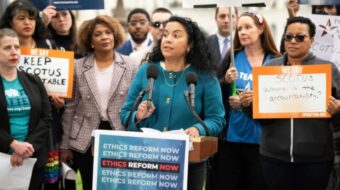
Sam Rasoul is a Roanoke native and has been a member of the House of Delegates since 2014. He has often been one of the most progressive voices in that body. Most notably, as the son of Palestinian immigrants, he has spoken out against Israel’s genocide in Gaza and is a staunch supporter of Palestinian self-determination.
Rasoul is also a strong advocate for Virginia teachers, sponsoring legislation to raise teachers’ salaries and fighting for their right to collectively bargain. Together with New York City Mayor-elect Zohran Mamdani, Rasoul participated in a five-day hunger strike in front of the White House in the wake of Israel’s invasion of Gaza, and both of their campaigns were deeply focused on the affordability crisis. If Democrats could look past their own Islamophobia, they could find a repeatable, winning strategy across the nation.
Nadarius Clark was the youngest ever Virginia Democratic Delegate at 26 years old when he was first elected in 2021. Growing up in Hampton Roads in a Navy family, he’s introduced bills to limit the ability of debt collectors to go after members of the working class for medical debt.
Last year, he attempted to cap rent increases across the state and he wrote the bill that Rasoul co-sponsored to raise the pay of public sector teachers across the state. Clark also supports financial reparations to the descendants of slaves. Once again, Clark has shown that relieving the affordability crisis is a winning policy.
Elizabeth Guzmán is a naturalized citizen born in Lima, Peru, and a social worker by profession. She was first elected to the House of Delegates in 2017, but in the last Virginia Senate election, she tried for a state Senate seat and fell short. This election, she won a House seat again in the 22nd District by ten points.
She has been a strong supporter of organized labor, being a second-generation union member, and supported overturning the ban on the public sector’s right to collectively bargain. In her first term, she helped pass Virginia’s Medicaid expansion, bringing affordable healthcare to 400,000 more people.
Guzmán has continued to support immigrants’ rights and fought against outgoing Gov. Glenn Youngkin’s further criminalization of vulnerable communities. She is a staunch defender of LGBTQ rights and has been especially bold on the rights of trans youth, an area where too many Democratic politicians have been lacking lately. She won with the support from all these sectors and promised further relief in the affordability crisis.
The greatest benefit of the election is that the working class of Virginia will have a temporary reprieve from the Republicans’ onslaught. But after examining the election data, it must be stressed how ephemeral the Democrats’ majority will be if they do not take serious measures to alleviate the cost of living crisis.
Affordability politics is successful because it is the only real amelioration for the crisis of capital, or the tendency of the rate of profit to decline. The AI hallucination of infinite growth proposed by Sam Altman and the other tech titans, with data centers at its center, will not bring back the postwar era of prosperity prosperity—and neither will the racism and expanded incarceration system underlying the Make America Great Again agenda.
No matter what any politician promises, those days are gone forever, born of a unique historical moment, and no one can turn back time. This leaves an opening for progressives across the country, but some of them too wish to return to an era when government capacity had not decayed due to the deep corruption of capitalism.
Ultimately, the Democrats winning was, of course, a good thing, even if it wasn’t the ultimate answer to the problems facing the working class. As Lenin wrote in State and Revolution, the “democratic republic” is the “best form of state for the proletariat under capitalism,” but “wage slavery” remains “the lot for people even in the most democratic bourgeois republic.”
It’s important to remember that almost half of people are politically disengaged, skeptical that politics as they exist can yield anything productive for their lives. They are looking for answers to the deep alienation, hopelessness, and isolation that late-stage of capitalism produces. Marxism looks past the constraints of declining profit rates and a dying empire to provide the solutions that are needed.
As with all op-eds published by People’s World, the opinions expressed here are those of the author.
We hope you appreciated this article. At People’s World, we believe news and information should be free and accessible to all, but we need your help. Our journalism is free of corporate influence and paywalls because we are totally reader-supported. Only you, our readers and supporters, make this possible. If you enjoy reading People’s World and the stories we bring you, please support our work by donating or becoming a monthly sustainer today. Thank you!
CONTRIBUTOR