Dr. Gerald Horne recently published The Capital of Slavery: Washington, D.C., 1800-1865. The book’s title represents how Washington, D.C., was the capital of a country whose political-economic system was based on the enslavement of Africans. Slavery wasn’t the sideshow; it was the main event, and it was foundational to the capitalist system of the United States of America.
In calling Washington, D.C. “The Capital of Slavery,” Horne is, in part, referring to how 10 Presidents, including George Washington, Thomas Jefferson, James Madison, Andrew Jackson, etc., before the Civil War, were wealthy slave owners, and two more after the Civil War owned slaves at some point. Twenty-six of the first 30 Supreme Court Justices were slave owners, or at least 30 Supreme Court Justices in total were slave owners, and at least 1,800 members of Congress were slaveholders at some point.
The three branches of the U.S. Government were dominated by slaveholders throughout the time period of the founding of the country until the Civil War, which resulted in the 13th Amendment and the technical abolition of slavery in the United States. The U.S. Constitution was written and designed to defend private property (which is central to capitalism) and protect the “minority of the opulent (the wealthy) against the majority,” as James Madison, a wealthy slave owner, said himself. The most valuable form of private property in the United States up until the Civil War was enslaved Africans, as this form of “private property” was worth more than all other private property, such as railroads, factories, and banks combined. 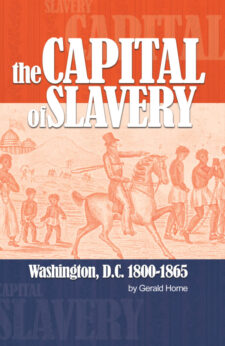
The Constitution protected enslaved private property. The United States was a slaveholder’s republic (or a slaveholder’s and wealthy white male property owners’ republic). This means it was a representative government, but only for white slaveholders and rich property-owning white males (all white males were later allowed to vote during the Andrew Jackson presidency).
Horne has said that this book represents a sequel to his book, The Counter-Revolution of 1776: Slave Resistance and the Origins of the United States, where Horne shows that most enslaved Black Americans joined the British during the Revolutionary War because this represented the best chances for them to get out of enslavement. The British were offering enslaved Black people freedom if they fought with them.
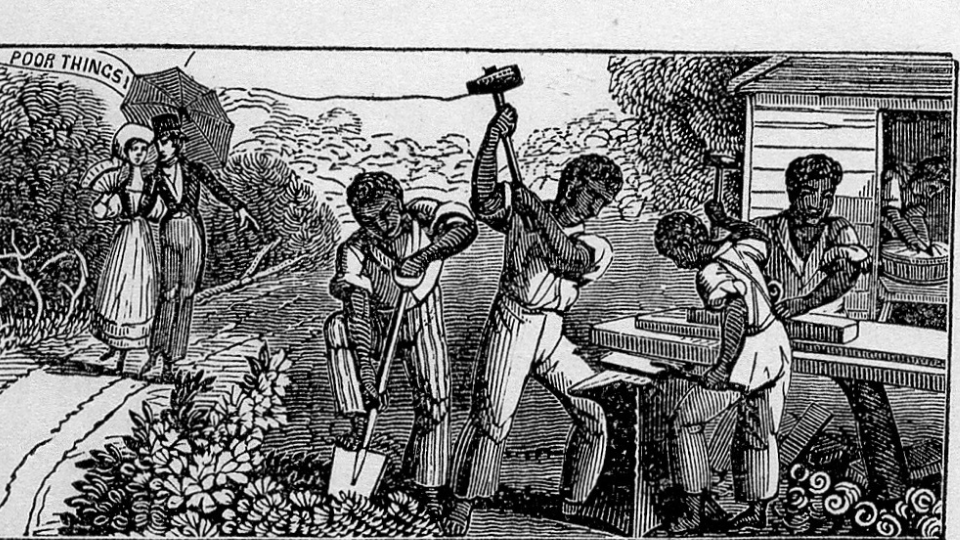
Horne points out that enslaved Black people represented the unpaid sector of the working class. This is an important corrective as many people often don’t see slavery as a site of class exploitation, class oppression, and class struggle. He builds on W.E.B. DuBois, who puts this idea forward in Black Reconstruction. Horne shows that enslaved Africans engaged in unremitting class struggle. Class struggle means that a dominant class exploits and oppresses a working class, and the working class then organizes and fights back against its exploiters and oppressors.
In capitalism, the working class organizes and fights the capitalist boss class for eventual working-class democratic control over the economy and society. Horne’s history lessons need to be taken in and connected with the Marxist idea of the multiracial multinational working class’s fight for democratic control over the economy and society, and the fight for an economic system that puts the people and planet before profits.
Horne shows that Washington, D.C., was a slave-trading hub, as it was located adjacent to Virginia, the largest colony at the time of the Revolutionary War. Virginia was a slave society, as enslaved Africans represented Virginia’s primary workforce. Horne teaches about the horrific and often not talked about “slave pens” that held enslaved African people for later resale as if they were livestock and not human beings.
During the War of 1812, many enslaved African people helped and joined the British in August 1814 when the British burned down the White House in an attempt to overthrow the slaveholder’s republic because once again the British offered enslaved people of African descent freedom for fighting with them. The Star Spangled Banner was written after the end of this war by U.S. slaveholder Francis Scott Key, which has the line, “no refuge could save the hireling and slave from the terror of flight or the gloom of the grave, and the star spangled banner in triumph doth wave, o’er the land of the free and the home of the brave.” The line is meant to scorn or threaten enslaved African Americans who fought with the British in the War of 1812.
In the book, Horne writes about how many of the slaveholding elite political leaders of the United States started the American Colonization Society to deport freed African people to Liberia, essentially because freed African Americans gave the enslaved population “wrong ideas”: that Black people could be free and slavery wasn’t a natural condition for Black people to be held in.
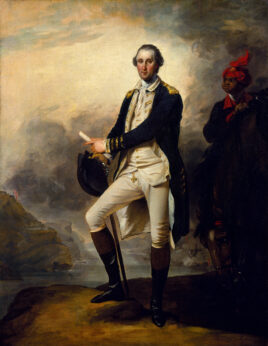
The white planter class and elite whites blamed the free Black population of Baltimore, Maryland, for supposedly inspiring enslaved Africans to join the British in the War of 1812. This is reminiscent of the Trump and MAGA coalition seeking to “whiten” the United States again with their immigration policies in fear that too many non-white people will dismantle their white supremacist class collaborationist capitalist project.
Gus Hall’s Working Class USA describes class collaboration in the glossary section as “trade union politics of non-struggle class partnership,” accommodating the wishes of the boss rather than the needs of the workers.”
Horne argues that it was the class struggle led by the enslaved and their allies and international pressure that helped end chattel slavery. He argues it was events such as the Haitian Revolution, Nat Turner’s revolt, John Brown’s revolt, not to mention constant resistance by enslaved people, and more that helped bring down the institution of chattel slavery. The Haitian revolution and slave revolts in the British Colonies of Jamaica, Barbados, and Antigua, etc., were key in pushing Britain to support the abolition of slavery because this worldwide economic, political, and social system based on enslaving people was untenable.
Horne adds on to W.E.B. DuBois’ argument that the enslaved African Americans withdrew their labor from the slaveholding Confederacy in a general strike and joined the Union Army to fight against the slaveholding white supremacist confederacy. The lesson that international pressure helped to end chattel slavery teaches us that we need to leverage and lean into international pressure in today’s multiracial/multinational working class fight for working class democracy and an economic system that puts the people and planet before profits.
These ideas need to be seriously understood and grappled with: capitalism, white supremacy, capitalist exploitation, exploitation of the working class, the state apparatus to keep the enslaved workers and the working class in check, and settler colonialism where the Euro-American “white” population is made into class collaborators with the capitalist ruling class in order to steal the land of the indigenous population and perpetuate racist exploitation and oppression of non-white people.
Horne argues that class collaboration was inherent to the origins of the United States, specifically its settler-colonialism. He also has said that whiteness is the height of class collaboration and class collaboration is the height of whiteness. In other words, one of the main purposes of whiteness and white supremacy is to unify the Euro-American population, such as the exploiting Euro-American capitalist class and Euro-American working class, in perpetuating the exploitation and oppression of Black and indigenous people.
For instance, poor “whites” in the antebellum and postbellum South saw the enslavement of Black people and white supremacy as in their interests, even though they were still poor. Poor and lower-class whites were overseers and slave patrols. Horne argues that similarly today, Trump’s MAGA coalition is a heterogeneous class mixture of elite CEO’s, small business owners, and working-class people. The 77 million people who voted for Trump represented many working-class forces. This was also class collaboration in action.
Horne’s main argument is added onto in this book: The founding of the United States represented a counterrevolution led by slaveholders and wealthy white settlers who sought to protect slavery and expand to steal the land and commit genocide on the indigenous people. He argues that the founding of the United States was not a step forward for all humanity because a great portion of humanity is Africans and indigenous people, as the former were enslaved as a part of this project, and the latter were victims of genocide and land theft.
Horne argues that these ideas need to be internalized for liberal and left-wing activists today so we can move forward in our fight for multiracial, multinational working class democratic control over society and an economic system that puts the people and the planet before profits.

For instance, the No Kings protests are supposed to reference the United States’ “revolutionary origins” in the fight against the British King, arguing that President Trump wants to be a King. Horne argues that merely saying, “Monarchy bad, Republicanism good” is not enough for today’s battle against fascism, white supremacy, poverty, and class oppression, as the United States started off as a slaveholder’s and rich white male exploiting elite republic as well as a settler colony based on theft of the indigenous land. “Founding Fathers” like George Washington, Thomas Jefferson, and James Madison, etc. were slave owners and land speculators, and Trump is similarly a land owner and land developer and also a white supremacist.
Horne has said we should graduate from the slogan of “No Kings” to “No Capitalism, No White Supremacy.” White racism or white supremacy actually hurts Euro-American working-class people in perpetuating the system of exploitation, systemic poverty, pollution, and threats to annihilate humanity in either capitalist destruction of the environment or nuclear war in the capitalist ruling class’s attempts to continually dominate and exploit the planet.
The Capital of Slavery: Washington, D.C., 1800-1865
By Gerald Horne
ISBN: 978-0-7178-0060-5
We hope you appreciated this article. At People’s World, we believe news and information should be free and accessible to all, but we need your help. Our journalism is free of corporate influence and paywalls because we are totally reader-supported. Only you, our readers and supporters, make this possible. If you enjoy reading People’s World and the stories we bring you, please support our work by donating or becoming a monthly sustainer today. Thank you!
CONTRIBUTOR