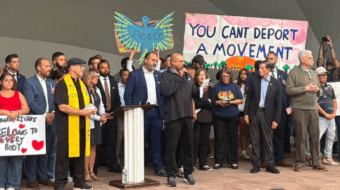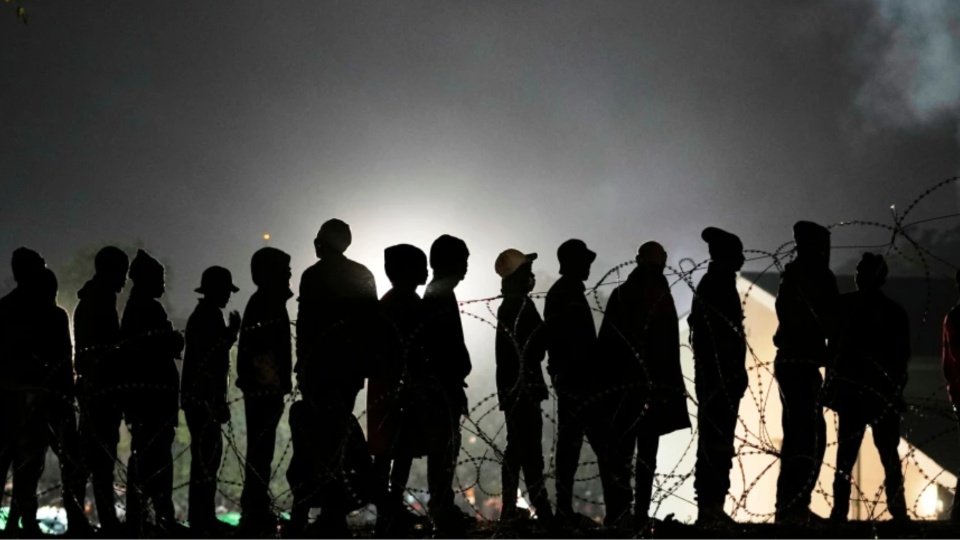
Thousands hit the streets in Durban, Johannesburg, and other cities in South Africa on June 30 to participate in over 120 separate marches demanding that all “illegal foreigners” leave the country. Over 900 participants were arrested, shops were looted in several places as the protests turned violent, and at least two people were killed. Further deaths in the aftermath of the marches are under investigation.
So widespread was the unrest that President Cyril Ramaphosa held an emergency meeting with key protest organizers to call for calm. Ramaphosa seemed to acknowledge the demands of marchers, saying, “South Africans have raised deep concerns about illegal immigration, border management, pressure on public services.… These concerns are real, and they deserve to be heard.”
Although it appears turnout did not live up to organizers’ expectations, the anti-immigrant demonstrations have already had a big impact which will not be good for the wellbeing of South Africa and other African nations, or for South Africa’s diplomatic relations with its neighbors.
“Xenophobic” and similar outbursts are not new to South Africa. In 1949, there was rioting against South Asian (called “Indian” locally) people in Durban, in which scores were killed. On that occasion, the pretext was that “Indian” merchants were cheating Black residents of that city.
As the apartheid system drew to an end in the early 1990s, a similar outburst occurred, also centered in Durban and its environs, as well as other major cities. In that situation, it was pretty clear that forces associated with imperialism and the old apartheid order were instigating and supporting the most violent elements, whose targets were always people working to end apartheid.
These included not only the white regime’s government and police, but also powerful figures among the Black majority who had, and were threatened with losing, privileged positions within the so-called “Bantustans,” pseudo-independent states within South Africa. The right-wing forces were defeated then, but they did not disappear entirely from South African politics.
In 2008, a round of anti-migrant riots left 62 people dead and sparked mass robbery, looting, and mob violence. The government is desperately working to keep that from happening again.
The forces behind June 30th violence
This time, the focus of action is to “March and March” against “foreigners” who are accused of taking jobs that South Africans should have, or, in many cases, starting small businesses and thereby limiting the business opportunities for locals. In both cases, the protests are aimed, not at wealthy white people or transnational corporations, but at other relatively poor Black people, from Zimbabwe, Malawi, Somalia, Nigeria, Ghana, etc.

The main sponsor, a group calling itself March and March—which includes the well-known influencer and media personality Jacinta Ngobeze-Zuma as its most prominent figure—had set a date of June 30 for all undocumented immigrants to leave South Africa or face the wrath of the marchers.
The March and March movement is backed politically by former President Jacob Zuma’s uMkhonto weSizwe (MK) Party. It has also earned praise from the ActionSA party, a breakaway group from the Democratic Alliance, which is part of the current governing coalition.
March and March’s threat of vigilante violence was an act of defiance against the South African government as well as an expression of hostility toward migrants. On the 30th, moderately large crowds of marchers did gather in Durban in Kwazulu-Natal province, in Johannesburg, and other cities. There was vandalism and looting of properties belonging to migrants, in some cases without regard to whether the migrants were in the country legally or not. It appears that the only people targeted were Black migrants from other African countries.
Ramaphosa’s government has responded rather weakly to this situation. While mobilizing police and exhorting demonstrators not to use violence, it has also made verbal concessions, as indicated by the president’s statement in his meeting with march organizers, promising to be tougher on “illegal immigration” in the future. This pleased some people, but not all.
Class-conscious condmenation
Objections to the targeting of “illegal foreigners” came from disparate directions in the South African body politic. The South African Communist Party (SACP) issued a strong statement in favor of defending the rights of all workers.
“No private grouping has the authority to determine who may live, work, or travel in our country,” the party said. “Such conduct undermines the Constitution, the rule of law, human dignity, equality, democratic governance, and the values of African solidarity.” The SACP called on workers, communities, trade unions, and all democratic forces “not to join vigilante-group deadlines and marches.”
It also had words for the government, rejecting “any conduct by the state that appears to legitimize, accommodate, or affirm the unlawful deadlines set by vigilante groupings.”
In just the past month, over 53,000 immigrants have been deported or repatriated by the government as part of a mass crackdown on undocumented migration. More than 80% of those were from Malawai.
“Whether inside or outside government, a genuinely class-conscious or disciplined left movement will never exploit the suffering and insecurity of the working class, regardless of nationality, for narrow electoral or other gains,” the SACP said. “Instead, it will strive to unite all victims of capitalism, irrespective of nationality, in the common struggle against imperialism, monopoly capital, and exploitation.”
Malvern de Bruyn, a leader with the Congress of South African Trade Unions (COSATU), said that, like the SACP, the union federation “rejects with contempt the co-called June 30 deadline,” accusing those behind the marches of causing “chaos, suffering, and violence.”
Broad opposition to scapegoating
Forces often at odds with the SACP and COSATU also condemned the marches on similar grounds.
Zwelenzima Vavi, the leader of the South African Federation of Trade Unions, which often clashes with COSATU, stressed that projecting anger horizontally to blame other working-class people lets the major culprits, such as abusive employers and corrupt politicians, off the hook.
Vavi wrote, “Migrants did not create South Africa’s unemployment crisis. They did not cause the collapse of local government. They did not deindustrialize the economy. They did not cut public spending, close factories, privatise public services, weaken labour protections or allow corruption to flourish.”

Instead, he pointed to “centuries of colonial dispossession, racial capitalism, and apartheid exploitation” as the roots of the current crisis. The democratic breakthrough of 1994 that ended apartheid, he pointed out, “did not fundamentally transform the economic structures that continue to concentrate wealth, land, and economic power in the hands of a small minority.”
Julius Malema of the Economic Freedom Fighters, often seen by many in and beyond of South Africa as a sort of provocateur, essentially said the same thing: “An unemployed South African and an unemployed Zimbabwean are both victims of the same system of inequality and exploitation. A Nigerian street trader and a South African worker are not enemies. A Somali shopkeeper and a township resident are not enemies.”
Why blame immigrants who run little corner neighborhood stores, called “spaza shops” in South Africa, for instance, and not say anything about the gigantic and hugely exploitative mining corporations?
Attacking fellow Africans with little wealth or power seems foolish when, for over a century, giant transnational corporations have brutally exploited not only South African-born mine workers but generations of workers from neighboring countries, as well. These workers have been worked half to death under dangerous conditions in the mines, and then sent back to their homelands sick with tuberculosis and other deadly diseases of the mines.
From quite another point on the political compass came words from the traditional Zulu king, Misuzulu ka Zwelethini. He pointed out that some of the countries from which migrants come, including specifically Zimbabwe and Malawi, include many inhabitants of Zulu origin who migrated to them during disputes in the Zulu monarchy during the 19th century. Mzilikazi, one of King Shaka’s famous generals, took thousands of his followers in the 1820s into what is now Zimbabwe, where their descendants still live under the name of AmaNdebele. A Zulu migration into Malawi is also well-documented.
King Misuzulu could have mentioned a large migration of Zulus into Mozambique also, under General Shoshangane. The king’s point is that when Zulus in South Africa scapegoat migrants from these three countries, they may be scapegoating their own out-migrated kith and kin.
Multi-factor crisis
Context, as always, is vitally important. It’s estimated that migrants account for fewer than four million of South Africa’s population of 63 million, but they have long been scapegoated for crime and joblessness. Unemployment in the country is officially 32%, with the number soaring to 60% among youth, and there are forces who want to direct anger at migrants for these troubles.
The government, meanwhile, which includes a multiplicity of political forces, has faced a number of scandals over the last several years. After a setback in the last general election, a new government was formed from a multiplicity of parties, some of them based on ethnic and racial ties, or even including leftovers from the old apartheid days.
This has made actual governing raucous and extremely difficult for the president and his own African National Congress (ANC). The South African Communist Party already announced that in the Nov. 4 municipal elections this year, it will run its own candidates under its own name.
Attacks by the Trump administration—including accusations of slave labor against South Africa, sanctions threats, and publicity stunt welcoming ceremonies for white “refugees” to the U.S. from South Africa—add to economic uncertainty.
The rest of the continent is reacting very negatively to the South African situation. There are diplomatic protests and demands that the South African government pay restitution for harm done to citizens of Nigeria, Ghana, and other countries during the protests.
What is needed, precisely, to roll back the imperialistic looting of Africa is unity among all the African nations, not targeting working-class people and other ordinary folk on the basis of ethnicity, nationality, or migration status. This goal is of course easier to proclaim than to pursue, and it has no doubt suffered a serious setback in the aftermath of the June 30 marches.
We hope you appreciated this article. At People’s World, we believe news and information should be free and accessible to all, but we need your help. Our journalism is free of corporate influence and paywalls because we are totally reader-supported. Only you, our readers and supporters, make this possible. If you enjoy reading People’s World and the stories we bring you, please support our work by donating or becoming a monthly sustainer today. Thank you!
CONTRIBUTOR