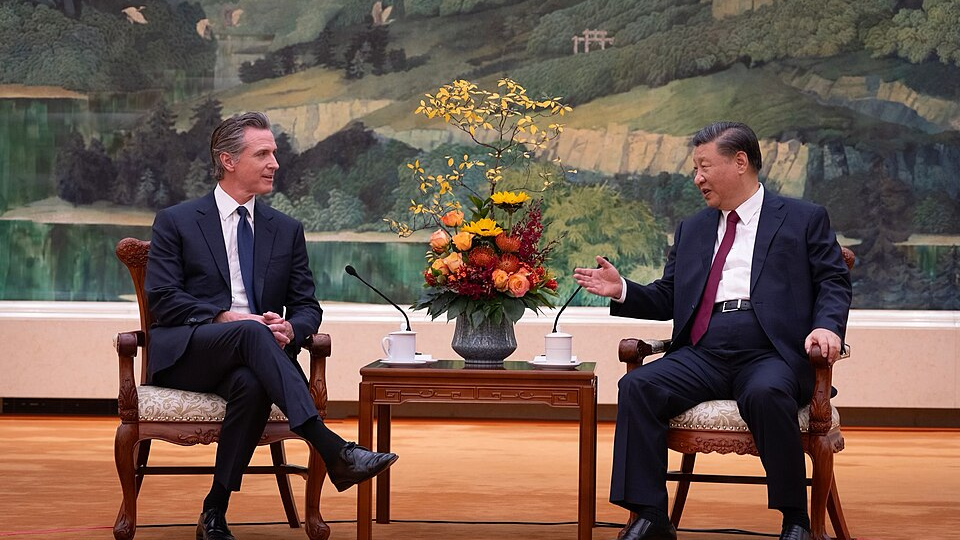
It’s been the standard practice for at least a generation that any serious contender for the American presidency must come out with a book.
For those whose campaigns fizzle out sooner rather than later, such volumes in short order occupy the remainder shelf.
For those who command a certain interest, voters, journalists, and other politicians will hie to the book for guidance on where the prospective candidate stands on any number of policy issues. A near-universal narrative arc for these books (many of them ghost-written or “with” a co-writer) is an inspirational come-up-from-behind story that shows how the candidate overcame adversity, learned their lessons well, and achieved an elevated sense of moral commitment to do the right thing by the American people.
California Governor Gavin Newsom’s autobiographical Young Man in a Hurry: A Memoir of Discovery, published in 2026, is much more than that—and at the same time, much less.
In mid-March of this year, obviously in the wake of the release, or impending release, of Young Man, Donald Trump told reporters, “Gavin Newsom has admitted that he has learning disabilities, dyslexia. Honestly, I’m all for people with learning disabilities, but not for my president.” (Look who’s talking!)
Newsom’s early childhood struggle with undiagnosed dyslexia is a major theme in his autobiography. Advised to accept the fact that he would only ever be “average”—such was the thinking at the time—it took Newsom years to adapt to his condition and hone a variety of techniques and protocols for reading, thinking, learning, and speaking. The recounting of that arduous work is part of the “discovery” in his subtitle. Today, for the most part, he does not stand out in public as someone who is greatly diminished or incapacitated. Quite to the contrary, he’s far more articulate than many who occupy such high positions in our democracy. 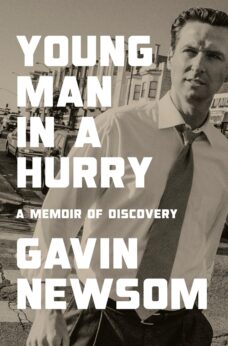
Dyslexia aside, Newsom has the reputation of being the child of privilege, for whom entitlement was built into his social status. Most people know that he was informally adopted into and raised by the ultra-rich Getty family in Northern California and Montana, owing to the prominence of his father, William, a judge. We are privy to the pricy vacations, the introductions to famous and powerful people, and the upper-class culture of affluence.
Yet Newcom also introduces us to the other side of his unique equation, the poorer side—his mother’s—and the deep veins of troubled personalities in several generations of his family. While on the surface a prospective reader might assume this book is a political autobiography, an overwhelming majority of its pages are devoted to parsing out the peculiarities and idiosyncrasies of his strange relatives. His maternal grandmother, Jean Addis Menzies, was “a Red…a true bohemian, a beatnik before beatniks were a thing,” who took off for Soviet Russia in the 1930s for a time. His mother, Tessa, worked three jobs to support Gavin and his sister, Hilary. The writer devotes several pages to the various jobs he held as a boy—home newspaper delivery on a bicycle is one.
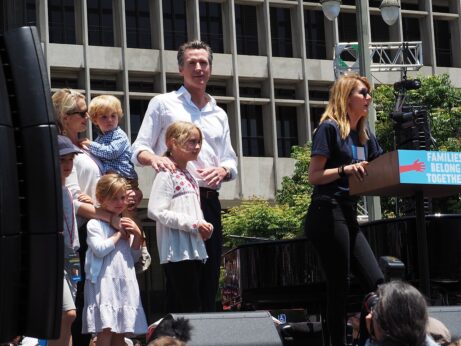
Newsom has plumbed every available source for his genealogical research, and we readers are the beneficiaries of it, in excruciating detail, going back as far as his great-great-grandfather on his neighborhood rounds as a San Francisco cop 150 years ago. The more Newsom uncovers of his family history, the deeper he is driven to go. “Who were they, truly? I began to tunnel backward, the questions more lucid in my head. I might have stopped at the first painful revelation, but my obsessive gear kicked in, and I kept on boring deeper into the past.” (If I were his editor, I might have advised against using the word “boring.”)
If that’s what floats your boat, well, there’s a lot of it here. I suspect the eyes of many a reader will glaze over at the sheer amount of anecdotal minutiae he has dredged up. In the final words of his Acknowledgments, he calls the book his “testament to the love my parents, William and Tessa Newsom, had for their children, and the love we have for our children.… This book, after all, is for them.” So very gracious to invite us, readers, into the intimacy of that tight circle, but let it be noted that in that sense, Newsom overfulfills our expectations.
Say the name Gavin Newsom and many, perhaps most, will recall how, in 2005, only a year into his mayoralty of San Francisco (following in the footsteps of his mentor Willie Brown), he ordered City Hall to start conducting same-gender marriages. Seen at the time, by the political establishment, as an impetuous move not backed by any traditional interpretation of the law, it’s the one passionate policy decision he most dwells on. He also devoted considerable attention to climate change, containing the spread of plastics, mental health care, and gun laws, but a reader would likely have to go elsewhere for a full-bodied exposition of just what he did and how he got it done. As Governor, he campaigned on the logic and necessity of single-payer healthcare for California, but he has—charitably—slow-walked away from it once in office. I don’t recall the subject even being mentioned in the book. Nor, curiously, is the 2021 recall election, which he won handily.
The memoirist does not shirk from discussing his early, disastrous marriage to Kimberly Guilfoyle, who later wound up in the arms of none other than Donald Trump Jr. And he is a faithful recorder of the far more successful marriage he embarked on in 2008 with Jennifer Siebel, admitting his discomfort, as a man, pulling his weight in the baby-care department. The narrative stops short of the 2024 presidential election, but before that, in November 2020, there was the dust-up around Newsom patronizing an upscale restaurant in Napa Valley with a dozen friends at a time when his office was issuing orders for people to stay home during the Covid epidemic. That episode goes unmentioned.
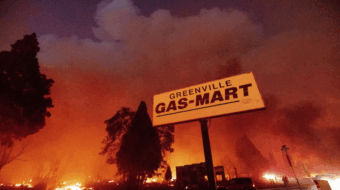
To me, the most memorable passage in the book is his recall of President Trump’s whirlwind visit to California at the time of the ravenous Paradise fire in 2018, which, as Lieutenant Governor (under Jerry Brown), Newsom accompanied. His description of those hours, which included a flight on Air Force One, as well as another on a Marine One helicopter, is a gem of first-person reportage. We are exposed to the pettiness, the ignorance, and insensitivity of this emotional monster that in their pithy essence borders on the sickly hilarious.
As for the 2028 election, toward which Newsom is clearly heading, there’s no speculation on it, even though Young Man is in many aspects his way of introducing himself sympathetically to the American public. In passing, he twice names Kamala Harris, “my longtime friend,” but who can say if a couple of years from now they won’t be contesting one another for the nomination.
If you love reading political memoirs, this is that, plus more than you’re ever likely to want to know about the history of the Newsom clan. If you’re looking for a bold statement of the kind of America Gavin Newsom would like to usher in once moving into the White House, you’ll probably find this introduction wanting. Clearly, however, this is not his last word.
Gavin Newsom
Young Man in a Hurry: A Memoir of Discovery
New York: Penguin Press, 2026, 291 pp., including index
ISBN: 9781984881939 (hardcover), also in other formats
We hope you appreciated this article. At People’s World, we believe news and information should be free and accessible to all, but we need your help. Our journalism is free of corporate influence and paywalls because we are totally reader-supported. Only you, our readers and supporters, make this possible. If you enjoy reading People’s World and the stories we bring you, please support our work by donating or becoming a monthly sustainer today. Thank you!
CONTRIBUTOR