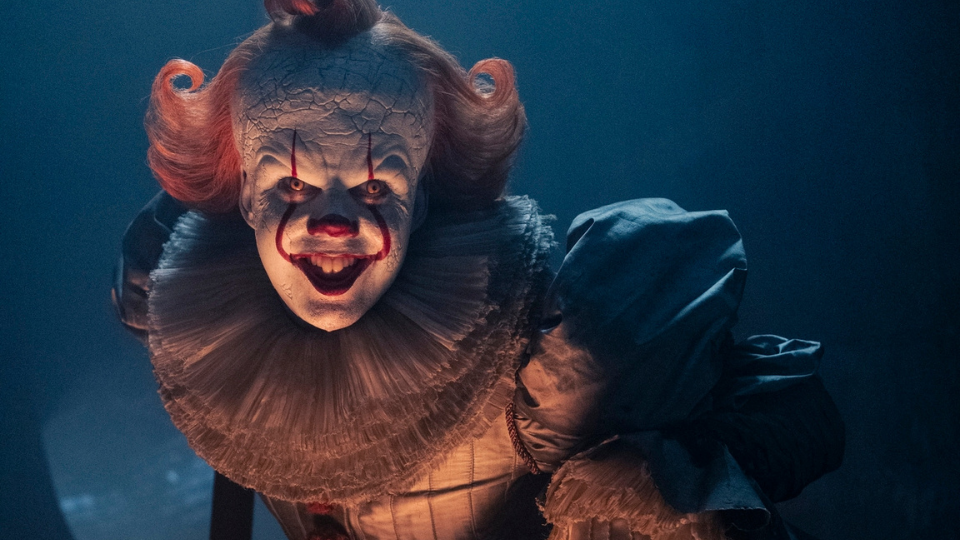
The unfortunate souls who suffer from coulrophobia—fear of clowns—will no doubt choose to skip the new horror series It: Welcome to Derry, just as they probably steered clear of viewing any of the film adaptations of Stephen King’s hit novel, It. That is a shame, given that the central monster of the story, Pennywise, is perhaps one of the most layered and socially relevant horror villains since King created them back in 1986.
It: Welcome to Derry explores the intertwined history of Pennywise and the fictional town of Derry, which they consider their home (read: hunting ground), in a new and thrilling way. While It explored the loss of childhood innocence in a brutal world, Welcome to Derry dives deeper into the psyche of a society that turns a blind eye to cruelty in order to keep up the facade of normalcy and hegemony. The horror comes as the killer clown once again symbolically turns their funhouse mirror on the folly of man and the real monsters in plain sight.
Streaming exclusively on HBO Max, the supernatural horror series is based on King’s 1986 novel and serves as a prequel to the earlier film adaptations, It (2017) and It Chapter Two (2019). The series was developed by Andy Muschietti, Barbara Muschietti, and Jason Fuchs, all of whom were involved in the recent films.
It is a story about a supernatural being that lands on earth, specifically the small town of Derry, Maine, in the early 1900s. Every 27 years, “It” awakens, takes on the persona of a killer clown named Pennywise, and terrorizes and kills many of the children of Derry. While generations of kids live in fear of the shapeshifting clown, much of the town seemingly ignores the unexplained disappearances and murders of children, as Pennywise has some sort of supernatural hold over the community that makes them willfully ignore the carnage and pain of their youth.
The 2017 and 2019 films focused on the main events in the original book, telling the story of a young group of misfits (known as the Losers Club) in Derry who band together in the 1980s and again in the 2000s to finally put an end to Pennywise’s terror. It: Welcome to Derry tells of other, less explored tragedies briefly mentioned in the original novel that helped shape the eerie town of Derry—tragedies in which Pennywise had a hand.
The series tells a story of supernatural generational trauma in a small town that, for all intents and purposes, presents itself as the “perfect” suburban community. Themes of racism, militarization, mental illness, and Cold War hysteria are intertwined within Pennywise’s reign of terror in 1962, the year season one takes place.
While the earlier films focused on specific characters, It: Welcome to Derry makes clear that its focus isn’t on individuals but rather on how a variety of characters are puzzle pieces in Derry’s sordid history. Pennywise exploits pre-existing fears in society and the children it terrorizes, and there is plenty for the clown to capitalize on. The season taking place in the 1960s is especially fruitful in this endeavor, given the fear of nuclear warfare and overt racial tensions that plague the decade. Many advancements were made in terms of civil rights on the basis of race during this time, yet, as integration grew, so too did “white flight.”
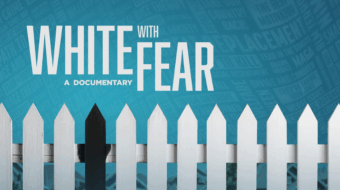
White flight is the term coined for the mass exodus of white people from urban neighborhoods to the suburbs in the 1950s and ’60s, primarily motivated by racial integration and fear of changing demographics. Derry in the ’60s represents the perfect alternative to the “boogeyman” of racial integration that so many white Americans bought into. The series uses horror to skillfully showcase the fact that this notion of perfection was a myth, and Pennywise’s hold over the townspeople symbolizes the near rotteness of apathy, racism, and isolation that can corrupt a community—a society even—creating a vicious cycle of death and trauma.
This is especially relevant and equally terrifying in our current time, when those in power push the idea of making an America that is “great again,” very much evoking this falsehood of white purity and a mythic time when neighborhoods were more hegemonic and therefore supposedly “safer.”
The panic surrounding the possibility of nuclear war that colored this time in history is also intertwined within season one in a clever way that keeps it connected to the supernatural horror while also exploring the military and the U.S. government’s behavior. Derry may be a fictional town with supernatural terror, but the series clearly illustrates how many of the societal ills that plague this locale have parallels in our own reality.
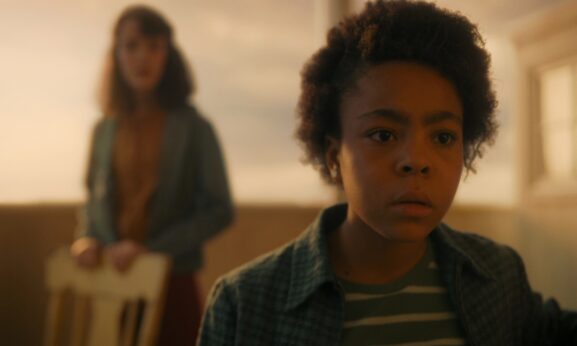
The major standout performances in the series come from Amanda Christine as Veronica “Ronnie” Grogan, Clara Stack as Lilly Bainbridge, and Taylour Paige as Charlotte Hanlon. The ability of these actresses to deliver the portrayals they do stems from the fact that the series’ creators have allowed women, particularly Black women, to be at the center of its point of view.
This is refreshing, given that far too many filmmakers who create movies set during this era seem to use it as an excuse to make the cast focused on white characters, with Black characters only appearing to experience racial trauma. And while racism happens in the story, it is not the defining plot point for characters like Charlotte and Veronica. This allows for a more interesting tale.
The character of Lily comes off as a reflection of the way women with mental health issues were treated during this time, often written off as “hysterical” and “crazy” or threatened with being sent away to mental institutions, where they often suffered abuse. Once again, some of the series’ scariest moments have nothing to do with the killer clown—and that demonstrates great storytelling.
Two of the most graphic and disturbing scenes of the series deal with the “miracle” of childbirth, a process that is often brutal on a woman’s body but glorified in a society that doesn’t respect the autonomy of said women. It: Welcome to Derry doesn’t shy away from the natural horror of the process, intertwining it within themes of the ideal nuclear family and the often untalked-about but deadly complications that can occur for women.
Those unfamiliar with the It novel and previous films should know that, while they may miss some of the initial significance in the scattered references throughout the episodes, the series’ creators have crafted a story that can also stand on its own. Fans of the films and the novel should expect something that isn’t just a rehash of what they’ve already seen. That may be welcoming to some in the fandom and a turn off for others, but approaching the series with an open mind will help along the way.
The main drawback of the show is perhaps the moments where the CGI is obvious and jarring. Technology may have advanced, but nothing beats the power of practical effects and storytelling.
If one views the previous It films as character studies on trauma and the loss of childhood innocence, then It: Welcome to Derry is a compelling social study of the ways a community can be corrupted by horrors both non-fictional and supernatural. The terror is there in a variety of ways, making for an exciting and impactful horror series.
We hope you appreciated this article. At People’s World, we believe news and information should be free and accessible to all, but we need your help. Our journalism is free of corporate influence and paywalls because we are totally reader-supported. Only you, our readers and supporters, make this possible. If you enjoy reading People’s World and the stories we bring you, please support our work by donating or becoming a monthly sustainer today. Thank you!
CONTRIBUTOR