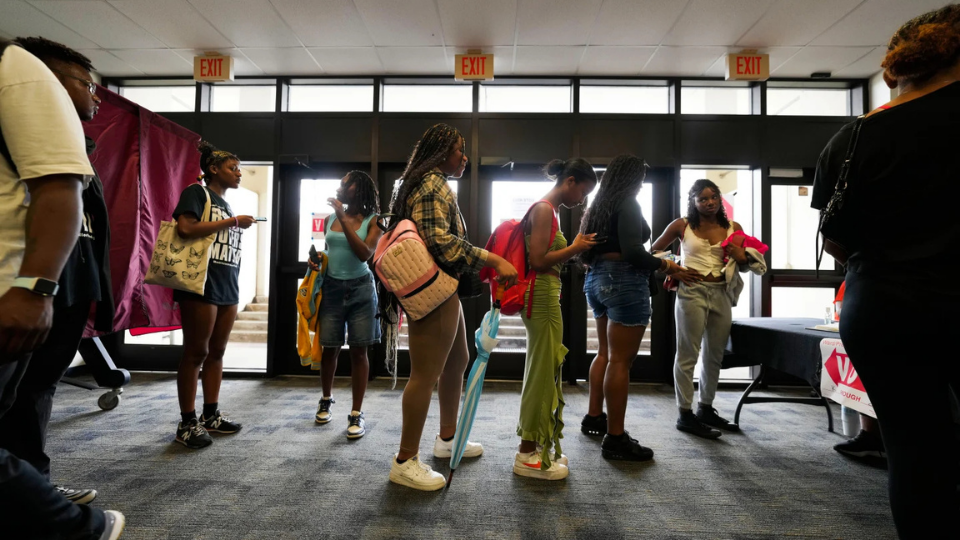
WASHINGTON—There was a time when it was perfectly legal in much of the country to refuse to serve Black people at lunch counters that were for “whites only.” There was a time when it was legal to relegate, based on race, who could drink from public water fountains or who had to sit on the back of the bus. There was a time when “segregation forever” ruled in many states.
That was eliminated when a powerful movement resulted in the passage of the Civil Rights Act of 1964. That law was followed by the landmark Voting Rights Act to become the second landmark legislative accomplishment of the civil rights era.
If the right wing Supreme Court majority rules soon as expected the last remaining piece of the Voting Rights Act will be struck down. Many ask whether the Civil Rights, the law that dealt such a severe blow to Jim Crow, will itself be the next target of the racists in power now in the White House, the Congress and the Supreme Court.
In a case with huge ramifications for the entire country, the Supreme Court is tackling and will hear arguments tomorrow whether to let stand or fall what’s left of the historic 1965 Voting Rights Act, a major achievement of the civil rights revolution.
And on past performance from the High Court, and in particular Chief Justice John Roberts, the outlook is not good in this case, brought in a lawsuit against voting rights from the state of Louisiana. Hopes that Roberts may moderate the views of the Trump appointees on the Court are likely false hopes because, ever since he was a young lawyer in Republican-run Justice Departments decades ago, Roberts has opposed the law.
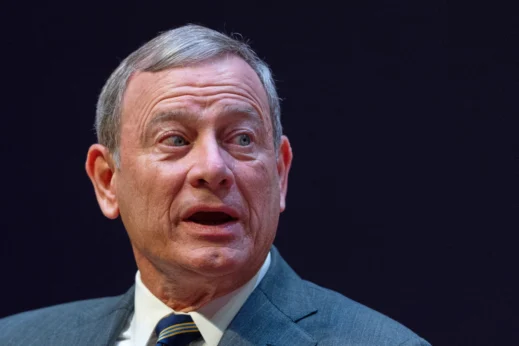
His one exception came two years ago, when the racial reasons for denying Black people the chance to win a second U.S. House seat in Alabama were so blatantly obvious that both Roberts and Trump-appointed Justice Brett Kavanaugh had no choice in the matter.
They, and the three Democratic-named justices, had to uphold a new Alabama judge-drawn map, after that lower court tossed out Alabama’s own map. It had only one majority-people of color district and, given that Alabama is 27% Black, and the racial polarization in voting there, it should have had two of its seven seats open to Black control.
Then, the justices ruled just on Alabama, without touching the big question of the Voting Rights Act’s constitutionality. Now, the way the Louisiana case shakes out, they can’t avoid it.
Louisiana is 31% Black, 7% Latino, 2% Asian-American, and 58% white. It has two Black U.S. representatives now. But the legislature—and the non-Black voters who sued—say that’s unconstitutional because the VRA’s key, and remaining, Section 2, is.
Lower courts split on the issue, first ruling against the legislature’s map and ordering one with two Black-influenced seats, but then ruling for a pro-white replacement map. The court, last year, put that second map on hold. The 2024 voting, under map #1, saw Louisiana elect two Black lawmakers.
Now the justices specifically want the lawyers to argue on the constitutionality of the remaining enforceable section of the Voting Rights Act, Section 2.
Unions and their allies have an interest in the case, even though they apparently did not file separate friend-of-the-court briefs with the justices.
That’s because if the jurists toss out Section 2, as Louisiana wants them to do, state legislatures around the country will be free of the last legal restraint they face when deciding to discriminate.
Donald Trump’s DOJ sides with Louisiana, but doesn’t completely obliterate the Voting Rights Act. It’ll tell the court that Section 2 can be used only in cases of proven intentional racial discrimination. The keyword is “intentional.”
And when lawmakers are free to discriminate, they can redraw lines—in U.S. House districts and state legislative seats and county councils and every other political body—to virtually nullify the rights of voters of color, who are more likely than others to support workers’ causes.
The practical impact? Two think tank studies calculate that should Louisiana win and the voters of color lose, the Congressional Black Caucus would lose 30% of its 62 members and the Congressional Hispanic Caucus would lose 11% of its 43 members.
Ever since Roberts became Chief Justice, 20 years ago, the increasingly Republican-dominated court has responded to the party’s white nationalist base by weakening voting rights and other protections.
The justices trashed the Voting Rights Act’s more-powerful Section 5, which mandated Justice Department approval of any measure affecting elections and voting in jurisdictions with histories of discrimination. All but a few were in Old Dixie.
The justices also repeatedly weakened voters’ power by giving free rein to corporate campaign cash for the last 15 years. That tsunami of dollars has overwhelmed workers’ voices at the polls.
The Legal Defense Fund, formerly the NAACP Legal Defense Fund, is arguing for a redrawn Louisiana map, used in 2024, which would give voters of color a shot at winning two of the state’s six seats, one centered in New Orleans and the other covering other parishes (counties), which they did.
“Section 2 authorizes race-conscious remedies only where, when, and to the extent required to respond to a ‘regrettable reality’ of ongoing unequal electoral opportunity based on race,” the Legal Defense Fund’s brief says.
“Only where a state makes ‘a strong showing of a pre-enactment analysis with justifiable conclusions’ will it have good reasons to believe Section 2 requires remedial redistricting. A valid court order affirmed on appeal necessarily constitutes a good reason,” the LDF says.
“If Section 2 is not available to protect Black voters in Louisiana, it will not end discrimination there or lead to a race-blind society, but it may well lead to a severe decrease in minority representation at all levels of government in many parts of the country,” LDF President Janai Nelson, who will represent the Black voters, wrote in the brief.
Those against voting rights for everyone want that court-ordered Louisiana map tossed, restoring Louisiana’s original map. That map allows voters of color only the New Orleans-based seat.
Louisiana’s heavily white Republican legislature justified that map on the basis of politics, not race—and the justices, led by Roberts, have already said that politically oriented redistricting is legal.
Specifically, the state lawmakers wanted to protect white incumbents, including House Speaker Mike Johnson and Majority Leader Steve Scalise, both Republicans.
But Louisiana didn’t mention Johnson and Scalise in their brief. Instead, they called Section 2 blatantly unconstitutional.
“Eliminating racial discrimination means eliminating all of it,” the state argues. The 14th Amendment commands the government “may never use race as a stereotype or negative.” Yet race-based redistricting rests on an invidious stereotype: That all minorities, by virtue of their membership in their racial class, think alike and share the same interests and voting preference.
The move in the Supreme Court is only part of a massive effort by the Trump administration to kill voting rights and ensure that the right-wing controls both the process and the results of future elections.
The big voting equipment company, Dominion Voting Systems, was a major target of numerous conspiracy theories fostered by President Trump after the 2020 elections. Only one theory put forward was that the company was changing votes for Trump to votes for Biden via electronic maneuvering in Italy.
Trump has now engineered the purchase of that company by a group of right-wing MAGA supporters. They have changed the name of Dominion to Liberty Vote, and the new company has already promised to adhere to all Trump executive orders regarding the carrying out of elections in the U.S.
Those executive orders call for radical changes in election policy, including the elimination of mail voting. Trump has demanded the use of paper ballots, for example, rather than machines. It is unclear whether Liberty Vote will use printed paper receipts of votes cast on their machines or whether they will participate in a move to end mail voting altogether and replace it with paper ballots. In any case, the moves against voting rights in the Supreme Court and the issuing of executive orders that some courts have ruled are unconstitutional indicate a full-fledged attack on voting rights by MAGA. The direct control of the voting machines in use by the Trump administration only underlines the danger posed to democracy.
We hope you appreciated this article. At People’s World, we believe news and information should be free and accessible to all, but we need your help. Our journalism is free of corporate influence and paywalls because we are totally reader-supported. Only you, our readers and supporters, make this possible. If you enjoy reading People’s World and the stories we bring you, please support our work by donating or becoming a monthly sustainer today. Thank you!
CONTRIBUTOR