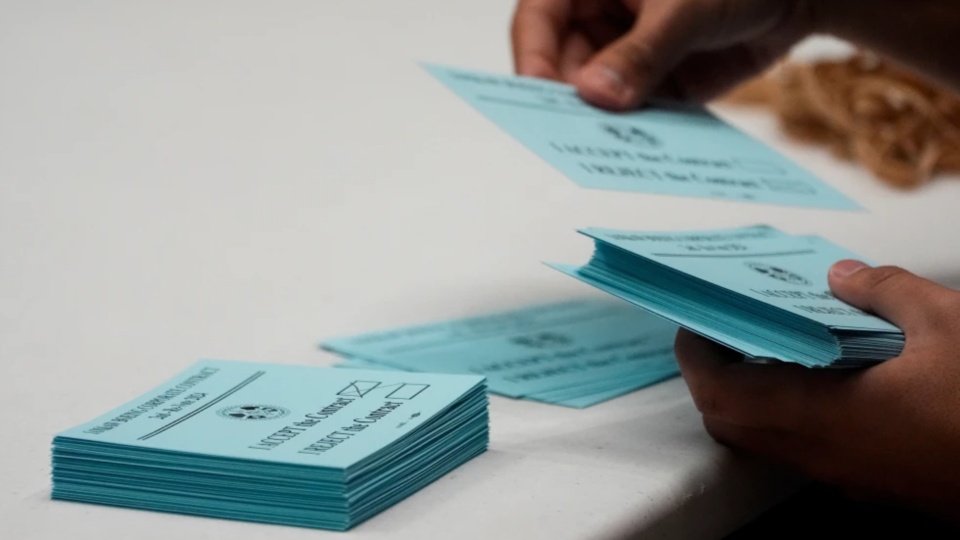
ST. LOUIS—By a 68%-32% margin, voting Machinists District 837 members at Boeing’s three St. Louis-area plants ratified a new five-year contract with the aerospace firm and returned to work on Nov. 16.
The settlement came after rank-and-file Boeing workers indicated they wanted more cash up front, so the firm dumped a prior offer of stock options and another offer of a $1,000 yearly signing bonus and increased the upfront signing bonus from $5,000 per worker to $6,000.
The key upfront money is an 8% general raise in the contract’s first year and 4% yearly in each following year. But top-of-scale workers would get a 5% lump sum in the second year of the pact, followed by a 1.5% general raise and a 2.5% lump sum in its final year. The workers originally sought 45% over four years.
The ratification ends a strike by the 3,200 Machinists members which began on Aug. 2. It also came after senators—all Democrats except for Missouri Republican Josh Hawley—pressured Boeing, one of the nation’s prime military contractors, to settle.
“IAM District 837 members stood strong and united for over three months,” District 837 leaders said in a statement. “We thank our bargaining committee for their tireless efforts, and we appreciate the unwavering support of our members, their families, the St. Louis community, our labor allies, and elected officials throughout this fight.”
In a side letter, Boeing promised to take all the striking workers back and, for pension purposes, to credit their time on strike as if they were at work. And it also said no “replacement workers” it brought in to run the plants while the workers were out would displace the striking Machinists. But it was silent on if the replacements would stay on the job, too.
As is common, the union agreed to drop all unfair labor practices charges it had filed with the National Labor Relations Board during the strike. The NLRB has heard none of them. Its workers, like hundreds of thousands of other federal employees, became victims of the 43-day federal shutdown which President Donald Trump imposed.
This is a win for the workers involved, but at some point progressive leaders in the union and more lawmakers are going to have to begin pressuring companies like Boeing to produce for the civilian rather than the military economy.
While these Boeing workers have justifiably fought a company resistant to paying top wages, the bigger battle nationally, one that can, in the long run, produce more high paying jobs and a better country entirely is the battle for transferring money for weapons to money to meet the people’s needs.
Lawmakers like the Independent Bernie Sanders of Vermont and Rep. Ro Khanna of California and others in both the Senate and the Congress have proposed legislation that cuts the bloated trillion-dollar-plus military budget.
We hope you appreciated this article. At People’s World, we believe news and information should be free and accessible to all, but we need your help. Our journalism is free of corporate influence and paywalls because we are totally reader-supported. Only you, our readers and supporters, make this possible. If you enjoy reading People’s World and the stories we bring you, please support our work by donating or becoming a monthly sustainer today.
CONTRIBUTOR