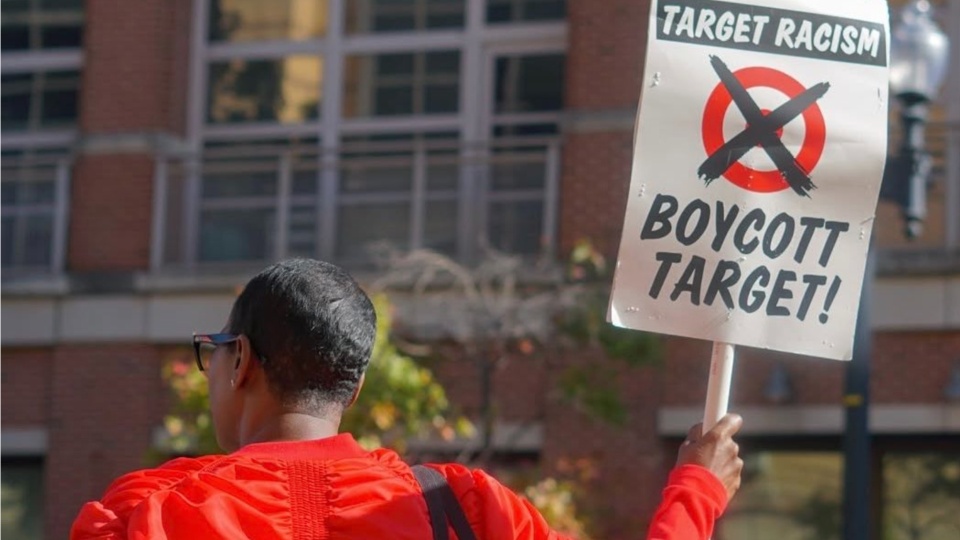
Two major labor organizations recently affirmed their support for the nationwide Target boycott, which started in February 2025.
The first is the Coalition of Black Trade Unionists (CBTU), which passed a resolution at its 55th convention during Memorial Day weekend in Atlanta encouraging its members to “refrain from patronizing Target until the company demonstrates a clear and measurable recommitment to diversity, equity, inclusion, and accessibility” and to further promote awareness of the boycott among its membership and encouraging support for Black-owned and union-supported businesses.
The second is the largest labor federation in the United States, comprising 15 million members, the AFL-CIO. At its recent convention in Minneapolis, the American Federation of Teachers (AFT) introduced the resolution titled “Calling on 15 Million Members to Support AFT’s Boycott of Target, Shop Locally, During Back-to-School Season,” and urged the entire federation to call on “parents, communities, and other allies to join us in this campaign to shop local.”
The Teachers union urged people to not shop at Target for back-to-school and other school-related supplies until the company “is willing to stand with the Twin Cities, including educators, healthcare workers, public employees, and the students and patients they serve, and publicly call for ICE to stop aggressive enforcement and occupation in Minnesota as well as signing on to the Business for Democracy Pledge to protect our democracy.”
Will the labor movement take on leadership of the boycott?
Since Rev. Jamal Bryant’s announcement in March that he was pulling his “Target Fast” campaign out of the “Mothership Three” coalition with Tamika Mallory and Sen. Nina Turner, the national boycott movement around Target was left divided. Many participants have been confused as to what concessions were made by Target during negotiations with Bryant and why he decided to suspend his organization’s participation.
Target never publicly announced any agreements and denied that any company policy had changed in response to Bryant’s announcement. Though the new CEO Michael Fiddelke says he aims to regain the trust of the Black community and has listened to the concerns of his workforce, it remains to be seen whether Target is actually willing to publicly break with the Trump administration’s fascist policy of targeting diversity and racial equity programs, otherwise known as “DEI.”
Additionally, the democratic forces in Minnesota’s Twin Cities, where Target is headquartered, continue to carry the torch against Target, saying they won’t stop until the company proves it’s willing to stand on the side of democracy.
The labor-community coalition behind the Day of Truth and Freedom, which was organized in response to Trump’s ICE terror with Operation Metro Surge, has continued with its advocacy for big corporations to pledge to defend voting rights and to stand against any attacks on the elections in coming midterms.
Part of this effort includes urging Target to not only commit itself to being a Fourth Amendment workplace but to also to truly support its workers and shoppers by defending their basic democratic rights. This parallels the call of the Congressional Black Caucus (CBC) for Corporate America to condemn the current efforts to dilute Black political power in the South in response to the Supreme Court’s recent gutting of the Voting Rights Act.
In light of the assault on civil rights and the continued attack on African Americans in particular, organized labor can play a major role. Perhaps the pair of resolutions passed by CBTU and AFL-CIO represent the beginnings of a consolidated, labor-community effort around a boycott target that is already weak. Such a unified campaign could bring Target to its knees and cripple the company for not standing tall when it comes to DEI and immigration.
The AFL-CIO, if it follows through on the resolution, can mobilize its 15 million members to participate and also initiate new activity around the country to boycott Target in coalition with the Black church and immigrant rights organizations.
Could the boycott spark union organizing in stores?
It remains to be seen whether the labor movement has the appetite to take on another big business, given its major fights with Starbucks and Amazon, two major monopolies in the country. The argument could be made, however, that a dual front is necessary—similar to the approach of Starbucks Workers United (SBWU), which has paired a major union organizing campaign alongside subsequent boycotts of Starbucks stores for as long as the company refuses to bargain in good faith for a fair contract.
Starbucks, which is also inside many Target stores throughout the country, could be an entry point in merging the two struggles and trying to develop an effort to begin organizing workers within Target. The retail giant has a long history of union-busting, which makes such an effort all the more crucial.
Back-to-school is important to rebuild momentum
The AFT’s effort to breathe life back into the Target boycott is important and should not go unnoticed. This is the time where there should be active engagement and outreach to AFT affiliates and locals throughout the country to build alternatives to Target for back-to-school supplies and clothes.
These labor-community coalitions should include partnerships with Black-owned small businesses and union shops to organize marketplaces near Target stores that can provide an immediate and accessible alternative for regular shoppers. This activity and organization could build momentum into the fall for Black Friday, a time when Target will try to lure shoppers back with cheap deals, especially amid the ongoing economic crisis and inflation.
Labor support for the Target boycott is essential, and the AFL-CIO should put resources into printing literature and supporting local coalitions that are forming to build alternative shopping guides and small business-community marketplaces.
If the union movement jumps into the campaign in a major way, it could prove to be a tipping point for beating back corporate cooperation with the Trump administration’s racist agenda.
As with all op-eds published by People’s World, the views expressed here are those of the author.
We hope you appreciated this article. At People’s World, we believe news and information should be free and accessible to all, but we need your help. Our journalism is free of corporate influence and paywalls because we are totally reader-supported. Only you, our readers and supporters, make this possible. If you enjoy reading People’s World and the stories we bring you, please support our work by donating or becoming a monthly sustainer today. Thank you!
CONTRIBUTOR