CHICAGO —Ever since his election as United Auto Workers president, Shawn Fain has been urging the labor movement to align all expiring union contracts for the same day: May Day 2028.
Then, he says, the prospect of a general strike by workers upset by their declining share of national wealth and watching the profits from their productivity flow into corporate and capitalist pockets could engage in a powerful general strike.
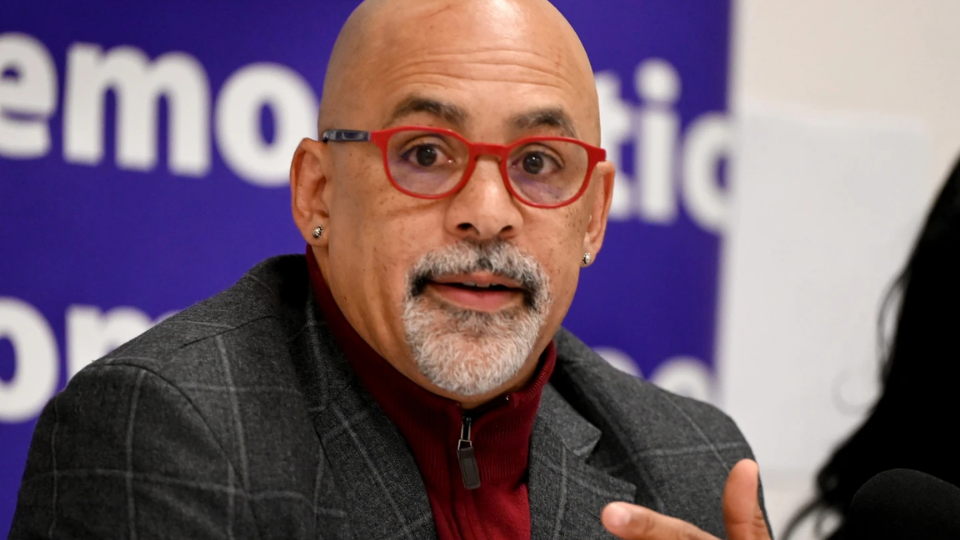
It sounds like a good idea to Pennsylvania State Rep. Chris Rabb, a Democrat who won a contested primary for the open U.S. House seat in the majority African-American 3rd District centered in Philadelphia. He’s unopposed in the November election.
So good, he says, because it’s been done before. It happened in the Civil War, and occurred to a lot more people than the population of one House district. Try all the enslaved people of the South.
“There was a general strike in the 1860s,” Rabb, who now has the nickname of “Rep Rabb,” said during a July 20 discussion at the NAACP convention here of how to create wealth in the African-American community. 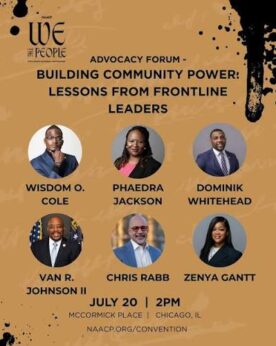
“Our ancestors stopped work,” he said of the millions of enslaved people then. “We wouldn’t have won the Civil War without that.”
“That’s always how it’s been then,” Rabb elaborated. “That’s how it’s gotta be now. Organized people beat organized dollars every time.” Rabb’s, whose ground troops—including members of progressive unions—embraced his progressive stands, gave him the primary victory over better-financed foes.
During the Civil War, Rabb explained, the enslaved first refused to work on the plantations, factories, homes and fields of the Southern white “slavocracy,” whom Rabb called “the organized dollars of that time.” Today’s equivalent are the millionaires and billionaires who now rule U.S. politics.
Then, hundreds of thousands of African-Americans put down their tools, gathered their belongings and fled—towards the Union army. Tens of thousands of formerly enslaved men of draft age enlisted, too, and their regiments helped turn the tide of the war.
That reversal also produced unusual scenes. One came when African-American soldiers guarded captured white Southern prisoners, including officers hailing from the planter class, the 1% of that era.
The archives of interviews with formerly enslaved people—youngsters and teens in 1861-65, in their 80s and older when the New Deal’s Federal Writers Project participants interviewed them—teemed with stories of what enslavement was really like. And the war, too.
One formerly enslaved man found himself guarding his former master, according to those archives, Ken Burns reported in his PBS Civil War documentary.
“Hullo, massa. Bottom rail top this time!” the soldier guard said.
Rabb compared President Donald Trump and his MAGA legions to other “isms” rife within the capitalist class. “My goal is to make that ‘ism’ so marginalized that they won’t control us,” he said. “But take nothing for granted.”
The panel Rabb and colleagues addressed focused on how to raise incomes and create wealth among African-Americans. Both panelists and questioners said government is a key and that to gain the levers of power and make government work for you, you need to educate and organize.
Which is where organized labor, whom the NAACP intends to work more closely with in the run-up to the November election and beyond, comes into the picture.
“Educate, educate, educate,” exclaimed Zenya Gantt, a junior political science major at an historically Black college, South Carolina State University. That’s what she did in organizing a protest that forced school management to withdraw a commencement speech invitation they issued to the state’s Trumpite Lieutenant Governor.
“It takes a conversation, and it needs a conversation,” and that’s what union organizers do, worker by worker, Gantt said. “You have to do the work before you get to the polls, and then once you see a big turnout” at the start of Election Day—long lines—“it starts to bootleg” and explode, and that’s how you win office and power.
But you also must be honest with the voters to win their trust, explained another panelist, Savannah, Ga., Mayor Van Johnson. That means not just taking stands on issues and defending them, but also explaining to voters what you can and can’t do in a particular elected office.
That includes what you can do for economic empowerment, such as lobbying for new industries with well-paying jobs, including union jobs, and what you can’t, such as single-handedly raising the federal minimum wage. At $7.25 hourly, it hasn’t risen since 2009. Talk at the convention was of $25 an hour plus indexing for inflation, or $30 an hour, as organized labor has achieved in Los Angeles.
It also means, being honest and telling voters that if they want a particularly expensive project, they might have to raise taxes for it, Johnson said. And that elected officials have to work across the aisle without sacrificing their principles, Rabb said.
All this, taken together, explained Gantt, who already has political campaign experience, “is how you bridge the gap between the working class and officials.”
We hope you appreciated this article. At People’s World, we believe news and information should be free and accessible to all, but we need your help. Our journalism is free of corporate influence and paywalls because we are totally reader-supported. Only you, our readers and supporters, make this possible. If you enjoy reading People’s World and the stories we bring you, please support our work by donating or becoming a monthly sustainer today. Thank you!
CONTRIBUTOR