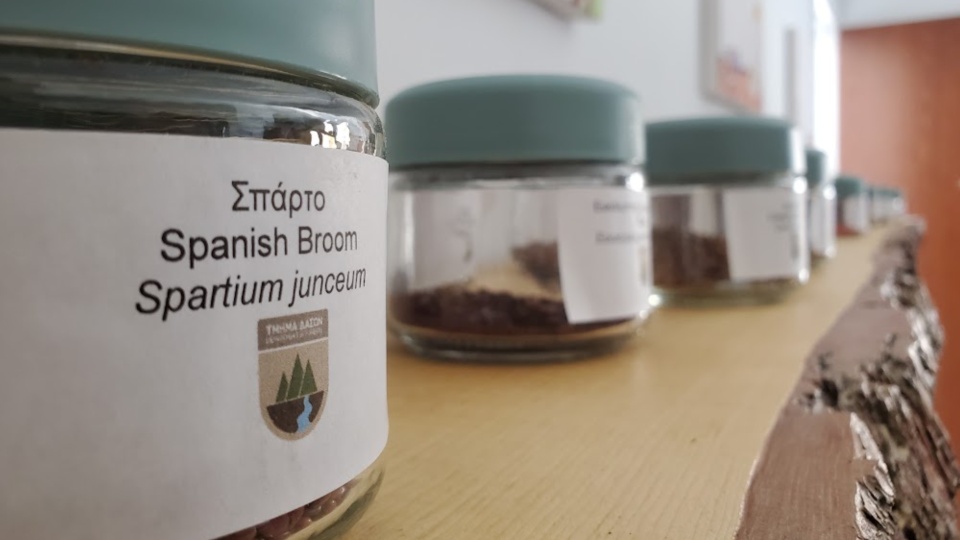
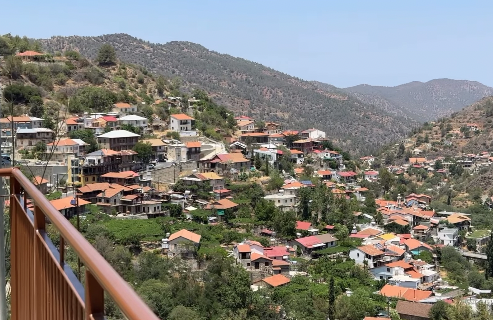
NICOSIA, Cyprus—At the end of a long, winding road in the quaint Cypriot village of Kalapanagiotis, there is a white painted building overlooking the breathtaking mountain ranges of the Mediterranean country. Under an orange ceramic roof, a new method of resistance against agribusiness monopolies is sprouting at the Community Bank of Cypriot Traditional Seeds.
Run by the Farmers Union of Cyprus, the bank exists in order to preserve seeds native to Cyprus, with the goal of maintaining the nation’s cultural connection to its food and agriculture. The seed bank was established in the aftermath of World War II, when high demand from big agricultural companies forced local farmers to shift toward hybrid seeds.
Hybrid seeds are the combination of two separate plants of the same species, bred to yield larger harvests. While production output soared initially, the other practical result of the switch to hybrids was the loss of traditional seeds that have been passed down for generations. Rich and beautiful produce that had long been grown in the airy and dry climate eventually came to lack the quality locals had loved. Tomatoes lost their juice, cucumbers lost their crunch, and the Cypriot people lost a valuable part of their culture.
Now, with the help of the seed bank in Kalapanagiotis, a slow but steady reversal is underway to give new life to farmers’ fields and take back power and control over food production from agricultural corporations such as Monsanto.
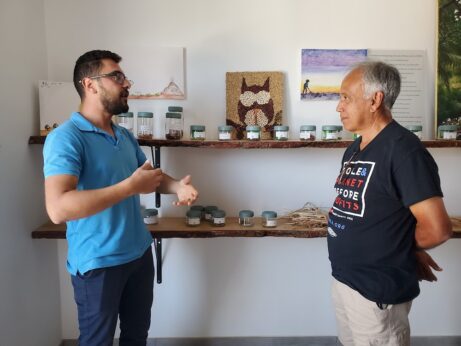
Managing the seed bank is not a simple task, Giannis Demetriou of the AKEL party (Progressive Party of Working People) explained to People’s World. While of course it is quite different from a financial bank, he explained that the seed bank has a similar function. If farmers are interested in planting non-hybrid seeds, “they are free to take as many as they would like.” The only catch? “Just like a loan from a financial institution, borrowers are required to return more seeds than they take out.”
More than just a site of storage, the seed bank serves as a living archive of Cyprus’s ecological memory. Farmers and community members bring in seeds from their grandparents’ gardens, share oral histories, and exchange knowledge on how to cultivate and grow. These practices not only restore the biodiversity lost to laboratory manipulation, they also reaffirm the intergenerational relationships and ways of life that have been lost by the push towards industrial mono-crop-based agriculture.
The seed bank’s goal is to remind its members and the nation that seeds are not just commodities to buy and sell but rather vessels filled with story, struggle, and survival.
Demetriou told People’s World that, in this way, “the Community Bank of Cypriot Traditional Seeds represents a form of political resistance.” By safeguarding indigenous seeds, the bank rejects the dependency created by multinational corporations that push genetically modified and patented seeds onto vulnerable farming communities.
The bank instead promotes genetic diversity and food sovereignty—the right of the people to define and control their own food systems—as a counterweight to colonial agricultural extraction. On an island that has long been shaped by colonial occupations and imperialist control, reclaiming the seed is a quiet but powerful act of decolonization.
Demetriou also emphasized how the ongoing Turkish occupation of north Cyprus has left its mark on agricultural production and memory. Since the island’s partition in 1974, many farming communities, traditional seeds, and land in the occupied northern region have become in-accessible to those forced to migrate south.
“Seeds that once circulated freely across the island now face both political and physical barriers, complicating efforts to preserve the full breadth of Cyprus’s agricultural heritage,” he said. Seed varieties unique to villages that are now behind checkpoints are at risk of disappearing entirely. As a result, the work of the seed bank takes on an added sense of urgency: They are not only preserving seeds for future harvests, but safeguarding fragments of the now divided island’s shared cultural memory.
In the Kalapanagiotis seed bank, a heartwarming and wholesome feeling echoes throughout the building that gently invites in people of all generations to take part in the preservation effort. While adults manage the space and children add their artistic touch, Demetriou explained that it is actually older women from various villages that make the seed bank what it is.
In fact, according to Demetriou, “the most important savers of the seeds are older women in remote villages.” These veteran green thumbs maintain and reproduce seeds that have been in their families for generations and happily turn over their share to the seed bank.
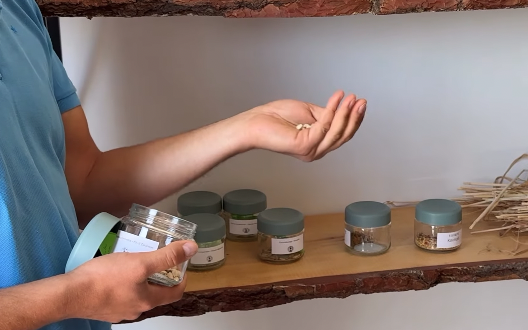
In addition to reshaping Cyprus’s farming tactics, the seed bank also serves as a way to build and strengthen community, something that can’t be taken for granted after years of occupation. Every year, the seed bank hosts a community festival in which visitors are invited to bring their family’s traditional seeds and help build the bank’s collection.
Essentially, the seed bank does more than just break farmers’ dependence on big corporations. Community members are instead able to rely on each other in order to grow and build the Cyprus they envision.
Just like a beautiful garden blooming with all types of produce, Cyprus’s road to independence is one that includes many diverse paths. The seed bank is just one of many flowers in the garden of resistance sprouting on the island nation. After a long history of thousands of years of occupation by other nations and empires, the seed bank represents just one of the many ways that Cyprus can belong to Cypriots.
We hope you appreciated this article. At People’s World, we believe news and information should be free and accessible to all, but we need your help. Our journalism is free of corporate influence and paywalls because we are totally reader-supported. Only you, our readers and supporters, make this possible. If you enjoy reading People’s World and the stories we bring you, please support our work by donating or becoming a monthly sustainer today. Thank you!
CONTRIBUTOR