The recently concluded AFI Film Festival, which is Los Angeles’s biggest and best yearly film festival, screened 160-plus features and documentaries. AFI offers moviegoers the chance to view far-flung foreign films we may not otherwise get an opportunity to see. Director/co-writer Marie-Elsa Sgualdo’s directorial debut, Silent Rebellion (A Bras-Le-Corps), is a case in point.
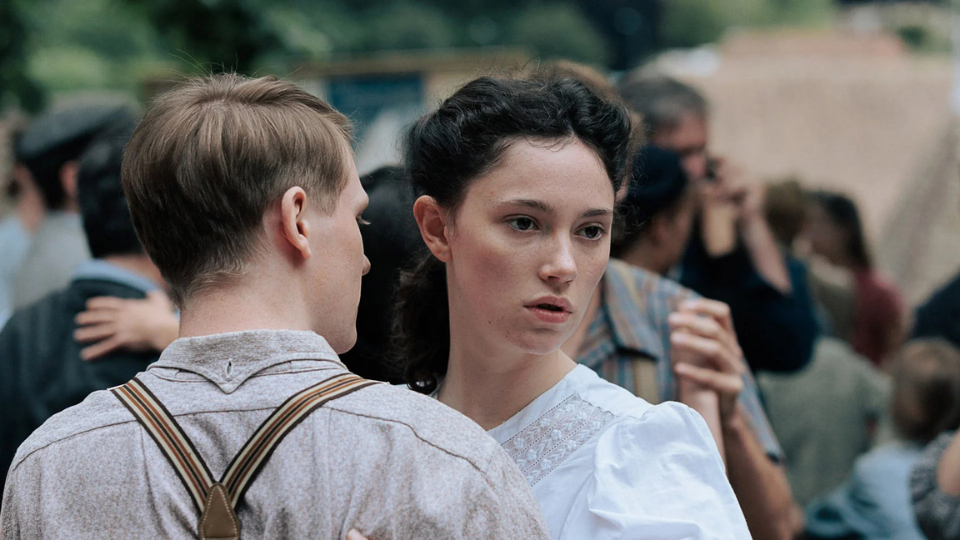
Set in the French-speaking region of western Switzerland during World War II, Emma (Lila Gueneau) is a 15-year-old who seems to have been abandoned by her parents and is trying to make her way in the world, on the straight and narrow path. This 97-minute period piece has a number of plot points that are actually slyly relevant to the world 80-plus years later, 2025.
During WWII, Switzerland was, of course, neutral, and in Silent Rebellion, refugees try to escape from Nazi-occupied France by fleeing to the relative freedom of democratic Switzerland. This raises the specter of the plight of migrants today trying to emigrate to Europe and beyond. Silent Rebellion also dramatizes sexual assault and the struggle for abortion rights, which are certainly major points of contention in contemporary America.
Another character is the Protestant minister (Grégoire Colin of 1999’s Beau Travail), who valiantly tries to take a moral stand, against the odds, from the pulpit.
But despite the film’s social observations, Silent Rebellion is first and foremost Emma’s story. As she tries to find and free herself in a complicated world beset by war (even if Switzerland was a non-belligerent, the small, middle European country couldn’t help but be affected by the bloody conflict surrounding it). Emma reminds me of those rural characters from 18th-century literature, such as Voltaire’s Candide and Henry Fielding’s Joseph Andrews, who embark on journeys of self-discovery, encountering the wider world along their way.
As she resists patriarchy and the church, Emma’s insurrection and quest for independence remain personal and solitary, never becoming part of a broader social movement per se. Emma may not like it, but she doesn’t try to intervene when the Swiss border patrol turns refugees over to the Nazis to return them to occupied France. Even when she becomes a factory worker, she never joins a union or goes on strike. Like Switzerland, Emma never takes sides and seeks to pursue her own self-interest. Lila Gueneau’s portrait of the angst-driven, long-suffering Emma, who sometimes self-destructively turns her anger inwards, is always convincing.
Silent Rebellion belies the stereotypes people may have of the Swiss. There is little, if any, of the spectacular Alpine splendor one usually associates with the mountainous nation; don’t look for any scenic shots of Mt. Blanc, let alone the Jungfrau or Matterhorn, here.
I did not understand the finale of Sgualdo’s film, although this could signify the ending of WWII and the protagonist’s coming into her own. It may also suggest that Emma, who hasn’t found happiness in relationships with men, may actually be gay, but who knows? Be that as it may, I enjoyed Silent Rebellion, which, like Ibsen’s 19th-century plays A Doll’s House and Hedda Gabler, insightfully dramatizes feminist issues.
Silent Rebellion is in French with English subtitles.
We hope you appreciated this article. At People’s World, we believe news and information should be free and accessible to all, but we need your help. Our journalism is free of corporate influence and paywalls because we are totally reader-supported. Only you, our readers and supporters, make this possible. If you enjoy reading People’s World and the stories we bring you, please support our work by donating or becoming a monthly sustainer today. Thank you!
CONTRIBUTOR