

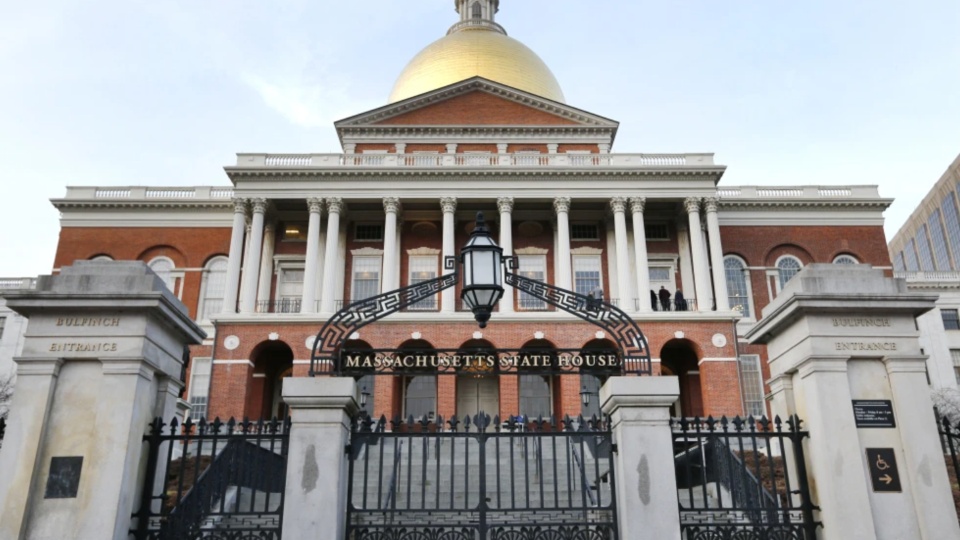
BOSTON—Massachusetts Gov. Maura Healey has signed a new $60.9 billion fiscal budget into law, and nearly a month sooner than last year’s budget.
While the budget details expenditures for all the various state and state-subsidized organizations, particular scrutiny has been given to the affordable housing aspect of the bill. After all, the Healey Administration has touted its commitment to affordable housing, releasing a comprehensive statewide housing plan in February 2025 which seeks to add 222,000 homes to the market in the next ten years.
Housing advocates hoped that this fiscal budget would be the first strong step in that direction, but the details revealed less than what they hoped for.
First, it’s important to highlight a clear, decisive victory for renters in the state: Renter-paid broker’s fees were banned starting Aug. 1. Now, landlords—who originally contract with brokers—must pay the fees rather than prospective tenants. The cost of broker’s fees in Massachusetts is typically one-month’s rent, which, when contextualized with the fact that Massachusetts has some of the highest rents in the country, can add up to a few thousand additional dollars just to move into a new apartment.
For comparison, prior to this change, it would be around $3,000 more expensive to move to Boston than to move to New York City. The removal of this burden from renters will undoubtably help the affordability crisis in the state.
Much of the rest of the budget, however, does not feature the same forward momentum. For example, the Massachusetts Rental Voucher Program (MRVP) and the Alternative Housing Voucher Program (AHVP) were funded at $253 million and $19.5 million respectively, maintaining the current number of vouchers available but not increasing the supply.
The Department of Mental Health (DMH) subsidies—reserved for individuals with several mental health needs—were funded at the exact same $16.5 million level, not keeping up with inflation and rising rents. The Residential Assistance for Families in Transition (RAFT) program, which assists households in paying for back-rent and move-in costs, received only a slight increase in funding ($197 million to $207 million, or 5%). The Access to Counsel program received no additional funding but is now no longer considered a “pilot” program.
The pattern is obvious: Many programs that specifically cater to low-income households are not seeing a substantive increase in funding. The demand for these services, however, has only increased year after year. As things stand now, the average wait for a MRVP or AHVP voucher is five years. Furthermore, since Jan. 13, the waitlist for the Section 8 Housing Choice Voucher Program (HCVP) in Massachusetts, which is funded by the federal government, has been closed.
Another subsidy program, HomeBASE, is facing similar difficulties. The HomeBASE program is offered to families leaving the shelter system, providing them up to $30,000 over two years for moving costs and rent stipends, with a possible extension for $15,000 in a third year. While helpful for families, the program has been taken advantage of by some landlords to increase rents and obtain as much of the money as possible.
For the new fiscal year, the HomeBase program saw no increase in funding, failing to keep up with inflation. Furthermore, Housing Secretary Ed Augustus recently announced that all approvals for a third-year extension of HomeBASE were paused effective July 1 with no foreseeable date for when approvals will resume. The stagnation of HomeBASE benefits aligns with the Healey administration’s commitment to wind down emergency shelter services.
Some housing programs were not lucky enough to maintain funding into the new fiscal year. The Shelter Workforce Development program, which offers monetary bonuses for shelter staff and case workers, was slashed by 50% (despite a 25% increase in unsheltered homeless households between 2023 and 2024). Housing Consumer Education Centers, which serve over 600 households a week seeking RAFT and other assistance, saw their budget cut by 40%. The Bureau of Substance Addiction Services saw their low-threshold housing budget cut by 50%.
And worst of all, some programs were cut entirely. The proposed $5 million budget of the Office of Fair Housing and Fair Housing Trust was cut entirely from the budget. Likewise, the proposed Healthy Homes Program, aimed at eliminating mold, lead, and other hazards in homes, was withdrawn completely. The Tenancy Preservation Program saw it’s $2 million dollar funding removed from the state budget and passed along to the quasi-public MassHousing Agency.
Where does this leave the state of housing and homelessness in Massachusetts? The Healey administration has made it a pillar of its agenda to decrease the cost of housing and decrease the number of people experiencing homelessness, as evidenced by the earlier-mentioned comprehensive housing plan. But the housing plan, if it completes everything it sets out to do, will take years to bear fruit. In the meantime, support for low-income households should continue to increase rather than stagnate or disappear, if only until the comprehensive housing plan delivers on cheaper housing.
And that is if the comprehensive housing plan succeeds in lowering housing costs. There is an argument to be made that the “historic” comprehensive housing plan may not be enough. The goal of building 222,000 new homes between 2025 and 2035 is not significantly higher than the 190,000 houses built between 2010 and 2020. A 17% increase in housing production may not be enough to counteract the skyrocketing cost of rent. For comparison, the fair market and median gross rent increased by 68% from 2020 to 2025 (34% when adjusted for inflation). Nationwide, rents have increased by 40%.
With all the fiscal stagnation in services, the FY26 budget is not as forward-moving as one would hope given the Healey administration’s commitment to affordable housing. The removal of tenant-paid broker’s fees is an important victory—one that should be celebrated. The fight for affordable housing, however, must continue.
Thankfully, there is some hope down the road. Already there have been bills proposed that would increase funding to RAFT and HomeBASE, among other programs. And even more exciting, a hearing is scheduled to discuss a bill to lift the statewide ban on rent control. Aside from these upcoming bills, there is a further $130 million earmarked in a supplemental budget bill, $30 million of which is set to be exclusively used for housing stabilization.
Given the precarious position of federal funding, this supplemental budget will be released in the fall, once the state’s needs are better assessed. Beyond that, work is continuing on streamlining the permitting process for environmentally resilient housing.
In conclusion, Massachusetts’s new fiscal budget keeps business moving as usual without any significant increases or changes in housing (save the broker’s fees). In a time when money and services from the federal government are at risk, the state should be more proactive in enshrining and funding those programs.
Massachusetts has long had a high quality of life, and it will be up to the state legislature to ensure that the trend continues in the new federal climate. The state will have to take steps to address these needs, but the size of the steps and in what direction remains to be determined.
We hope you appreciated this article. At People’s World, we believe news and information should be free and accessible to all, but we need your help. Our journalism is free of corporate influence and paywalls because we are totally reader-supported. Only you, our readers and supporters, make this possible. If you enjoy reading People’s World and the stories we bring you, please support our work by donating or becoming a monthly sustainer today. Thank you!
CONTRIBUTOR



MOST POPULAR TODAY

Mussolini’s shadow: Italy alarmed as students encouraged to report ‘left-wing’ teachers

Trump’s catalog of constitutional crimes: Long and getting longer


On boycott anniversary, D.C. campaign pickets every Target store in solidarity with Minnesota

Communist Councilwoman from Ithaca: Hannah Shvets defeats landlord candidate