NEW YORK—“We are supposed to work to live, not live to work.” Those were the words of New York Taxi Workers Alliance (NYTWA) Executive Director Bhairavi Desai when speaking on the recent death of fellow driver Jagjit Singh.
Singh, a yellow cab driver for more than 20 years, was found dead in his taxi after having reportedly suffered a medical episode. This is the third taxi driver death in three months, and another example of what Taxi worker advocates say is the growing physical and emotional toll of the job, with long hours and intense stress in a time of economic pressure.
In July, when the United States and the world experienced record-breaking heat, taxi driver Richard Coulibaly died in his parked cab overnight. Coulibaly immigrated from the West African country of Ivory Coast over three decades ago to work in the U.S. The father of four rented a one-bedroom apartment in Harlem and was described as a hard worker who was “working, working, working, every day working.”
With no family in the country, it was NYTWA and other fellow drivers who took up the tasks of identifying their colleague when he was found by police and paramedics and spending days searching for his family in Ivory Coast. It was through social media and WhatsApp that they were finally able to contact Coulibaly’s brother and let him know his brother was deceased.
The union and friends of Coulibaly’s then came together to raise the funds for his funeral and—as NYTWA described it—go through the “long process of bureaucracy and paperwork” of sending Coulibaly to his final resting place in Ivory Coast. He was 73 years old.
In late August, Khalifa H. Siwa, a worker who originated from Tanzania, died alone in his parked taxi on the Henry Hudson Parkway with his insulin injection in his hand. He was the eldest of four children, helped raise his siblings, paid for their education, and cared for their mother. Khalifa had recently had a stroke and, in the last week of July, was admitted to the hospital for a few days due to his diabetes.
Despite these obstacles, he still worked—and eventually died on duty. “He was alone in this country and lived a life of sacrifice,” NYTWA stated in a press release. He was only 53.
Jagjit Singh, an immigrant worker from India, is the latest in this string of tragic deaths. On Sept. 11, the yellow cab driver of more than 20 years was found in his car, deceased after having suffered a heart attack. On that Friday afternoon around 5 pm, Singh reportedly pulled over after dropping off passengers in the West Village. Friends and family realized something was wrong when they couldn’t reach him for hours. At 11 p.m., they traced the car to his last drop-off, where they found him. The husband and father of 10-year-old twin sons was 53.
In a social media post after reports of Singh’s death, the NYTWA stated: “How many strangers passed him? How many hit the hood for the car to move or lamented there were too many cabbies taking up parking spots? There lay a man, a devoted father and husband, with a wife in a frantic search and with parents and siblings far away.”
Taxi drivers, like all workers across the country, are facing an intense affordability crisis. The cost of living is soaring, and so is the cost of working for drivers whose ability to survive depends on the rise and fall of gas prices.
Over the years, with the rise of rideshare apps like Lyft and Uber, many taxi drivers saw their incomes decline, pushing them to work longer hours and take more trips to make up the difference. This strain has only grown as taxi, Uber, and Lyft drivers now find themselves confronted by the corporate push for driverless AI “robotaxis” that threaten job security even further.
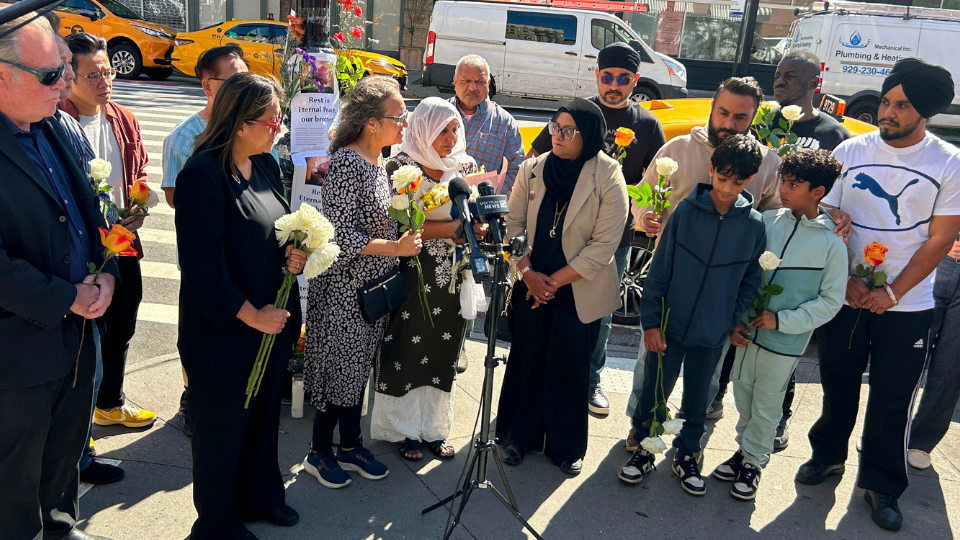
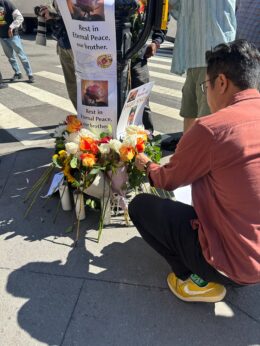
With over 28,000-members of their union feeling the pressure, NYTWA Executive Director Bhairavi Desai asserts that something has to be done. Joining with Singh’s family at the site where he died to lay flowers, the director made it clear that the current situation is not sustainable.
“Drivers like our deceased brothers work grueling days and nights. As trips shrink while costs grow, they’re left with little time to take care of themselves while they work longer and longer hours to try to make ends meet,” Desai said. “They have less time for breaks, less time to go to the doctor, less time to pick up medications. We urgently need economic reforms in this industry so drivers can earn enough to stop working themselves to death.”
No paywalls at People’s World
We hope you appreciated this article. At People’s World, we believe news and information should be free and accessible to all, but we need your help. Our journalism is free of corporate influence and paywalls because we are totally reader-supported. Only you, our readers and supporters, make this possible. If you enjoy reading People’s World and the stories we bring you, please support our work by donating or becoming a monthly sustainer today. Thank you!
CONTRIBUTOR