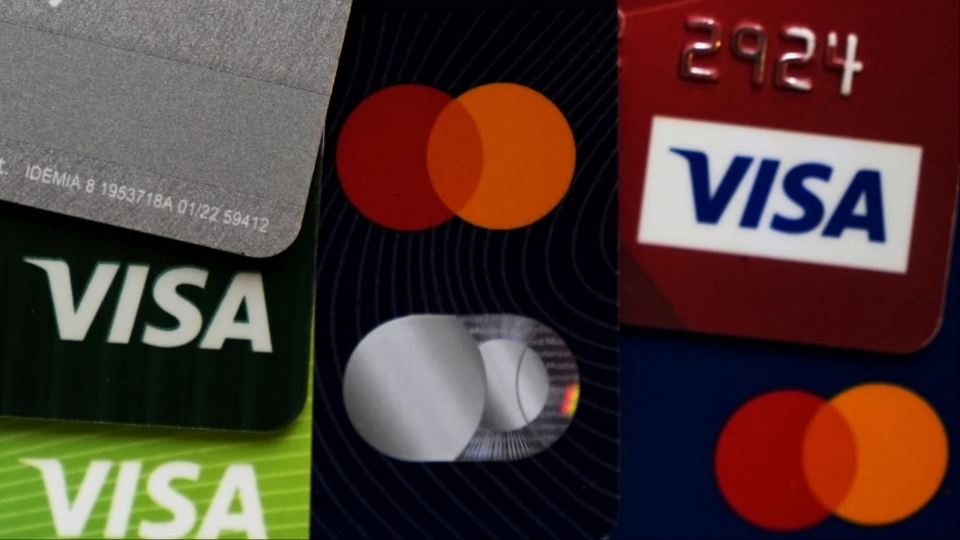
Top White House operatives are claiming that “through the roof” credit card use by consumers is a sign of a healthy economy. Millions using those credit cards everyday know, however, that what is driving their reliance on plastic is high costs and a lack of cash to pay them.
In the midst of a week where the president continued to tell Americans what they know are lies about his Iran war and bragged about the multi-billion-dollar ballroom for which taxpayers are footing the bill, his National Economic Director Kevin Hassett declared that there is no cause for worry.
Hassett correctly said last week credit card spending is “through the roof,” including charges for gasoline and other basic goods and then falsely claimed that this shows a “very, very strong” economy.
The reality is that people are using their credit cards to purchase the most essential of items. A woman at a laundromat in Erie, Pa., Saturday paid for her wash by swiping a credit card in the slot on the machine. She then asked another customer if she could borrow her credit card to pay for the load in the dryer.
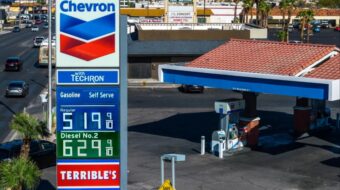
At a gas station in the same town later that day, a man complained when he read the sign on the pump that read, “The fuel dispended from here is now 15% ethanol.”

“We’re paying $4.54 for gas that burns up faster because of the ethanol,” he said to the man pumping gas from the dispenser next to his. Meanwhile, at the Wegman’s supermarket nearby, a single ear of corn was selling for 69 cents.
Corn is becoming a luxury item as more and more of it is used to add to the fuel that powers the country’s combustion engines. Prices on all the fresh produce at that Wegman’s and at most other supermarkets are rising by the day because of the higher cost of fueling trucks that deliver the food.
Since people are using their credit cards to pay for everything from groceries and fuel to laundry and cleaning supplies, credit card debt is indeed “through the roof.”
It had already reached $1.28 trillion in the fourth quarter of 2025, which was a 5.5% increase from 2024. The rate of increase in credit card debt continues to rise so rapidly that statisticians in and out of the government are finding it difficult to update figures in a timely fashion.
Figures for the disastrous state of savings accounts also don’t look good. Hassett and others are claiming that the 4% drop in savings rates this year over last is not so severe and shows that therefore things are not really as bad as naysayers claim. People are optimistic about the future, we’re told, so they don’t feel the need to save as much!
What most consumers realize, however, is that there is a downside to the 4% figure that Hassett did not mention. The decline in savings rates we do see, even though not so severe as they could be in a major recession or depression, indicate that people today, even where they still have some small savings, are making use of debt rather than cash to cover expenses. They do this when they fear that the prospects for any economic improvement are slim. Those fears result in further harm to the economy.
Claiming that the economy is heathy just because spending on credit cards is continuing is false when that spending is fueled by reliance on debt rather than any available real money. People with no degrees in economics understand this. Apparently, top officials in the Trump administration do not.
Young people in their 20s and 30s are the hardest hit by the credit card crisis because they are hardest hit with the combination of low wages and low savings
Trouble paying credit card bills is a bad signal, eventually, not just for the hardest hit but for the entire economy. When tough times hit young people, minorities, and others with low pay and savings, it is only a matter of time before the problem spreads to others.
The biggest retailers are already feeling the pinch. Walmart, for example, says its customers have already cut back on things like electronics and are spending mainly on necessities. The problems at Walmart have contributed to a stall in retail spending that has already hit the country. That stall is an additional thing Hassett failed to mention in his happy assessment of the Trump economy.
Already in May, without having to wait for official indicators, it is clear that gas prices at the pump and their connection to the war on Iran are cementing in place a negative assessment of the overall economy by Americans.
Sentiment people express at the gas stations and in the shops are backed up by professional surveys and measurements. The University of Michigan’s Index of Consumer Sentiment showed only 46.3% think the economy will turn around any time soon.
Gas prices have shot up an average of $1.50 since the start of the war, according to AAA, and are now headed toward $5.00 per gallon nationally. In California, Oregon, and several other states, they are already much higher.
As you use your plastic to purchase that gas or any of the other absolute necessities you cannot afford, just remember you are doing your patriotic duty to keep the economy roaring and the pockets of the billionaires lined.
Just spend away and in the words of the popular song: Don’t worry, be happy!
As with all op-eds published by People’s World, the views reflected here are those of the author.
We hope you appreciated this article. At People’s World, we believe news and information should be free and accessible to all, but we need your help. Our journalism is free of corporate influence and paywalls because we are totally reader-supported. Only you, our readers and supporters, make this possible. If you enjoy reading People’s World and the stories we bring you, please support our work by donating or becoming a monthly sustainer today. Thank you!
CONTRIBUTOR