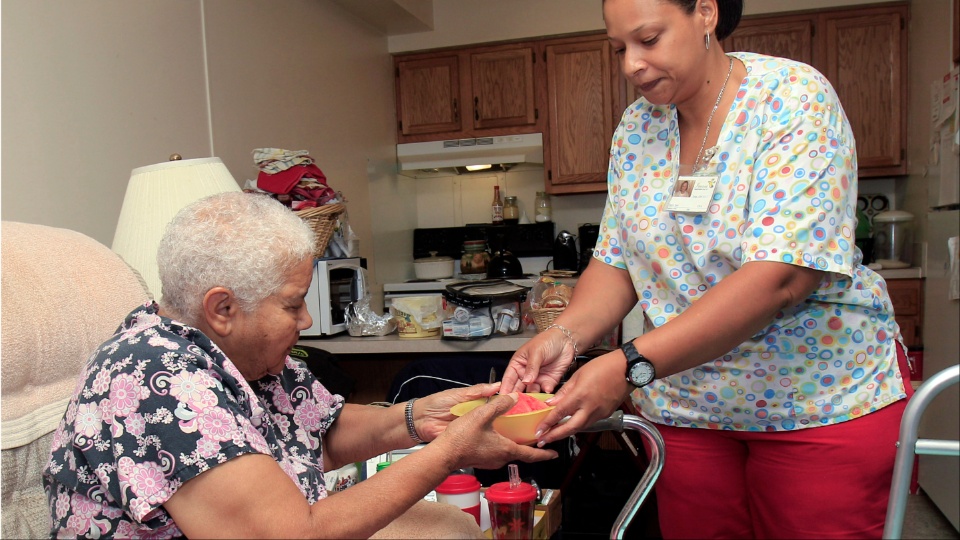
WASHINGTON—The Trump administration is planning to cut the pay of some of America’s lowest-paid workers: The nation’s 4.348 million home health care workers.
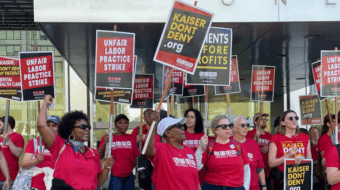
The pay cut, dragging wages back to levels of more than a decade ago, comes in planned federal rules Trump’s Labor Department published on Sept. 2. It outrages both National Nurses United (NNU) and the National Employment Law Project (NELP).
It’s just one of a package of anti-worker rules Trump Labor Secretary Lori Chavez-DeRemer unveiled in that day’s Federal Register, NNU adds.
Another DOL rule would strip the DOL Office of Federal Contract Compliance of its power to ensure federal contractors and subcontractors obey civil rights laws, making it advisory only.
“It should not be lost on anyone that eliminating these essential protections and voice for workers and unions has long been one of the first acts of dictatorships over the last century,” NNU President Mary Turner, RN, commented.
“These repressive regulatory changes reinforce the sweeping handouts to the corporate class under President Trump. The overall impact fully brands Trump’s administration as the most hostile to working people in a century,” Turner added.
“America’s nurses will join with other labor and community organizations to defend our most consequential working-class rights.”
The rollback of all the rules would upend 60 years of fighting “Jim Crow segregation discrimination against Black and other workers of color, and other discrimination based on gender, national origin, and other protected classes of workers,” NNU says.
Turner says the net result of all the changes is to “further perpetuate the growing chasm of racial, gender, and other income and wealth inequality that is a stain on our nation.”
That’s especially true of the home health care workers. FDR’s need to cater to white Southern Democratic racists led to bans on covering home health care workers—then as now mostly women of color—and farm workers, then as now mostly Latino, from the 1938 minimum wage and overtime pay law, the Fair Labor Standards Act.
And it’s those home health care workers whom Trump’s rules tromp on, both National Nurses United and the National Employment Law Project say.
For decades, NELP explained, home health care employers—both families and firms—used a loophole in the law to escape paying their workers even the federal minimum wage, now $7.25 hourly, or for working overtime.
The loophole made home health care workers “companions” and “casual babysitters,” DOL said then.
As a result, DOL’s own Occupational Handbook says the median yearly wage even now for the nation’s 4.348 million home health care workers is $34,900—far lower than the median for all other large groups of workers. The median is the point where half the group is above the figure and half below.
In 2011, Democratic President Barack Obama ordered his DOL to rewrite the rules governing home health care workers’ pay to ensure they were paid the federal minimum wage and got overtime pay. Those rules took effect four years later, NELP says.
In plain English, NELP declares, Trump wants to make the African-American and Latina women who make up the overwhelming majority of home health care workers “companions” and “babysitters” again.
“The results will be disastrous. This is terrible policy.”
It’s also going to affect many more workers in coming years. DOL’s occupational handbook reports the U.S. had 4.348 million home health care workers last year—and that’s projected to grow by 17%, or 739,800 workers, a year through 2034.
NELP emphasized the point that “a much-needed workforce of majority women, people of color, and immigrants continue to be underpaid for their essential work of bathing, changing dressings, and conducting other tasks that enable individuals to live at home,” rather than be placed into more-expensive nursing homes after Medicaid mandates they drain their savings.
“Meanwhile, the for-profit agencies employing home care workers pocketed most of the payments, including Medicaid reimbursements that cover in-home care, instead of paying decent wages.”
There are exceptions to those nationally low levels of pay for home health care workers: The ones who are unionized, such as in California and other “blue” states.
Under the leadership of current Service Employees President April Verrett, then the union’s California leader, SEIU waged a successful years-long campaign to get the California legislature to recognize the state as the home health care workers’ employer. Then SEIU California unionized tens of thousands of them.
It’s now airing a tweet and a video snippet about a contract win in San Joaquin County as an example of the union difference for home health care workers.
“Because our members took action to protect the health and safety of San Joaquin County, we secured a union contract that raises wages to $18.57 [an hour] effective September 1!” Local 2015 home health care worker Virginia Tristan says.
“Watch Virginia’s message to learn more,” the tweet exhorts. “Contract by contract, we’re building a world that values long-term care workers and those we care for. #LongTermCareForAll”
The increase on September 1 was $1.57 an hour, Tristan explained in the video, with another 40-cents-an-hour raise this coming New Year’s Day.
“I don’t know about you but not only will I be using my pay increase to better care for my kids and grandkids but it will also help us all to care for our neighbors across San Joaquin County,” Tristan exclaims.
Chavez-DeRemer unveiled the planned cut in home health care workers’ pay—and other anti-worker rules–the same day the GOP majority on the House subcommittee that helps allot dollars for the Labor Department’s zeroed out the department’s civil rights Office of Federal Contract Compliance.
Before that elimination, which would be effective October 1, Trump’s “Department of Government Efficiency” had already trashed OFCCP, as People’s World reported earlier this year.
Besides cutting home health care workers’ wages and the civil rights enforcement, the Trump DOL’s rules would eliminate rights of differently abled people and farm workers, NNU adds.
“By rescinding the non-discrimination and affirmative action obligations of federal contractors, the administration is essentially aiding and abetting discrimination by private employers who are using public funds,” says National Nurses United President Turner.
We hope you appreciated this article. At People’s World, we believe news and information should be free and accessible to all, but we need your help. Our journalism is free of corporate influence and paywalls because we are totally reader-supported. Only you, our readers and supporters, make this possible. If you enjoy reading People’s World and the stories we bring you, please support our work by donating or becoming a monthly sustainer today. Thank you!
CONTRIBUTOR