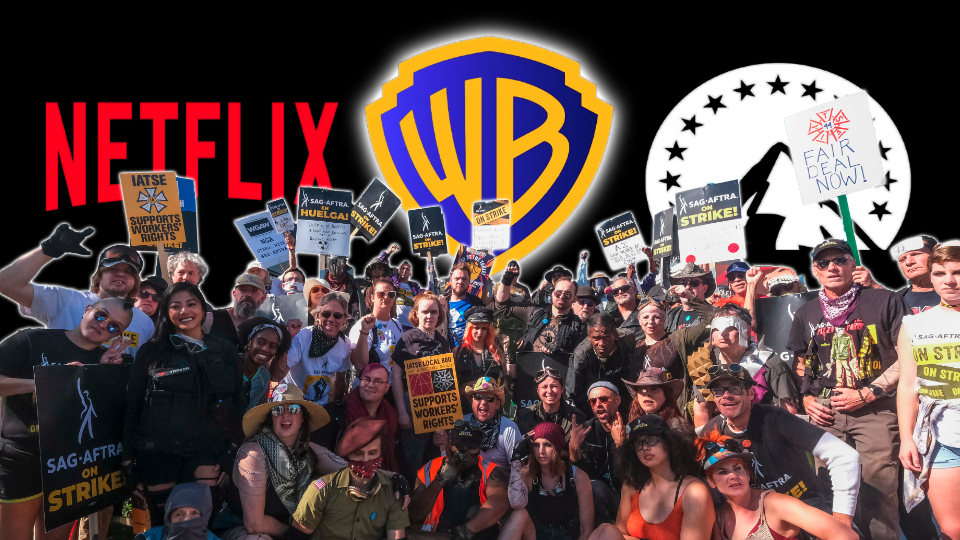
HOLLYWOOD, Calif.—Streaming media giant Netflix and Warner Bros. Discovery (WBD) announced on Dec. 5 that they had entered into a definitive agreement under which Netflix will acquire Warner Bros., including its film and television studios, HBO Max, and HBO.
The deal, valued at $82.7 billion, may have the companies’ investors ready to celebrate, but several labor unions and elected officials are sounding the alarm that the acquisition may be bad business for workers and consumers alike.
Over the course of several weeks, a bidding war broke out between major media studios Netflix, Paramount Skydance, and a number of other large media conglomerates over which company would acquire part or all of WBD. Warner Bros., which has existed since 1927, has long been considered one of the major studios in the Hollywood entertainment industry.
In recent years, it became one of the “Big 5” remaining major film studios, which include Walt Disney Studios, Universal Filmed Entertainment Group, Sony Pictures, and Paramount Skydance Studios. Together, the five account for nearly 80% of American box office revenue. The Netflix acquisition would leave one less major film studio and consolidate the fourth-largest paid streaming platform (under WBD) with the first (Netflix).
A Netflix statement to investors claimed its acquisition of WBD “will enhance Netflix’s studio capabilities” and result in the creation of more jobs and “strengthen the entertainment industry.” A number of entertainment workers’ organizations beg to differ.
Unions speak out
The Writers Guild of America West (WGAW) and Writers Guild of America East (WGAE) released a joint statement condemning the deal.
“The world’s largest streaming company swallowing one of its biggest competitors is what antitrust laws were designed to prevent. The outcome would eliminate jobs, push down wages, worsen conditions for all entertainment workers, raise prices for consumers, and reduce the volume and diversity of content for all viewers,” the statement read. “This merger must be blocked.”
When asked by People’s World what a better alternative to the acquisition would be, the Writers Guild of America provided a follow-up statement asserting: “The problem is the acquisition and pending consolidation of two media giants, not who the buyer is. These companies should be focused on investing in their own businesses, rather than wasting tens of billions to buy up the competition.”
SAG-AFTRA union, which represents approximately 160,000 actors and other entertainment and media professionals, issued a statement noting that the consolidation may help the financial interests of both companies’ shareholders, but it will no doubt “impact on the future of the entertainment industry, and especially the human creative talent whose livelihoods and careers depend on it.”
The union concluded that there needs to be “more creation and more production, not less,” and that any transaction should focus on jobs and production commitments.
The Directors Guild of America (DGA) said it will request a meeting with Netflix to understand the company’s vision for the future. The Guild stated that its members “believe that a vibrant, competitive industry—one that fosters creativity and encourages genuine competition for talent—is essential to safeguarding the careers and creative rights of directors and their teams.”
The apprehension among labor unions about the consolidation and its impact on jobs is not without reason or precedent. The entertainment industry has undergone several upheavals in recent years, including the global COVID-19 pandemic, two significant labor strikes, a decrease in production both globally and in Los Angeles, and the looming threat of AI to creatives’ jobs.
Death of theatrical releases?
This worry regarding jobs is also felt by those who work in movie theaters around the country. The Independent Cinema Alliance (ICA), a cinema trade organization representing nearly 5,000 independently operated movie screens throughout North America, opposed the acquisition, citing Netflix’s history of slighting theatrical film releases.
“Netflix has made its position clear for years: It is built to serve consumers who watch content on personal devices, not to sustain a robust theatrical ecosystem for families and individuals who want to see movies in theaters,” ICA executive director Frank Rash said in a public statement.
Rash highlighted a similar merger in 2017, when Disney purchased 20th Century Fox, resulting in a 40% decrease in Disney’s theatrical releases. “A Netflix-controlled Warner Bros., which currently accounts for an industry-leading 24% of box office revenue, risks repeating, or worsening, the anticompetitive effects of industry consolidation,” the executive director said.
Antitrust nightmare and Trump interference
Elected officials have also chimed in, expressing concern that the buying of WBD could be a monopoly horror show.
Sen. Elizabeth Warren, D-Mass., released a statement after the definitive deal was announced, saying that it “looks like an anti-monopoly nightmare,” and that it would create “one massive media giant with control of close to half of the streaming market.” She expressed that the acquisition threatens to force Americans to pay higher subscription prices “while putting American workers at risk.”
The senator is no stranger to the fight to rein in corporate overreach and against monopolies. On Nov. 19, she led Sens. Bernie Sanders and Richard Blumenthal in writing to the U.S. Department of Justice (DOJ) Antitrust Division, warning that a potential Warner Bros. deal could be influenced by “political favoritism and corruption.”
This was in reference to the Trump administration’s Federal Trade Commission (FTC) approving the substantial merger between Paramount and Skydance months ago on the heels of Paramount’s $16 million donation to Trump’s presidential library fund.

Skydance CEO David Ellison, now CEO of the newly-minted Pramount Skydance company, is the son of Oracle billionaire—and avid Trump supporter—Larry Ellison. Government approval of the Paramount Skydance merger was seen by many as a political favor from the Trump administration.
Since Netflix’s announcement of the deal with WBD, Paramount has launched a hostile bid for WBD and argues that its offer would create an easier path to regulatory approval—which includes the Department of Justice (DOJ) and the European Union (EU).
Some experts believe this “easier” path has more to do with Ellison’s close ties to the Trump White House and business dealings with and financing support from Trump’s son-in-law, Jared Kushner, than the technicalities of the money put up.
Netflix’s offer is $27.75-per-share to acquire WBD’s streaming and studio assets. Thanks to the help from his financing partners, Ellison is trying to woo WBD shareholders with a $30-per-share all-cash offer to buy all of the company’s assets—streaming, studio, cable television, and more.
In another statement issued after Paramount’s hostile bid, Warren asserted that “Paramount Skydance’s new hostile bid is backed by a who’s who of Trump buddies, from Jared Kushner’s private equity firm to the Ellison family to money flowing from the Middle East.”
Trump, for his part, stated during a recent interview that he would be part of the review process. In response to this, Warren said it was “an open invite for CEOs to curry favor with Trump in exchange for merger approvals.”
Future of the industry
Any merger—whether with Netflix or Paramount Skydance—could take weeks or months to reach a conclusion. Whichever company prevails in its merger bid, the outcome will have an enormous impact on labor in the entertainment industry.
As Teamsters Local 399 Secretary-Treasurer Lindsay Dougherty put it in a recent statement, some investors may get richer, but many workers may just be on the losing end.
“Netflix is the biggest streaming service in the world. Consolidating its power over the streaming video market not only kills jobs but also raises prices and hurts the U.S. entertainment industry. Teamsters have been clear on our position that greed-fueled consolidation of corporate power, no matter what industry, is a direct threat to good union jobs, the livelihood of our members, and the very existence of our industry.”
We hope you appreciated this article. At People’s World, we believe news and information should be free and accessible to all, but we need your help. Our journalism is free of corporate influence and paywalls because we are totally reader-supported. Only you, our readers and supporters, make this possible. If you enjoy reading People’s World and the stories we bring you, please support our work by donating or becoming a monthly sustainer today. Thank you!
CONTRIBUTOR