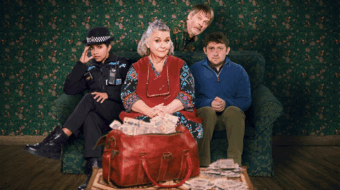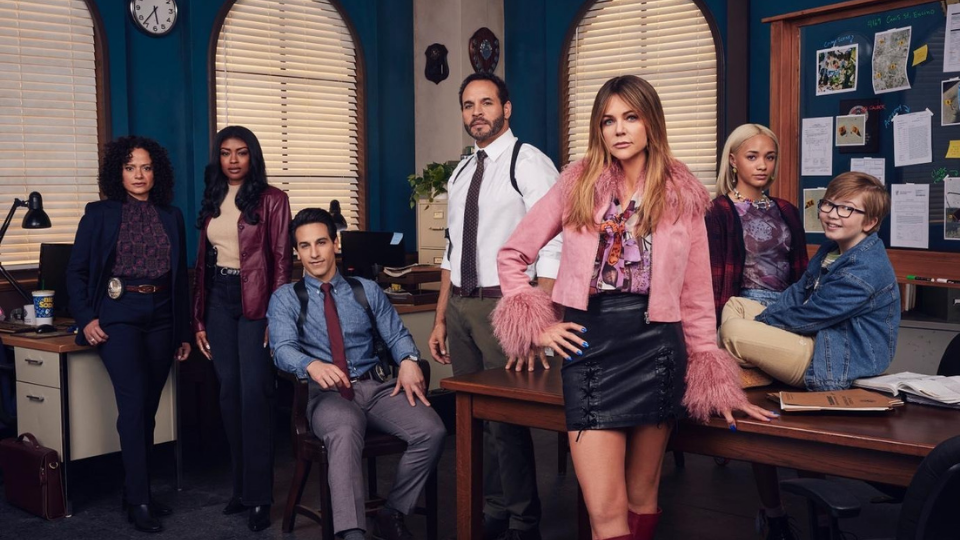
Over the last year, we have seen increasing state violence and violation of the right to protest in Minneapolis, Los Angeles, and other places. We are now presented with two TV series that are perky and gleeful about those violations. The American series High Potential and the Australian series Blue Murder Motel feature ordinary citizens, in the first a housewife/office cleaner and in the second two owners of a motel, trampling the rights of the accused all in a cutesy, light atmosphere where the hilarity never stops, that is, unless you’re the victim of the characters in either of these series.
High Potential, which is a hit on ABC and was renewed for a second season, follows the fun escapades of Morgan, an overnight janitor at the LAPD with an IQ of 160 and by day a mother with three kids. The series, a combination of more standard ABC/Disney family melodrama and CBS police procedural, begins with a series of role reversals. Instead of being an immigrant stuck in a low-paying job, Morgan is a Caucasian consigned to being a cleaner, but, between dusting, she puts the police on the right track toward solving a murder. The upper echelons of the LAPD, the detectives, in this fantasy, are Black American and Latino, and their sensitivity contrasts with two white goon cops on the street who accost Morgan.
She bullies her way onto the staff and, in solving crimes, is distinguished by her utter disregard for 75 years of court protections of police suspects. She paws through a biologist’s office in an illegal search as the official police detective is talking to the scientist. She then more brazenly steals a letter from the same office by posing as a cleaner and breaking and entering a safe because she figures out the combination. Finally, in an interrogation, she wants to play the bad cop, coming down more violently on the citizen being grilled.
This is Desperate Housewives meets CSI, even employing the CSI flashbacks of suspects as Morgan tells their story, but not as murderers, but as the suspect couple enjoying a fun water world ride. Morgan describes her flaunting of citizens’ rights as her “rebelliousness,” and in the end, we all have a laugh at her walking all over the Constitution.
Blue Murder Motel, an Australian series, is about a couple of former police detectives from the New South Wales force in Australia who retire and buy a run-down motel in New Zealand. The gimmick, alluded to in the title, is that every week there is a murder at their motel, which the couple solves. The way Peter and Vanessa Coleman solve these crimes is, as in High Potential, by using their status as civilians to spy on and trample the rights of their guests at the motel.
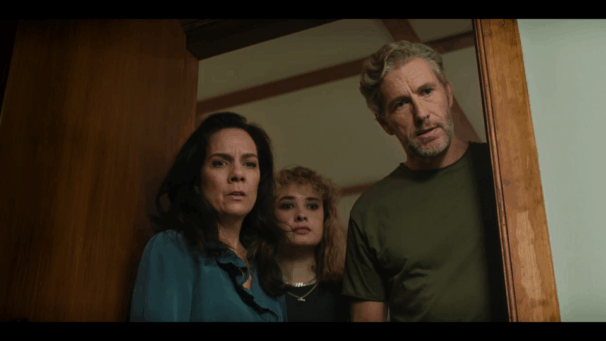
In this combination of romantic comedy and detective series, Vanessa is especially more aggressive, grabbing hold of a guest’s arm and twisting it to stop a verbal confrontation that even Peter thinks is too much on her part. She later breaks into the room of a suspect couple and steals the woman’s lipstick to be used later as evidence against her. Peter, standing guard, calls to warn her that the other couple is outside, putting us in the position of sympathizing with her breaking and entering, hoping she gets away with it.
Later, Peter, in unclogging the suspect couple’s drain, finds the missing piece of evidence that seals their guilt. He suggests they simply install cameras in the rooms to spy on all their guests, which Vanessa resists because “it will kill the fun vibe.” The pilot ends with the two dancing under a disco ball, highlighting their romance, which is enhanced by their combined flaunting of the law. In our modern police state, this is called a romantic interlude.
It’s not often that a TV series spills directly into the headlines, but the New South Wales police force, from where Peter and Vanessa retired, is in the news for the brutality with which they assaulted demonstrators during a rally to protest the royal treatment of the Australian government for the president of Israel, Isaac Herzog, whom they accuse of perpetrating genocide. Even the Australian mainstream media described the protestors as being “punched, pushed and arrested,” and questioned whether this was excessive use of force. It’s interesting to note that ABC, the Australian Broadcasting Company, which was there on the ground, ran with the story questioning the police, while the BBC, the British Broadcasting Company, in their story, defended the police, drawing attention instead to what they termed “protest violence.” We also have the LAPD, Morgan’s force, accused of violent treatment of ICE protestors, with a woman recently shot in the face by police.
These two series then make light of ongoing violence as protestors ramp up dissent against governments that are becoming increasingly hostile and belligerent. They do it in a way that makes police flaunting of rights fun, after all, to demand the police honor the rights of protestors is for the police “killing their vibe,” though the problem, of course, is what constitutes their “vibe.”
This article is a preview of Episode 2 of the podcast Lies, More Lies and Damned Media Lies.
As with all news-analysis and op-ed articles published by People’s World, the views reflected here are those of the author.
We hope you appreciated this article. At People’s World, we believe news and information should be free and accessible to all, but we need your help. Our journalism is free of corporate influence and paywalls because we are totally reader-supported. Only you, our readers and supporters, make this possible. If you enjoy reading People’s World and the stories we bring you, please support our work by donating or becoming a monthly sustainer today. Thank you!
CONTRIBUTOR