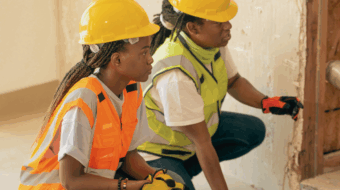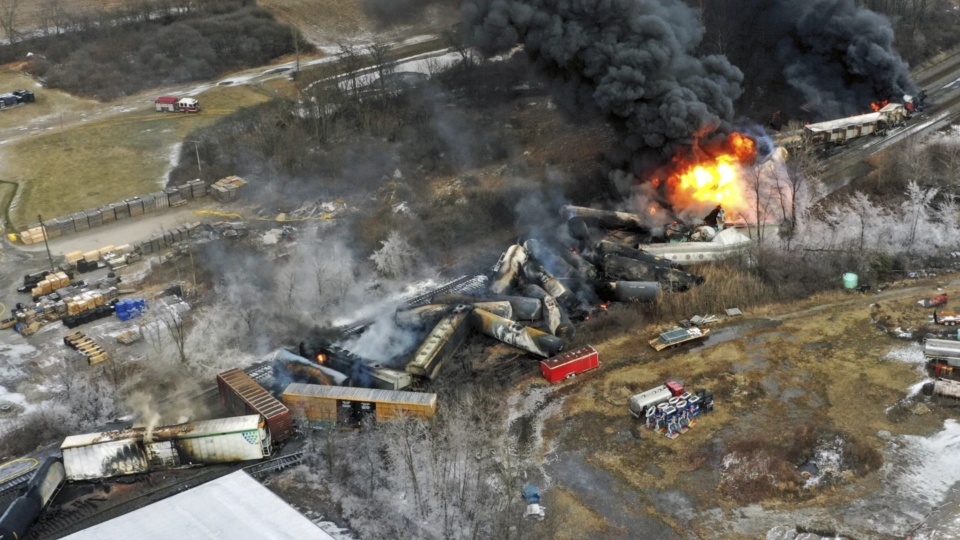
It is no secret that irresponsible rail giants out for profits have visited injury and death on workers and massive destruction to communities around the country. Workers are warning that a new corporate monster railroads want to create via a merger would tear up critical health and safety measures that protect both workers and people in towns thorough which the trains pass.
The monster rail monopolies created America’s Gilded Age. Now, the proposed $85 billion merger between Union Pacific and Norfolk Southern seeks to create a new Gilded Age for the 21st century. They are lobbying to merge into a single corporate giant that would wield monopoly power over freight from the Pacific to the Atlantic.
Such a consolidation will threaten spikes in costs for the entire economy, degrade safety, and crush the bargaining power of rail workers. America’s rail workers are mobilizing against this merger, but their campaign faces a critical test: maintaining a united front among all rail unions.
At the forefront of the opposition to the dangerous merger is the rank-and-file coalition Railroad Workers United (RWU). Its position is that in order to defeat the proposed union of Union Pacific and Norfolk Southern, all 14 rail craft unions must present a solid wall of solidarity. Any fracture, RWU argues, will empower the corporate giants and jeopardize the jobs, safety, and bargaining power of every rail worker.
“This is not governance, it’s gate-keeping for the cartels,” warned RWU. They argued that this concentration of power will “jeopardize the freight rail network that sustains our industries, our jobs, and our communities.”
The proposed merger would reduce the number of major Class I freight railroads to five and enable price-fixing and strangle competition. For the 40% of the nation’s freight rail workers employed by the two carriers, the merger only promises them job losses, forced relocations, and a drastic erosion of bargaining power.
Recently, the solidarity of rail labor faced a severe test when the largest union, SMART-TD, fractured their united front. In July, SMART-TD expressed “measured skepticism” about the merger’s impact. By September, its leadership reversed course, endorsing the deal after private negotiations yielded an undisclosed “jobs guarantee.”
In response, RWU condemned what they called a secretive agreement as a betrayal of union democracy and collective solidarity.
“SMART-TD acted alone… The union did not poll its membership, disclose the agreement, or provide any mechanism for members to approve or reject it,” RWU’s statement noted. This fracturing echoes the failed strategy of the 1996 Union Pacific-Southern Pacific merger, where unions accepted empty promises that failed to prevent massive layoffs.
“Any union that cuts a separate deal at the expense of others invites retaliation later,” RWU argued. “Today Union A may gain at Union B’s expense; tomorrow the roles will reverse.”
Of course, workers’ distrust of mergers is warranted. In 2023, Union Pacific launched “cost-cutting” furloughs while returning billions to shareholders, proving its priority is Wall Street, not its workforce.
RWU argued the “jobs guarantee” from the corporations is hollow. It applies only to current employees, creating a two-tier workforce, they said.
“Who will negotiate limits on forced relocations?” RWU asked. “What will happen in cities where UP and NS operations overlap and ‘redundant’ facilities will be cut?”
This fight against the merger extends beyond just the rail yards, too. The Transport Workers Union (TWU), the United Electrical Workers (UE), and the Brotherhood of Maintenance of Way Employees (BMWED) publicly opposed the merger.
“Anything that empowers the freight rail carriers is dangerous for workers, and actually dangerous for everybody,” said TWU President John Samuelsen. “If they’re twice as big, they’ll be twice as difficult to deal with.” BMWED’s Tony Cardwell vowed to “vehemently deny” the merger and work to block it.
The rail workers are also aligned with shippers, environmental groups, and community activists who warn that reduced competition will spike shipping costs for farmers, manufacturers, and energy producers. If successful, the merger would accelerate the industry’s decades-long shift toward a financialized model obsessed with stock buybacks and “precision scheduled railroading” at the expense of operational reliability and safe staffing—major concerns for workers and their unions.
For its part, RWU reiterated its calls for a united labor front to defeat the merger and champion an alternative vision. They point to grassroots victories, like the campaign against the Kroger-Albertsons grocery merger, as a potential model.
“We could highlight the dangers of monopoly, the industry’s service failures and safety decline… and record profits amid stagnant traffic,” they argued. “Around the world, rail is expanding; in the United States, rail potential is squandered by corporate short-termism.”
This struggle will test whether the rail unions can stand together on the principle that “an injury to one is an injury to all” or fracture into competing crafts. It also challenges the labor movement to reject the financialized logic of Wall Street and to revive its historic mission of asserting democratic control over the industries that shape our collective lives.
“United and determined,” RWU declared, “rail labor can win this fight.”
We hope you appreciated this article. At People’s World, we believe news and information should be free and accessible to all, but we need your help. Our journalism is free of corporate influence and paywalls because we are totally reader-supported. Only you, our readers and supporters, make this possible. If you enjoy reading People’s World and the stories we bring you, please support our work by donating or becoming a monthly sustainer today. Thank you!
CONTRIBUTOR