The war on Iran has not merely opened a new military front in the Middle East. It has shattered long-standing myths that have shaped U.S. policy and regional politics for decades. What has unfolded in the past days is not simply a battlefield confrontation; it is a historical rupture.
Several narratives that once appeared unassailable have collapsed under the weight of reality. At the same time, theories long dismissed as ideological or exaggerated have been confirmed with startling clarity.
Myth of American protection
For decades, Washington has portrayed itself as the ultimate guarantor of regional security. U.S. military bases, aircraft carriers, air defense systems, and bilateral security agreements were marketed as shields protecting allies from existential threats.
This war has exposed that promise as hollow.
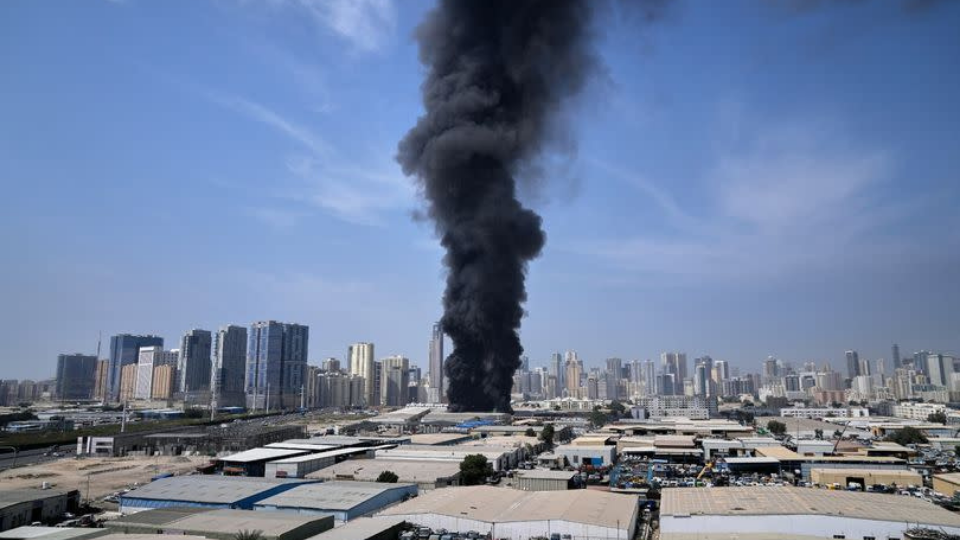
Despite an overwhelming U.S. military presence across the Gulf, regional allies have faced missile alerts, drone incursions, and maritime threats. American troops themselves have been killed. Energy infrastructure has been threatened. Shipping routes have been destabilized.
The presence of American forces has not prevented escalation; it has invited it.
More importantly, the nature of the U.S. presence has been exposed. It is not rooted in partnership but in dominance. Yet even dominance has proven illusory. Military superiority does not automatically translate into strategic control. When a regional power like Iran chooses to retaliate asymmetrically, the illusion of total American command evaporates.
Failure of “containment”
For years, U.S. policymakers framed Iran as a state that could be isolated, sanctioned, and gradually weakened under a prolonged containment strategy. The assumption was that Tehran would remain strategically boxed in.
That assumption has now collapsed.
Iran has demonstrated that it possesses both the capacity and the willingness to disrupt the entire regional order if pushed to the brink. Missile capabilities, regional alliances, and maritime leverage give Tehran tools that extend far beyond its borders.
Containment presumes passivity. Iran has proven anything but passive.
This reality carries a fundamental implication: Iranian rights, interests, and security concerns cannot simply be dismissed. A sustainable regional order cannot be built on the permanent marginalization of one of its central actors.
Normalization agreements were sold as a new architecture of stability. Israel was presented as a technological, military, and intelligence power capable of protecting its new Arab partners from regional threats.
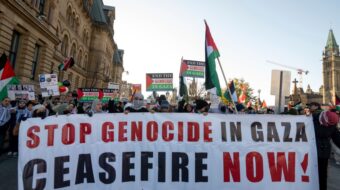
The events of recent years—from the genocide in Gaza to the widening regional war—have dismantled that narrative. Israel has not stabilized the region. It has destabilized it.
Its wars have drawn neighboring countries into cycles of violence. Its confrontations have triggered regional escalation. The notion that Israel could serve as a security umbrella for Gulf states now appears deeply flawed.
Instead of becoming a regional protector, Israel has become a catalyst for broader conflict.
The alignment miscalculation
The United Arab Emirates and other Gulf states were told that full alignment with Washington and Tel Aviv would ensure security and prosperity.
Yet news reports now suggest widespread anxiety among residents. In Dubai, expatriates reportedly scrambled in mass numbers to leave amid fears of regional escalation.
Security cannot be outsourced. Total alignment with external powers does not immunize states from regional consequences. On the contrary, it can entangle them in conflicts not of their choosing.
The promise that alignment equals safety has proven dangerously simplistic.
End of the post-Iraq order
Since the invasion of Iraq, Washington operated under a strategic formula: permanent military bases, rigid regional divisions between “allies” and “adversaries,” and unconditional support for Israel.
That model is now under strain, to say the least.
Permanent bases have become targets. The binary division of the region has produced polarization rather than stability. Blind support for Israeli military adventures has entangled Washington in repeated crises.
The post-Iraq order was never sustainable. The war on Iran may have finally exposed its fragility.
Israeli influence over U.S. policy
Although Israel carries out the strategic aims of U.S. imperialism in the Middle East, the war has laid bare the decisive role Israel plays in shaping U.S. tactics. Washington’s rationale for entering and sustaining this particular conflict has extended little beyond reflexive alliance language, offering no coherent explanation that stands independently of Israeli priorities.
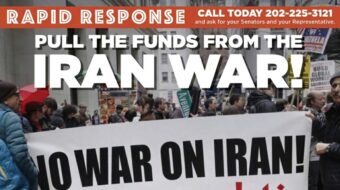
At a time when public opposition to another Middle Eastern war remains strong across the United States, American tactics have nevertheless aligned almost seamlessly with Israeli strategic objectives. This is not a coincidence. It reflects a structural reality.
Congressional and executive backing for escalation has remained firm despite widespread domestic fatigue with foreign wars. The calculations driving this support are political, not popular. Electoral financing, lobbying influence, and long-standing strategic entanglements outweigh the preferences of a war-weary electorate.
For years, analysts have argued that Israeli influence over U.S. policy is profound. The war on Iran has transformed that argument from theory into observable reality.
Iran’s military capacity
Iran was widely portrayed as weaker than it truly is. The expectation in some Western circles was that swift decapitation strikes would paralyze the state.
Instead, Iran has demonstrated substantial military capability. It has retaliated with precision and scale. It has threatened shipping lanes. It has activated regional alliances.
This does not mean Iran is invincible. But it does mean that assumptions of easy dominance were deeply flawed.
Institutional resilience
Perhaps most strikingly, Iran’s political system did not collapse following targeted assassinations of senior leadership figures.
This confirms a critical reality: Iran is a state built on institutions, not solely on personalities. The killing of top leaders did not produce chaos or fragmentation. Instead, state structures adapted.
The expectation of immediate internal disintegration proved misguided.
Durability of regional alliances
Iran’s allies—including Hezbollah—remain consequential actors.
Despite setbacks and strategic calculations, these groups continue to shape regional outcomes. They have not been neutralized. They have not disappeared.
The regional balance of power cannot be understood without acknowledging its continued presence.
Myth of “America First”
Finally, the war has exposed the emptiness of the “America First” slogan.
Intervention in Iran, continued hostility toward Venezuela, and sustained military entanglements demonstrate that U.S. foreign policy remains anchored in global projection of power.
The rhetoric of restraint was politically useful. The policy of intervention continues.
A Turning Point
The war on Iran may ultimately be remembered less for territorial shifts and more for intellectual ones.
It has shattered myths about American protection, Israeli regional guardianship, Gulf immunity, and Iranian weakness.
It has confirmed deeper truths about institutional resilience, regional power dynamics, and the persistence of interventionist policy in Washington.
History does not change overnight. But when long-standing narratives collapse under the weight of events, a turning point emerges.
This war may well be that moment.
As with all news-analysis and op-ed articles published by People’s World, the views reflected here are those of the author.
We hope you appreciated this article. At People’s World, we believe news and information should be free and accessible to all, but we need your help. Our journalism is free of corporate influence and paywalls because we are totally reader-supported. Only you, our readers and supporters, make this possible. If you enjoy reading People’s World and the stories we bring you, please support our work by donating or becoming a monthly sustainer today. Thank you!
CONTRIBUTOR