How do you bomb a country “without mercy”—and end up strengthening it?
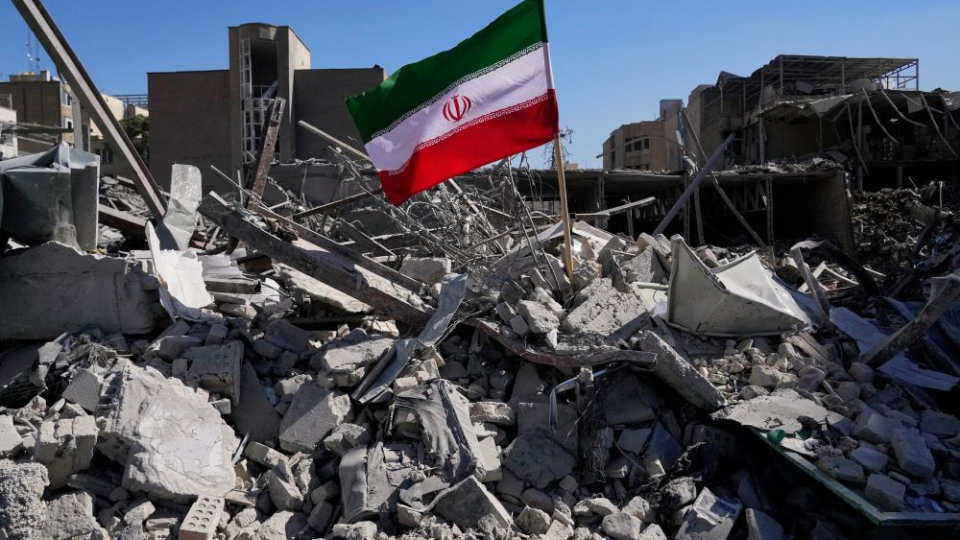
When U.S. Defense Secretary Pete Hegseth declared that Washington would show “no quarter, no mercy for our enemies,” the message was unmistakable: this was not a limited war, but an overwhelming campaign meant to break Iran—militarily, politically, and socially.
The logic behind such a position is not new. A country under years of sanctions, strained by economic hardship, and periodically shaken by protests, would, under sustained attack, fracture from within. Pressure would compound, divisions would deepen, and the political system would eventually collapse.
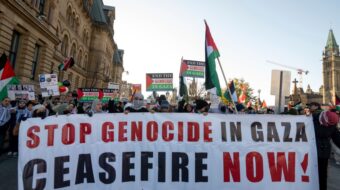
That was the expectation. But the result has been the opposite. Across Iran, millions have taken to the streets—not only rejecting the war, but expressing support for their country’s military and political institutions. Instead of collapse, there has been consolidation. Instead of fragmentation, cohesion.
This is not simply a miscalculation. It is the failure of an entire way of thinking about history.
For decades, much of U.S. and Israeli strategic thinking has relied—implicitly or explicitly—on the assumption that political systems can be weakened and reshaped from the outside. Economic pressure, psychological operations, military escalation, and the targeting of leadership are all seen as levers that, if applied with sufficient intensity, will produce predictable outcomes.
In Iran’s case, this approach was reinforced by visible internal tensions: economic grievances, social unrest, and waves of protest that seemed to signal a society under strain.
Yet these indicators were read in isolation. They were treated as signs of imminent collapse, rather than as expressions of a complex and dynamic society. What was missing from this analysis was not data, but depth.
More than a century ago, Leo Tolstoy offered a framework that helps explain precisely this kind of failure. In War and Peace, particularly in its second epilogue, Tolstoy dismantles elite-centered explanations of history—what would later be called the “Great Man” theory. He rejects the idea that leaders, generals, and political elites determine events, challenging instead the very foundations of how history is understood.
Tolstoy argues that history is not shaped from the top down. It is not the product of individual will imposed on passive societies. Instead, it emerges from the interaction of countless individual actions—each shaped by circumstance, culture, memory, and necessity. As he put it, “in historical events great men… are but labels… having the least possible connection with the event itself.”
What appears, in hindsight, as the decisive role of leaders is often an illusion. Tolstoy insists that those we consider powerful are, in fact, constrained by forces far greater than themselves. “Kings are the slaves of history,” he writes, describing history itself as “the unconscious, general… life of mankind,” which uses individuals as instruments rather than obeying them.
In this view, power is not located in the individual, but in the collective. Leaders do not create history; they are carried by it.
This perspective leads to what can be described as a “beehive” model of history. Society functions like a hive, where no single actor directs the whole, yet a coherent pattern emerges from the interaction of countless parts. Tolstoy himself approached this idea through a different language, arguing that to understand history, one must shift attention away from rulers and toward the countless small actions that, taken together, determine outcomes.
Modern strategic thinking struggles precisely at this point. It is highly effective at measuring what can be quantified: economic decline, protest frequency, military capability, and political rhetoric. But it struggles to account for what cannot be easily measured—the accumulated weight of collective experience, the cultural and historical frameworks through which societies interpret events, and the ways in which populations respond not mechanically, but adaptively, to external pressure.
Iran’s national unity, in this context, is not an anomaly. It is a reflection of these deeper forces.
Iranian society has been shaped by a long history of upheaval and resistance: revolution, war, foreign intervention, and sustained economic pressure. These experiences do not produce a simple or uniform political outlook. They generate a layered and often contradictory social reality—one in which dissent and cohesion coexist. But under conditions of external threat, these layers can align in unexpected ways.
What may appear as fragmentation in times of relative stability can become unity when the threat is perceived as existential. This is not the result of central coordination or propaganda alone, as is often suggested. It is the outcome of countless individual decisions—people reassessing priorities, recalibrating their positions, and responding to a shared sense of danger.
Tolstoy observed a similar dynamic in Russia during the 1812 invasion by Napoleon. The defeat of the French army was not simply the result of strategic brilliance or centralized command. It emerged from the cumulative effect of local actions: peasants refusing cooperation, communities adapting to invasion, individuals making decisions that, taken together, shaped the course of the war. These actions were not coordinated in any formal sense, yet they produced a coherent outcome.
This is what Tolstoy meant when he challenged historians to look beyond rulers and to focus instead on the countless human actions that actually produce historical change.
A comparable logic can be seen in the Palestinian concept of sumud, or steadfastness. Over decades of occupation and dispossession, Palestinian resilience has not been sustained primarily by centralized structures or formal strategies, but by the people themselves—their social fabric, cultural continuity, and collective memory. As many thinkers, from Antonio Gramsci to Ghassan Kanafani and Howard Zinn, have argued in different contexts, history is not simply imposed from above; it is constructed from below.
This does not mean that leadership, institutions, or strategy are irrelevant. It means that they are not sufficient to explain historical outcomes on their own.
The expectation that Iran would fracture under military pressure failed because it relied on the wrong unit of analysis. It treated society as a system that could be manipulated through external force, rather than as a living, adaptive organism shaped by its own internal dynamics. It interpreted internal dissent as weakness, rather than as part of a broader and more complex social process.
Most importantly, it assumed that history can be engineered.
But history is not a linear sequence of inputs and outputs. It is not a program that can be executed according to plan. It is an emergent process, shaped by the interaction of forces that cannot be fully predicted or controlled.
In such a system, overwhelming force does not guarantee the intended outcome. In some cases, it produces the opposite effect—strengthening the very structures it was meant to weaken.
If Tolstoy were to observe the current moment, he would likely reject the dominant narratives that center on leaders, strategies, and geopolitical calculations. He would not begin with presidents or generals. He would begin with the people—the millions whose actions, taken together, are shaping the course of events in ways that no model can fully anticipate.
The national unity visible in Iran today is not simply a political phenomenon. It is a historical one. It reflects the deeper “hive-life” of a society responding to external pressure—not as a passive object, but as an active force.
This is the lesson that remains consistently overlooked. This maxim is consistent with Gramsci’s revision of Cicero’s saying, “Historia magistra vitae” (History is the teacher of life). For Gramsci, an important caveat needed to be added: History is the teacher of life, but it has no disciples.
History is not made in war rooms or think tanks. It is made in the accumulated choices of ordinary people, acting within the constraints and possibilities of their own lived realities. Power, in this sense, does not reside solely in states or leaders. It resides in the collective—distributed, dynamic, and often invisible until moments of crisis bring it into view.
What we are witnessing is not an exception to the rules of history.
It is the rule itself.
As with all op-eds published by People’s World, the views reflected here are those of the author.
We hope you appreciated this article. At People’s World, we believe news and information should be free and accessible to all, but we need your help. Our journalism is free of corporate influence and paywalls because we are totally reader-supported. Only you, our readers and supporters, make this possible. If you enjoy reading People’s World and the stories we bring you, please support our work by donating or becoming a monthly sustainer today. Thank you!
CONTRIBUTOR