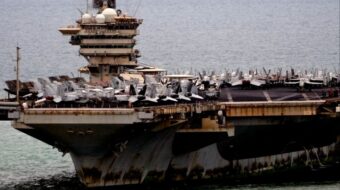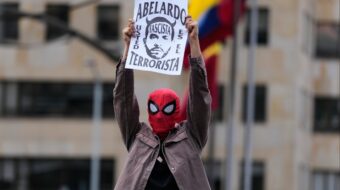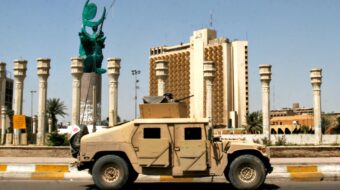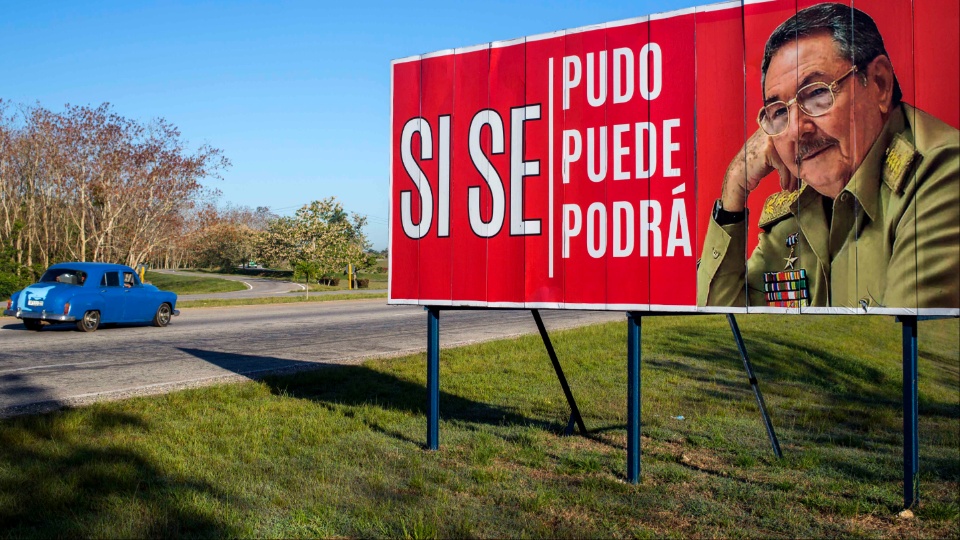
After kidnapping Venezuelan President Nicolás Maduro in January and killing Iranian Supreme Leader Ayatollah Ali Khamenei the following month, President Donald Trump declared “Cuba is next.” With the unsealing of a criminal indictment against former Cuban President Raúl Castro on May 20, the administration in Washington is preparing to make good on its threat.
The U.S. Department of Justice filed murder and conspiracy charges against Castro in relation to the 1996 downing of two planes operated by a Cuban-American exile group over the waters near Cuba’s northern shore. Four people died in the incident. The planes were shot down by the Cuban Air Force, which was under the command of Castro, who served as minister of defense at the time.
While portrayed as a pursuit of justice by Trump’s DOJ officials, the indictment is more about justification. It is the latest weapon in Washington’s decades-long war against the Cuban Revolution, solidarity activists say, and a signal of things to come across Latin America.
U.S. Secretary of State Marco Rubio joined in the effort with a Spanish-language message to Cubans Thursday aimed at turning them against their leaders. He pitched the U.S.-imposed embargo and blockade of energy imports as the fault of the Cuban state.
“The reason you are forced to survive 22 hours a day without electricity is not due to an oil ‘blockade’ by the U.S.” Rubio said. “The real reason you don’t have electricity, fuel, or food is because those who control your country have plundered billions of dollars, but nothing has been used to help the people.”
The charges against Castro are intended to provide the U.S. with a pretext for an operation to capture him and depose the revolutionary government, similar to the raid in Venezuela that deposed Maduro and ushered in more cooperative leadership in that oil-rich country. Following the attack on Caracas and at multiple points during his Iran war, Trump has signaled that overthrowing the Cuban government is his next objective.
The 1996 provocation
The indictment against Castro centers on the Feb. 24, 1996, downing of two Cessna planes operated by a Cuban exile group called Brothers to the Rescue (Hermanos al Rescate). Washington presents the incident as cold-blooded murder, but the facts tell a very different story.

Brothers to the Rescue was founded by José Basulto, a veteran of the failed Bay of Pigs invasion and a CIA collaborator with a history of violent actions against Cuba. In 1961, Basulto was involved in a plot to bomb a base in Havana. A year later, he helped position a boat armed with a 20mm cannon off the coast of Havana and fired on the Hornedo de Rosita hotel, where it was believed revolutionary leader Fidel Castro was dining.
During court testimony in 2001, Basulto confirmed he had gained his skills from the CIA and that he had indeed launched the cannon and machine gun attack on the Cuban hotel. “I was trained as a terrorist by the United States,” Basulto once admitted in an interview with a documentary filmmaker.
He established Brothers to the Rescue in 1991, a time when Cuba’s economy was hit by the fall of its socialist trading partners in Eastern Europe. The hardships prompted many people to attempt migration to the United States via boat. Brothers to the Rescue claimed to be a humanitarian organization assisting and rescuing raft refugees by spotting them from the air and directing the U.S. Coast Guard to their locations. Basulto and his associates had also flown similar missions during the 1980 mass migrations from Cuba’s Mariel Harbor.
The group flew a military version of the Cessna 337 aircraft, the O-2 Skymaster, which had been retired from military service in the 1980s. Ricardo Alarcón, Cuba’s retired foreign minister and former president of its legislature, alleges that the group used planes that had been deployed in U.S. wars in Vietnam and El Salvador and that they may have been provided to Basulto’s organization by the U.S. Air Force.

After a 1994 immigration accord between the U.S. and Cuba reduced the flow of migrants, Brothers to the Rescue shifted from its rescue work to overt provocation. “They started to carry out a political agenda of harassing and threatening the Cuban government,” recalled Richard Nuccio, then White House special advisor on Cuba.
On the day of the shootdown, three Brothers to the Rescue Cessnas took off after filing a false flight plan claiming they were searching for rafters at sea. As the aircraft approached Cuba, Cuban controllers warned them not to cross into their airspace. “We are ready to do it,” Basulto responded. Two planes were eventually shot down; the third, piloted by Basulto himself, managed to return to Miami.
A former Brothers to the Rescue pilot, Juan Pablo Roque, said two days after the shootdown that Basulto and his cohorts were “longtime CIA agents who engaged in terrorist actions in Cuba and Central America,” as reported by People’s World editor Tim Wheeler in March 1996. Roque’s revelations, along with official U.S. documents, show that Washington’s own officials saw this coming.
Declassified FAA records show that starting a year before the shootdown, the Cuban government filed multiple protests over repeated violations of its airspace. High-level U.S. officials, including Nuccio, State Department Undersecretary Peter Tarnoff, and Secretary of Transportation Federico Peña, repeatedly expressed concerns to the FAA about Brothers to the Rescue flights.

An internal FAA memo from January 1996—released this week by Cuba’s embassy in Washington—warned that “the worst-case scenario is that one day the Cubans will shoot down one of these planes.”
In the 20 months preceding the incident, the group had penetrated Cuban airspace on 25 occasions, each of which was denounced by the Cuban government. On several of those missions, they dropped hundreds of thousands of leaflets over Havana calling for an insurrection against the socialist government.
Cuba formally reported each violation in writing to the State Department, the FAA, and the International Civil Aviation Organization. “No one can claim ignorance,” Cuba’s embassy stated.
Pastors for Peace, an interfaith religious group, said at the time that the methods of Brothers to the Rescue “continue a long tradition of invasion and violence launched on Cuba from Florida.” Communist Party USA Chairman Gus Hall said the “answer to these provocations is to end the…blockade of Cuba and establish full diplomatic and trade relations.”
Washington went in the opposite direction, however, wasting no time exploiting the incident. The Helms-Burton bill to tighten the U.S. embargo on Cuba had first been introduced in early 1995 but was stalled by Democratic filibusters. After the downing of the planes, it was immediately reintroduced and rushed through both houses of Congress. President Bill Clinton signed the Cuban Liberty and Democratic Solidarity (LIBERTAD) Act—known as the Helms-Burton Act—just days after the shootdown.
The law dramatically strengthened sanctions on Cuba and remains to this day the primary legal foundation of the U.S. blockade. It stripped the president of the authority to ease any part of the embargo without an act of Congress, denied visas to Cuban government employees and Communist Party members, and prohibited lifting trade restrictions until Cuba dismantles its political system on Washington’s terms.
The indictment of Castro this week is aimed at speeding up that dismantlement, through force if necessary.
Justification for war
Cuba has responded to the indictment with defiance. In an official statement carried on television and published in Granma, the Cuban government called the charges “a despicable and infamous act of political provocation, based on the dishonest manipulation of the incident that led to the downing over Cuban airspace of two aircraft operated by the terrorist organization ‘Brothers to the Rescue,’ based in Miami, whose repeated violation of Cuban airspace for hostile purposes was a matter of obvious public knowledge.”
The statement also noted that “it is highly cynical that this accusation is made by the same government that has murdered nearly 200 people and destroyed 57 vessels in international waters of the Caribbean and the Pacific, far from the territory of the United States, with the disproportionate use of military force”—a reference to the U.S. bombing of boats on unfounded claims they are transporting drugs.
The Cuban people, the statement concluded, “reaffirm their unwavering determination to defend the Homeland and its Socialist Revolution.”
Cuban Americans for Cuba, a U.S.-based group demanding an end to the embargo and cooperation between the two governments, posted a statement about the 1996 shootdown, saying, “Raúl Castro’s indictment over this incident is a flimsy pretext for war.”
In New York, the Communist Party USA dismissed the indictment as another example of an imperialist strategy that “seeks to remove from power anyone the U.S. cannot control” in the Western Hemisphere. It said that attempts to criminalize the Cuban leadership “while ignoring the violence and suffering carried out by U.S. imperialism reflects not a commitment to justice but rather the desperate acts of a system in crisis trying to reclaim its lost global dominance.”
The CPUSA condemned the charges against Castro and said “it is the people of Cuba alone who have the right to determine their destiny.”
China voiced its opposition to the indictment, as well. In response to a question from a reporter Thursday in Beijing, Guo Jiakun, spokesperson for the foreign ministry, said, “The United States should cease using sanctions and its judicial apparatus as tools of coercion against Cuba and refrain from making threats at every turn.”
The Trump administration’s argument that the indictment of a 94-year-old man who cannot be extradited is about justice is thus being seen by many as cover for an effort to justify further interference in Cuba’s internal affairs. Washington is building a legal-political case for the next phase of aggression against Cuba, taking a page from the same playbook it used against Venezuela.
We hope you appreciated this article. At People’s World, we believe news and information should be free and accessible to all, but we need your help. Our journalism is free of corporate influence and paywalls because we are totally reader-supported. Only you, our readers and supporters, make this possible. If you enjoy reading People’s World and the stories we bring you, please support our work by donating or becoming a monthly sustainer today. Thank you!
CONTRIBUTOR