Of all the hundreds of assignments I was given as a reporter for the Worker/ Daily World/ People’s World, my stories about the coal miners of Appalachia—and Wyoming—moved me the most.
Joyce and I and our children had just moved down to Washington, D.C., to take up my assignment as Washington Bureau Chief of the Daily World when Rockefeller-owned Consol Number 9 mine in Mannington, W.Va., caught fire, trapping 78 miners.
Managing Editor Si Gerson phoned me at my office in the National Press Building and asked if I could drive to Mannington to cover the disaster. It was three or four days before Thanksgiving, 1968. Joyce was nine months pregnant. But I raced out of my office, took the transit bus home, kissed Joyce, jumped into the car, and drove five hours due west to Little Laurel Run, a tiny little hamlet where the surviving miners, rescue crews, wives, and children of the trapped miners were waiting at the Champion Company Store. The miners, as far as we knew, were still alive. Yet it was like a wake, the families already in mourning.
I interviewed many of the wives, brothers, sons, and daughters, and wrote up my stories longhand. I called my stories in from the pay phone just outside the company store. I was there for several days, saw the grief on the faces of the widows and children. All 78 of the trapped miners died. I was there when Consolidation Coal Company CEO John Corcoran and United Mine Workers President Tony Boyle joined in a cover-up of Consolidation Coal Company’s disgraceful safety record.
From then on, coverage of the struggles of the coal miners ranked first on my list of priorities. In the year that followed the Mannington disaster, I covered Jock Yablonski’s campaign to replace Tony Boyle. In the last week of 1969, I was writing a story about President Nixon’s drive to slash black lung benefits for the thousands of coal miners suffering from this deadly disease, coal miners’ pneumoconiosis. It was a dead week; everyone fled from Washington for the Christmas-New Year’s holiday. I could not reach anyone on the phone for a comment.
Why not phone Yablonski at his home in Western Pennsylvania? I called information, got his phone number, and called. In a minute, a gravel-voiced man answered, “Hello.” It was Yablonski, himself. I asked him his opinion of Nixon’s drive to, in effect, destroy the black lung compensation program. I will never forget the sadness and anger as Yablonski blasted Nixon for savagely slashing black lung benefits for miners while squandering billions of tax dollars on the war in Vietnam, where thousands of sons of coal miners were dying.
Two days later, I picked up the Washington Post. There in a banner headline was the report that Yablonski, his wife Margaret, and their daughter Charlotte, had been murdered in a midnight assassination in the Yablonski home near Clarksville, Pennsylvania.
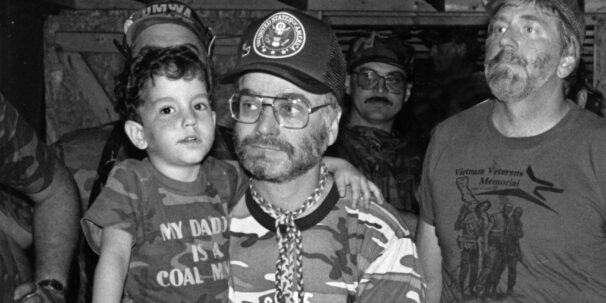
| UMWA
I drove up to attend the Yablonski family’s funeral at the Church of the Immaculate Conception in Washington, Pa. I was one of a delegation of four members of the Communist Party who attended those last rites. The eulogy was delivered by the progressive, anti-war priest, Monsignor Charles Owen Rice, who had been a close friend of the Yablonskis. He was the priest who performed the marriage ceremony for Jock and Margaret Yablonski. An estimated 90,000 coal miners walked out of the mines to honor the memory of Yablonski, his wife, and daughter.
And later, I interviewed Dr. I.E. Buff, founder of the Black Lung Association, whose medical practice was in Charleston, W.Va. He told me bluntly that UMWA President, Tony Boyle, was nothing but a hireling of the Rockefellers and all the other mine owners who were the real assassins of the Yablonski family.
The coal miners had joined the Black Lung Association because Boyle was such a spineless lackey of mine owners that the UMWA refused to endorse legislation authored by Rep. Ken Heckler (D-W.Va.)to fully fund and expand the coverage of the black lung compensation program.
Heckler invited about forty of these coal miners, several of them already coughing and wheezing from black lung, to come to Capitol Hill to speak at a press conference sponsored by Heckler himself, about the necessity of passing this legislation. In my role as Washington Bureau Chief of the Daily World, I went to cover this press conference in the Longworth House Office Building.
I sat in the front row, and nearly all the seats behind me were filled with these miners. I noticed that I seemed to be the only reporter present—odd, since the New York Times had sixty reporters in its Washington bureau, and similar large numbers on the payroll of the Wall Street Journal, Washington Post, Baltimore Sun, etc. The Associated Press and UPI also had large numbers of reporters, CBS, NBC, ABC, and so on. Where were they?
We were waiting for Rep. Heckler to arrive. His press secretary slipped in and sidled up to me. “Mr. Heckler asked me to speak to you. He does not think your presence is a good idea.” I was stunned! I pulled out my wallet and showed him my House Press ID. “I am a fully accredited member of the Press corps in Washington, D.C. I don’t know why no other member of the Press corps is present. But I have no intention of leaving.”
“Well,” said the Press secretary. “In that case, this press conference is canceled.”
We had been speaking as quietly as possible, but the coal miners overheard it all. It was their turn to be stunned. One of them stood bolt upright and exclaimed, “Canceled? What? We drove seven hours to get here, and you cancel?”
Another miner leaned over the back of my seat and grasped me by the hand. “The Congressman is canceling because you are here? At least you had the courtesy to attend. I don’t know what this is about, but we don’t blame you. Where are all the other reporters?”
The next day, the Washington Post—that could not spare a reporter to cover these miners—carried a brief story about this non-news conference. The story contained a profound inaccuracy—or perhaps an outright lie! The Post reported that it was the coal miners who canceled the news conference when they learned that a communist reporter was covering it.
I wrote a letter to the Washington Post stating that it was not true that the miners canceled the press conference. It was canceled by Rep. Heckler, and in my letter, I asked the Post why they did not send a reporter to cover this eminently newsworthy story with coal miners present to tell the world why they need fully funded black lung benefits. The Post carried my letter.
As usual, I ran into Rep. Heckler repeatedly in the months that followed. He grinned from ear to ear, shook my hand as if I were his long-lost brother. But he never spoke to me about his decision to cancel the press conference. But luckily, his black lung compensation bill was passed despite efforts by the Republicans to kill it.
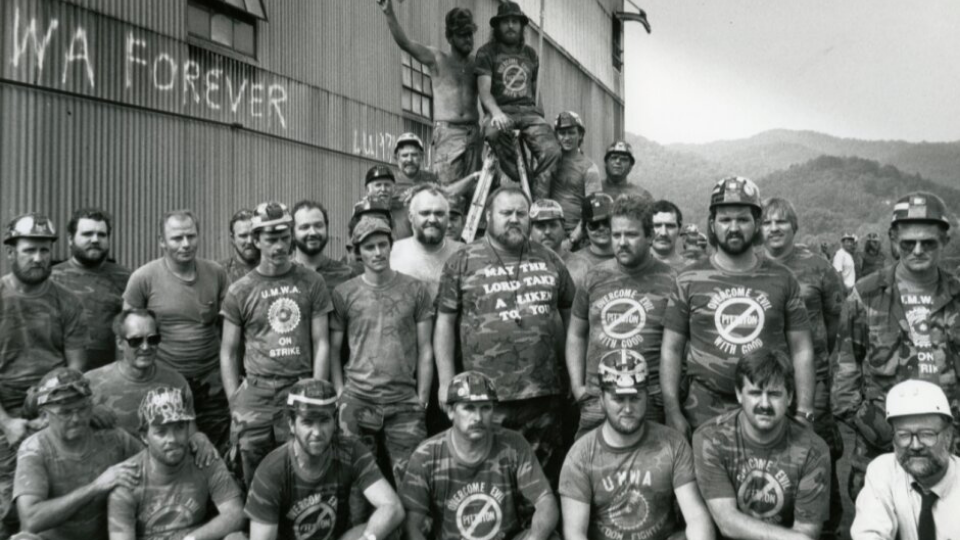
The next major coal mine battle I covered was the Pittston strike in Southwest Virginia, where all the Pittston miners dressed in their camouflage combat fatigues. Cecil Roberts, then Vice President of the United Mine Workers, greeted the big crowds at Camp Solidarity:
“Welcome to class warfare in Southwest Virginia,” Roberts shouted into the microphone. The chartered bus loads of union members who traveled from far and near to join these rallies cheered.
Why did I find the coal miners’ story so magnetic? Coal miners are locked in the class struggle at the heart of the system of capitalist exploitation. In the coal mines, exploitation takes the form of premeditated homicide. One of my mentors as a pro-union, pro-worker reporter was Art Shields, the greatest labor reporter of all time. Art taught me many lessons. “Make your stories sing,” he would say. Art covered the Battle of Blair Mountain, about the first and only case of union miners forced to defend themselves with firearms—outright combat on the rugged, forested slopes of Blair Mountain, a war against ruthless mine owners. This case of class war is not taught in our classrooms.
Of all the union leaders with close ties to the coal miners, none was dearer to me than George A. Meyers, a friend, neighbor, and comrade in Baltimore. George’s father was a staunch union coal miner from Lonaconing, the tiny little coal mining town in western Maryland where George was born. He organized the 10,000 Celanese corporation textile workers in nearby Cumberland, Maryland, and became one of the main organizers of the CIO (Congress of Industrial Organizations). He joined the Communist Party USA. He was chosen as President of the Maryland-DC CIO and worked closely with CIO President-UMW President John L. Lewis. He served in the Army Air Corps during the war to defeat Hitler. After the war, homegrown fascists arrested him and scores of other CPUSA members on fake charges that they conspired to overthrow the government by “force and violence.”
George spent nearly four years in prison on these trumped-up charges. The U.S. Supreme Court later ruled the main clauses of the Smith Act “unconstitutional.” (It was a different court in those days.) After George’s release, he spent the rest of his life struggling to rebuild the labor movement into a “class struggle” organization. I wrote a book about him, NO POWER GREATER: The Life & Times of George A. Meyers.
One of George’s closest friends was Florence Reece, wife of Harlan County coal miner Sam Reece. George, gifted with a lovely singing voice, knew Florence Reece’s song “Which Side Are You On” by heart and often sang it: “Don’t scab for the bosses/ Don’t listen to their lies /Us poor folks haven’t got a chance/ Unless we organize…”
We hope you appreciated this article. At People’s World, we believe news and information should be free and accessible to all, but we need your help. Our journalism is free of corporate influence and paywalls because we are totally reader-supported. Only you, our readers and supporters, make this possible. If you enjoy reading People’s World and the stories we bring you, please support our work by donating or becoming a monthly sustainer today. Thank you!
CONTRIBUTOR