MCKINNEY, Texas—Karmelo Anthony, a teenager who fatally stabbed another teen at a school sporting event, has been handed a 35-year prison sentence after a jury rejected his claims of self-defense during the confrontation, instead charging the now 19-year-old Anthony with first-degree murder. During the trial, both the prosecution and defense made claims that the case had nothing to do with race, but others assert that the sentencing has everything to do with it and has resulted in a miscarriage of justice.
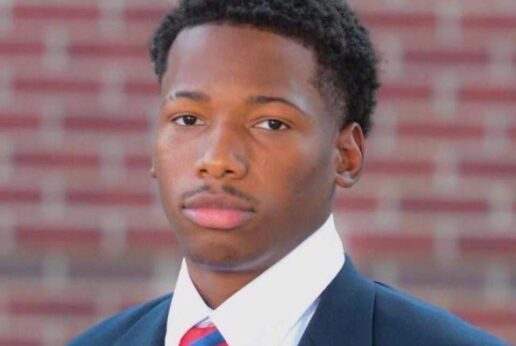
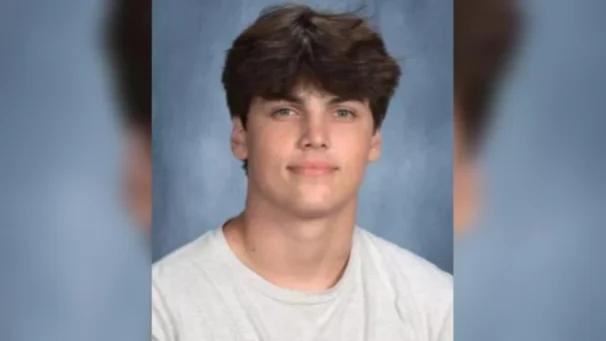
In April 2025, during a school track meet, then-17-year-old Anthony sought shelter from the rain under the tent of a school where he was not a student. An altercation ensued between Anthony and 17-year-old Austin Metcalf—who witnesses say attempted to physically remove Anthony from the tent. During this altercation, witnesses claim Anthony pulled out a knife, and Metcalf was stabbed in the heart during the scuffle, resulting in his death. Anthony’s defense team argued he acted in self-defense, while the prosecution claimed Anthony acted with murder on his mind. Under Texas law, he was tried as an adult and is set to serve his sentence in an adult prison rather than in juvenile rehabilitation.
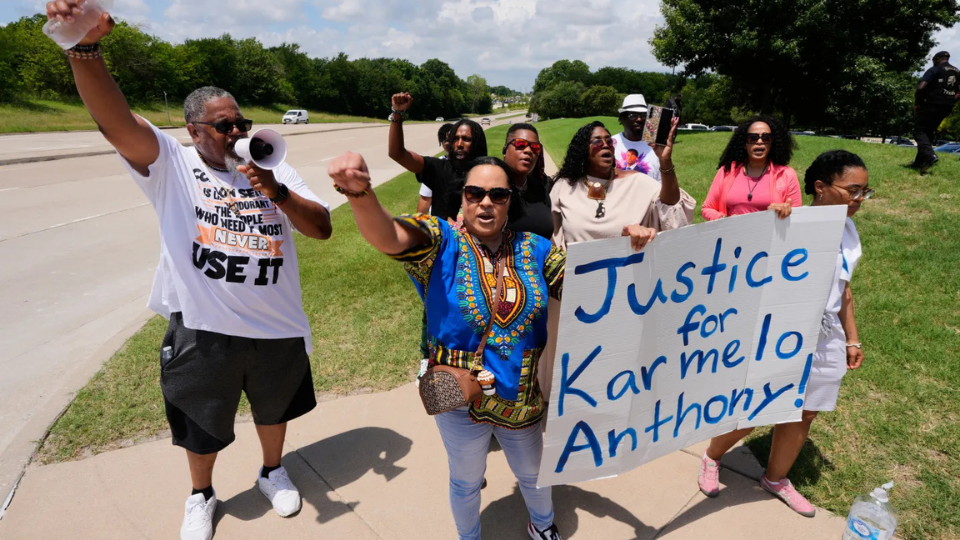
The criminal case drew nationwide attention due to the fact that Anthony is Black and Metcalf was white, with tensions stoked further for months by racist social media posts directed towards Anthony. Supporters on both sides often clamored outside the Collin County Courthouse, where the trial took place, and got into shouting matches. The jury had the option to go with the lesser charge of manslaughter, but did not.
According to reports from the trial, Anthony’s defense counsel objected to the prosecution striking the final three remaining Black potential jurors from the jury pool. The prosecution’s stated reason was that the three Black jurors were educators. This reasoning was allowed by the trial court. This led many to question whether Anthony was denied his right to be tried by a jury of his peers and if racial discrimination played a part in jury selection.
Judge John Roach of the 296th District Court, who presided over the case, said in an interview with WFAA that he “sleeps well at night” and that he stands by every decision he made during the trial. When asked about the jury and their decision, he stated: “They were picked based upon the law, they listened to the facts, it happened in this courtroom, and they got a verdict.” Yet many disagree with the judge.
Anthony’s father, Andrew Anthony, stated in an interview after the sentencing that the situation was “unfortunate” and questioned the composition of the jury, which included no Black people. Andrew Anthony also believes his son was “already convicted” in the court of public opinion long before the jury reached its verdict.
The Collin County branch of the NAACP released a statement condemning the sentencing and the treatment of Black defendants within the justice system: “The absence of Black jurors in this high-profile, racially divisive case involving a Black defendant has only intensified those concerns. A jury should reflect a broad cross-section of the community whenever possible. Diverse perspectives do not guarantee a particular outcome, but they strengthen public confidence that all viewpoints and life experiences have been considered during deliberations.”
Texas’s 30th Congressional District Rep. Jasmine Crockett stated that if the racial roles had been reversed, “I don’t even know if [Anthony] would have been convicted, because if a white boy would have said that they were afraid of a Black boy, something tells me that that jury that didn’t have any Black people on it, they would have believed him and his fear.”
Crockett’s statement also brings into question who, when it comes to race, is allowed to claim self-defense and be believed, as there have been similar trials with wildly different outcomes when the defendant happens not to be Black.
In a recent statement, the African American Equality Commission of the CPUSA highlighted this sentiment, comparing Anthony’s trial to that of Kyle Rittenhouse, a white teenager who claimed self-defense after shooting and killing two protesters.
“Both Rittenhouse and Anthony were teenagers. Both argued that they acted in self-defense. However, the jury in the former case took 26 hours to determine that the accused was innocent. And the jury in the latter case took only 3 hours to determine the accused is a murderer. Rittenhouse walks free and will get to enjoy his young adult life. Anthony was sentenced to 35 years, and he will spend his most formative years behind bars,” the statement read.
Talbert Swan, NAACP chapter president in Massachusetts, referenced in a post on the social media platform X the Daniel Penny case, in which a white Penny placed Jordan Neely, who was Black, in a chokehold until he died.
“Jordan Neely never touched Penny. Penny was acquitted and later celebrated by Donald Trump and J.D. Vance as a hero. Meanwhile, Karmelo Anthony, a Black teenager involved in a confrontation with a larger white student who initiated the physical encounter, claimed self-defense and was sentenced to 35 years in prison, more time than former white police officers Derek Chauvin and Amber Guyger got for the murders of George Floyd and Botham Jean combined.”
“The issue isn’t whether America believes in self-defense. The issue is whose self-defense America is willing to believe,” Swan concluded.
And while much of the racial tension exploded online when it came to the trial, the town of Frisco, where the stabbing took place, is also no stranger to such divisiveness.
An article in the Washington Post explains that Frisco, which, according to census data, has a population of 46% white, 34% Asian, 10% Latino, and 10% Black, is dealing with racism and far-right extremism. The article reported that a candidate for Frisco mayor called Islam a “terrorist group” and immigrants “rats.” Locals have complained of a so-called “Indian takeover” of Frisco, with a number of far-right politicians gaining power in the area.
It is against this backdrop that Anthony and his family have assembled a new legal team to represent the young man as he appeals his conviction. It includes a number of appellate, civil rights, and criminal defense attorneys, including former Dallas County prosecutor Russell Wilson, Michael Ware, director of the Innocence Project of Texas, and Texas NAACP President Gary Bledsoe.
In a statement to the press, the team said that they have been retained to “conduct a fresh, independent review of the trial record” and that their “responsibility is to determine whether a legal error occurred and to ensure that every issue supported by the record is fully and vigorously presented on appeal.”
Anthony’s case will no doubt continue to draw attention as many await the outcome of the appeal, noting that the young Black man’s case has taken on symbolic meaning. As the Collin County branch of the NAACP put it: “The concerns being expressed throughout our community are not simply about one verdict. They are about whether every defendant receives the full benefit of due process…. Justice is not measured solely by a verdict. It is measured by the public’s confidence that the process was fair, impartial, and worthy of trust.”
We hope you appreciated this article. At People’s World, we believe news and information should be free and accessible to all, but we need your help. Our journalism is free of corporate influence and paywalls because we are totally reader-supported. Only you, our readers and supporters, make this possible. If you enjoy reading People’s World and the stories we bring you, please support our work by donating or becoming a monthly sustainer today. Thank you!
CONTRIBUTOR