WASHINGTON—By a partisan 6-3 margin—all GOP-named justices for, all Democratic-named justices against—the U.S. Supreme Court gave oil giant ExxonMobil the go-ahead to sue the Cuban government for at least $1 billion.
Writing for the majority, Justice Brett Kavanaugh explained that generally foreign governments, and their diplomats in the U.S., too, have “sovereign immunity” from U.S. lawsuits.
But the Helms-Burton Act, which Congress approved and Democratic President Bill Clinton signed in 1996, made an explicit exception for Cuba, and its “agencies and instrumentalities” unless the U.S. president waived the act’s impact.
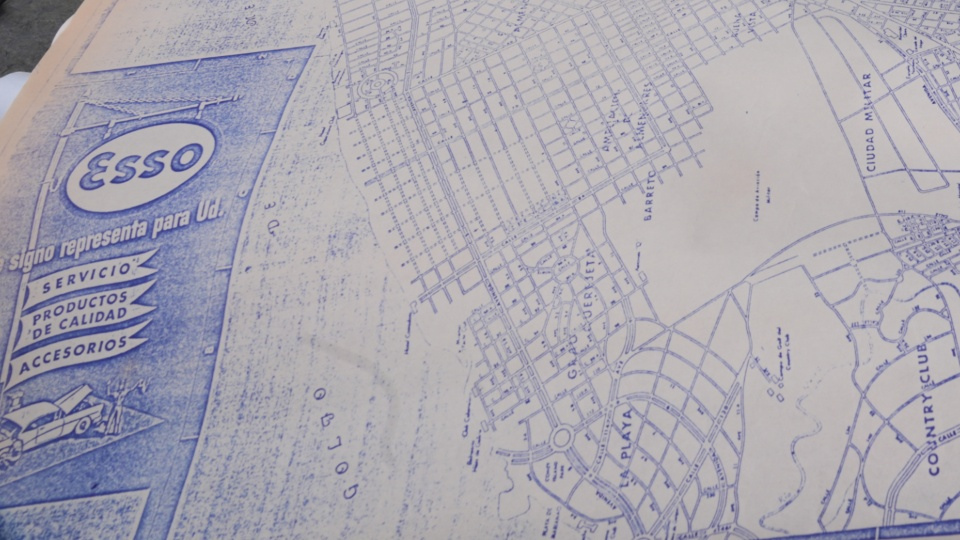
Two Cuban government-owned oil companies, UniónCuba-Petróleo and Corporación CIMEX, S. A., which ExxonMobil sued along with the government, now run the refinery, the pipelines, and the 100-plus gas stations ExxonMobil’s predecessor, Standard Oil, left behind in 1959-60.
The ruling is another pro-corporate decision by the Supreme Court’s GOP-named majority, which has helped drive public regard for the High Court into negative numbers.
That same majority has gutted the Voting Rights Act, blessed unlimited corporate cash in politics—including “dark money”—and turned a blind eye to oligopolies, monopolies, and the Bill of Rights.
ExxonMobil doesn’t need the money. It reported profits of $28.8 billion last year and is on track for an identical figure this year, market analysts say.
Presidents prior to Donald Trump waived the section of the Helms-Burton Act allowing lawsuits against the Cuban government. Trump, catering to the politically powerful rightist Cuban and anti-Castro community of South Florida, ended the waiver in 2019. That reinstated companies’ and individuals’ right to sue.
RELATED ARTICLES:
> Socialism under siege: Cuba embarks on emergency reforms to survive
> Can the Cuban revolution survive?
> A revolution in trouble: Cuba’s government analyzes and responds to economic woes
The original value of the oil firm’s works prior to the 1959 Cuban revolution and subsequent takeover was $71 million. With inflation, penalties, and 6% annual interest starting in 1960, it’s grown to $1 billion. Helms-Burton also allows triple damages.
The Democratic-named justices, Elena Kagan, Sonia Sotomayor, and Ketanji Brown Jackson, dissented. Writing for them, Kagan said, “nothing in the text or ‘architecture’ of the Helms-Burton Act suggests Congress abrogated the sovereign immunity of these defendants—much less that it did so with the requisite unmistakable clarity.”
Neither U.S. lawmakers with large anti-Castro Cuban-American populations—Reps. Robert Menendez Jr., D-N.J., and Mario Diaz-Balart, Carlos Gimenez, and Maria Elvira Salazar, all R-Fla., had immediate reactions to the court’s ruling.
And the websites of the Miami Herald and the two national Spanish-language networks, Telemundo and Univision, show they did not cover it. The Cuban Embassy in the U.S. also posted no immediate comment.
But in his speech to the Central Committee of the Cuban Communist Party a week before the court’s ruling, Cuban President Miguel Díaz-Canel discussed trying to attract more foreign investment as part of a wide-ranging economic reform plan to counter the U.S. embargo and other right-wing strangleholds on the island republic.
“We must not only tell foreign investors where to invest, but also empower them to invest in the economic sector of their interest, and to directly select their workers, always without state intermediaries,” Díaz-Canel stated.
“We must authorize foreign direct investment in the national private sector…with clear rules on ownership, repatriation, reinvestment, and dispute resolution.” That includes “facilitating investment models with different modalities and with all stakeholders.”
Díaz-Canel sharply criticized the imperialist nature of the embargo, which has lasted since 1960—as well as Trump’s obsession with overthrowing the Cuban government.
That is symbolized by the Trump regime’s recent indictment of former Cuban President Raúl Castro, now 94, on U.S. charges of conspiracy and murder.
Díaz-Canel did not mention the Helms-Burton Act specifically, even though it opens the door to suits by other firms and individuals, such as the Fanjul brothers.
Those Trump pals and Castro foes have a virtual monopoly on U.S. raw cane sugar production. Trump name-checked the Fanjuls at the White House fundraiser among corporate donors for his controversial ballroom.
We hope you appreciated this article. At People’s World, we believe news and information should be free and accessible to all, but we need your help. Our journalism is free of corporate influence and paywalls because we are totally reader-supported. Only you, our readers and supporters, make this possible. If you enjoy reading People’s World and the stories we bring you, please support our work by donating or becoming a monthly sustainer today. Thank you!
CONTRIBUTOR