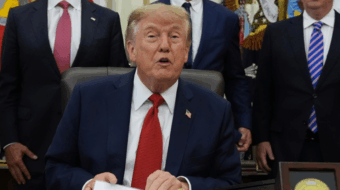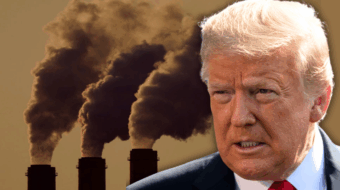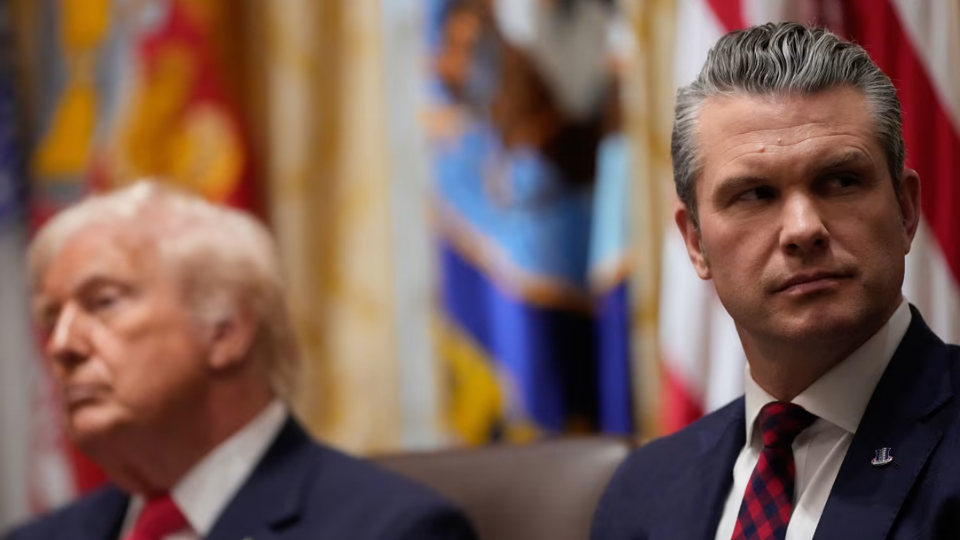
Since the attacks on Iran in late February, Donald Trump has announced that the U.S. has won the war in Iran 68 times, as of this writing. Out of those 68 times, only one claim of victory was in September: an ominous sign, no doubt, that the war is indeed going poorly.
Perhaps most unsettling are the words from retired U.S. Naval Intelligence Officer Travis Akers, who said, “Before I retired in 2024, the ‘worst-case scenario’ in the Pentagon for the Middle East was both straits being closed. It was not even imaginable except in PowerPoint briefs and war college gaming scenarios. Under Pete Hegseth, it has become a reality in less than six months.”
The two straits Akers is talking about are the Strait of Hormuz, which was open before the war and has since closed, and the Bab al-Mandab Strait. The Bab al-Mandab Strait connects the Red Sea to the Gulf of Aden and the Indian Ocean and, like the Strait of Hormuz, is a vital passage for the world’s oil and cargo ships. Since the Yemeni Armed Forces and the Ansarallah (Houthis) began to advance along the coast, capturing towns and villages along the way, they have now reached the strait and taken control. With Yemen’s government backed by Saudi Arabia, and the U.S. deciding not to help Saudi Arabia drive back a Houthi advance in Yemen, control of the Bab al-Mandab Strait remains perilous, to say the least.
The worst-case scenario of both straits being closed is made even worse by the drone attacks on the Saudi East-West pipeline. Drones originating from Iraq damaged three pumping stations on the 750-mile-long pipeline, and estimates for how long it will take to repair are five to six weeks. While the Strait of Hormuz has been largely closed since the start of the war, the East-West pipeline has served as the main route for Middle East oil, moving 4% to 5% of the global supply.
The fighting between the Saudis and the Houthis has escalated to the point that the U.S. warned citizens in several Middle Eastern countries to exercise “heightened vigilance,” and that “the security environment remains complex with the potential for unforeseen escalation.” This warning comes on the heels of a Washington Post report wherein six Defense Department insiders familiar with the agency’s internal casualty accounting data said there have been more service member deaths from the Iran war than the Trump administration is admitting.
Fuel prices have skyrocketed because of the Iran war, with diesel prices hitting an all-time high. When Trump held a speech in North Carolina last week, he told the audience, “It’s a very inexpensive price to pay for what we’ve done.” Trump has no empathy for working-class people, so higher gas prices mean nothing to him, especially since his second turn at the presidency has netted him a couple billion dollars.
Despite all this, the U.S., and the world, have China to thank for gas prices not being even higher. President Xi spent years amassing the world’s largest oil stockpile while also investing heavily in renewable energy. China now leads the world in overall renewable energy capacity and, while drawing on its oil stockpile and offloading some onto the global market, can weather the storm in the Middle East. Retired U.S. Navy Rear Admiral Mark Montgomery, an analyst at the Foundation for Defense of Democracies, said, “The Chinese deserve credit. They did in 10 years what took us 25 years after the 1973 oil crisis to do: really build a kind of strategic petroleum reserve that could allow you to weather this.”
At the start of the Iran war, Donald Trump implored the Iranian people to rise up and overthrow their government. Now, the Iranian government is saying the Strait of Hormuz will remain closed until Trump and Israeli Prime Minister Benjamin Netanyahu are removed from power. The leaders of the U.S. and Israel told the Iranian people to revolt, then indiscriminately bombed them, an act that will go down in history as one of Trump’s most colossal blunders. We should not be surprised when Iran says the U.S. and Israeli people should revolt. Perhaps this is why Trump is now saying he wants his Washington, D.C. arch to be a military institution, capable of holding drones and snipers.
We are on our way to another oil crisis. While countries that could shift to renewable power did so, the U.S. did the opposite. Ronald Reagan famously removed the solar panels Jimmy Carter put on the White House, and Donald Trump has expressed outright hostility to renewable energy. And while many on the right in the U.S. are openly against electric cars, China has developed electric cars that cost half as much as U.S.-built ones. You can’t buy one, however, because the free-market conservatives don’t want competition.
None of this bodes well for the short term, and the long term is already bleak. In just the past week, the U.S. almost accidentally went to war with China over a false AI-based military intelligence report, and the Yemeni Houthis have essentially taken Saudi Arabia’s oil offline. At the same time, Trump came back from Camp David earlier than planned, and North Korea launched two ballistic missiles off its coast, just days after it accused the U.S. of driving tensions on the Korean Peninsula through a series of military drills.
Added to all of this is the United Nations officially accusing the U.S. of committing war crimes in Iran, claiming it has “reasonable grounds” to believe the U.S. committed war crimes in two strikes in Iran where children were killed. The American people would do well to follow Iran’s advice, for removing Trump from power would only be the beginning of fixing his and his administration’s mess.
As with all op-eds published by People’s World, the views reflected here are those of the author.
No paywalls at People’s World
We hope you appreciated this article. At People’s World, we believe news and information should be free and accessible to all, but we need your help. Our journalism is free of corporate influence and paywalls because we are totally reader-supported. Only you, our readers and supporters, make this possible. If you enjoy reading People’s World and the stories we bring you, please support our work by donating or becoming a monthly sustainer today. Thank you!
CONTRIBUTOR