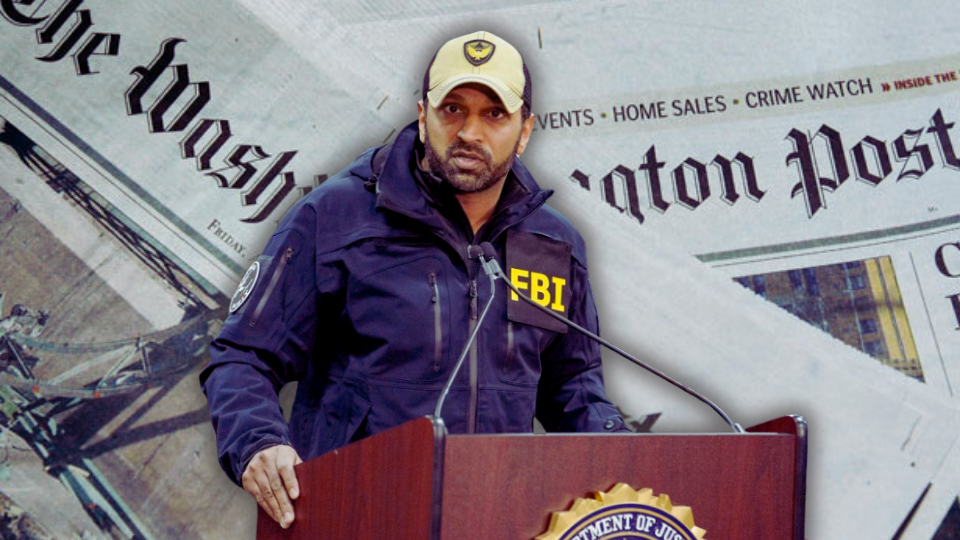
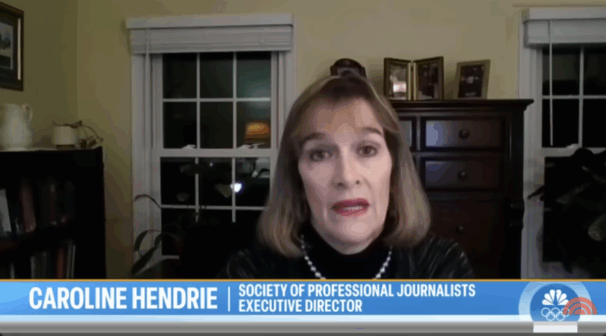
“We are just seeing an assault on press freedom that we typically see in authoritarian countries.” Those were the words of Caroline Hendrie, Executive Director of the Society of Professional Journalists (SPJ), during an interview on the Today show as she condemned the recent FBI raid of the home of a Washington Post reporter. The incident is the latest addition to a growing list of what many see as government transgressions against press freedom.
On Jan. 14, agents from the Federal Bureau of Investigation executed a search warrant on the Virginia home of Hannah Natanson, a journalist at the Washington Post. The raid was reported as being linked to an investigation into a government contractor, Aurelio Perez-Lugones, accused of illegally retaining classified government materials.
When news of the raid hit, President Donald Trump’s attorney general, Pam Bondi, posted on the social media platform X that the raid was conducted by the “Department of War” (formerly known as the Department of Defense) and the FBI at the request of the Pentagon. Bondi claimed that Natanson was “obtaining and reporting classified and illegally leaked information from a Pentagon contractor” and that the leaker was now “behind bars.”
The attorney general went on to state that the Trump administration will not “tolerate illegal leaks,” alleging that Natanson’s reporting posed “a grave risk” to U.S. national security. Trump would later state in a White House press briefing that the leaks were in connection with Venezuela. His FBI director, Kash Patel, stated on X that Natanson was “found to allegedly be obtaining and reporting classified, sensitive military information.”
But journalism advocates are pushing back against Bondi and the Trump administration’s narrative, arguing that the government’s actions are an overreach and violate the U.S. Constitution. The First Amendment protects journalists’ rights to gather and write about classified information, they point out, and such actions are not considered criminal or illegal.
The Washington Post’s Executive Editor stated that the raid was an “aggressive action” and “raises profound questions and concerns about constitutional protections.”
SPJ, joined by a coalition of press freedom groups and unions, including the NewsGuild-CWA, PEN America, and others, sent an open letter to the U.S. attorney general and the FBI director condemning the Bureau’s execution of the search warrant. The letter highlights the fact that Natanson has extensively covered stories relating to federal workers, who continue to be in a battle with the Trump administration regarding layoffs and department cuts.
Late last year, Natanson wrote a Post article detailing her experience as the newspaper’s “federal government whisperer.” During the raid, her electronic devices were also searched. The letter asserts that this has potentially jeopardized the “1,000 current and former federal employees as sources for her work.”
The letter goes on to state that “dogged reporting” about the government is not a crime, and the FBI cannot conduct intrusive searches and seizures simply because the newsgathering “advances transparency and accountability in ways that may be uncomfortable for those in power.”
The coalition cited the Supreme Court’s 2001 decision in Bartnicki v. Vopper, that “a stranger’s illegal conduct does not suffice to remove the First Amendment shield from speech about a matter of public concern.”
The coalition ended the letter by demanding an explanation from Bondi and Patel on the violation of Natanson’s rights as a journalist.
In an initial statement issued on Jan. 14, SPJ asserted that “the law exists to protect the public’s right to know—not to shield the government from embarrassment or scrutiny.”
Since his first term in office, Trump has had a contentious and often confrontational relationship with the news media, often calling journalism he didn’t like “fake news.” In his second term, those he has placed in power have made moves that many press advocates see as a continued assault against journalism. In April of last year, the Justice Department rescinded a policy put in place by former President Joe Biden that provided protections to journalists in leak investigations. In a memo, Bondi wrote that employees intentionally leaking sensitive information to the media was “illegal and wrong, and it must stop.”
But SPJ asserts that an internal memo does not override federal law, and that it does not “erase decades of legal and ethical precedent recognizing that a free press cannot function when reporters are treated as investigative targets for doing their jobs.”
And when it comes to journalists doing their jobs and government interference, press advocates are also sounding the alarm about reported Pentagon plans to seize editorial control of the U.S. military publication Stars and Stripes.
The publication, which first appeared during the Civil War and has had continuous issues released since World War II, describes itself as a provider of independent news and information to the military community worldwide.
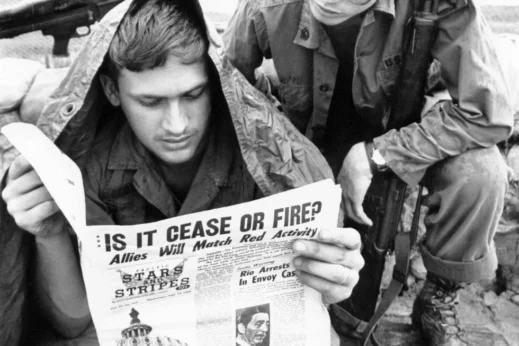
On X, Sean Parnell, the Pentagon’s public affairs official and close adviser to Defense Secretary Pete Hegseth, wrote that, “The Department of War is returning Stars & Stripes to its original mission: reporting for our warfighters,” and that it would refocus the publication’s content away from “woke distractions.” He likened the newspaper to “repurposed DC gossip columns” and “Associated Press reprints.”
In a note addressed to staff, Stars and Stripes Editor-in-Chief Erik Slavin pushed back against the editorial takeover, saying, “The people who risk their lives in defense of the Constitution have earned the right to the press freedoms of the First Amendment. We will not compromise on serving them with accurate and balanced coverage, holding military officials to account when called for.”
SPJ released a statement noting that the Pentagon official’s X posturing “directly contradicts long-standing protections for Stars and Stripes’ editorial independence and its governing directive,” which affirms that “there shall be a free flow of news and information to its readership without news management or censorship.
“Turning Stars and Stripes into a vehicle for government-generated content…represents an unmistakable drift away from transparency and toward propaganda,” the organization explained. SPJ called on the Department of Defense to reaffirm the publication’s editorial independence.
From revoking White House press credentials for established news outlets to ongoing lawsuits against media companies over their reporting, many see the Trump administration’s actions as a dismantling of press freedoms and a violation of the Constitution. They note that the fight to defend freedom of the press goes beyond individual incidents and is part of a dangerous battle with high-stakes consequences for society as a whole and the press industry charged with informing it.
As the SPJ proclaimed in their statement on the raid, “A democracy does not grow stronger by intimidating the press. It grows weaker.”
We hope you appreciated this article. At People’s World, we believe news and information should be free and accessible to all, but we need your help. Our journalism is free of corporate influence and paywalls because we are totally reader-supported. Only you, our readers and supporters, make this possible. If you enjoy reading People’s World and the stories we bring you, please support our work by donating or becoming a monthly sustainer today. Thank you!
CONTRIBUTOR